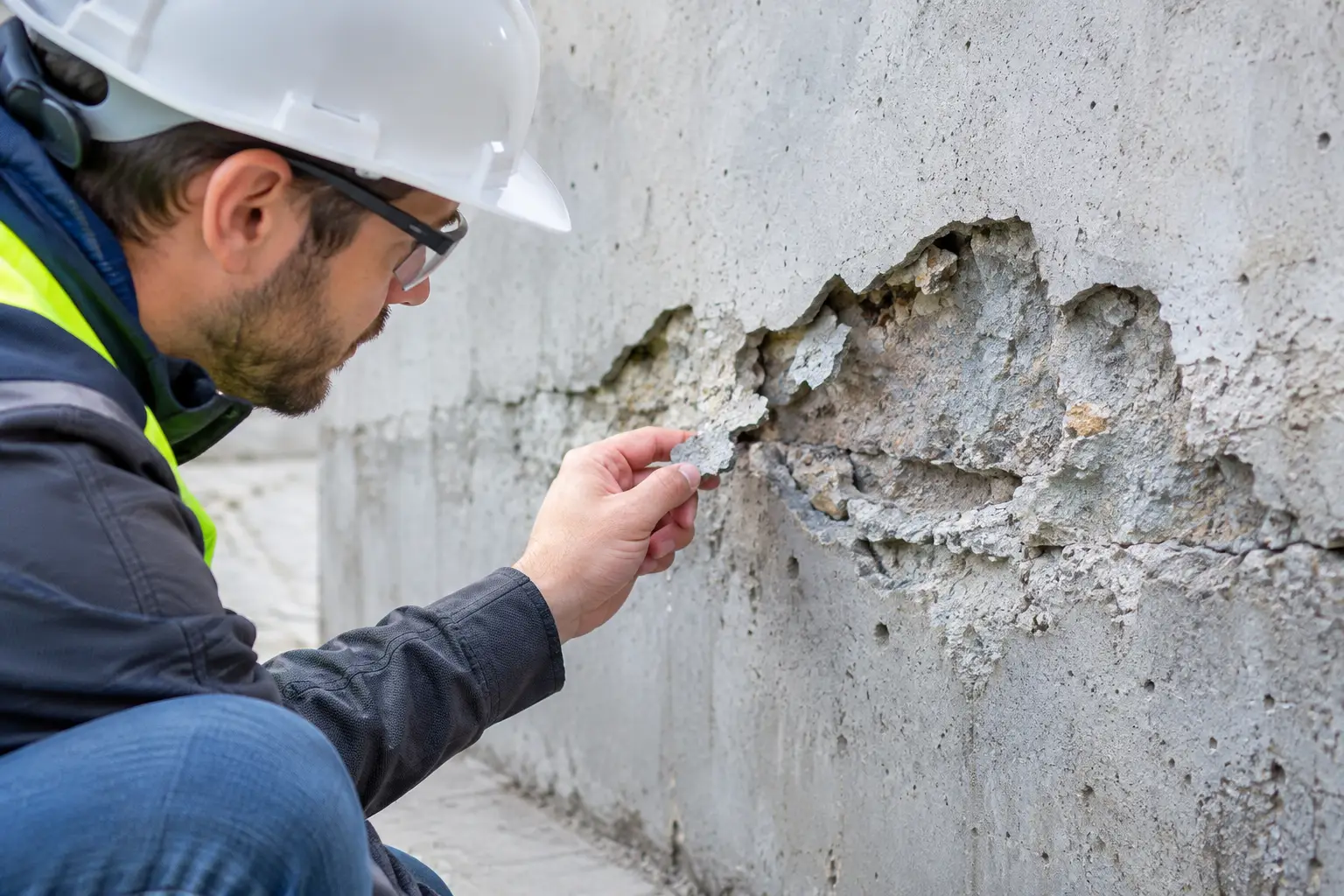
A driveway should not leave gritty concrete chips behind after every rainstorm or cold snap. If you are asking, "why is concrete flaking," the surface is usually telling you that water, installation conditions, or years of wear have weakened the top layer. The right fix depends on whether the damage is limited to the surface or points to a larger concrete failure.
What Concrete Flaking Actually Means
Concrete flaking is commonly called scaling or spalling, although the terms are not always used the same way. Scaling is usually shallow damage where thin layers of the finished surface peel, chip, or break away. It can make a driveway, patio, sidewalk, or pool deck look rough and patchy.
Spalling can be more severe. It may involve deeper chunks breaking loose, exposed aggregate, rust stains, or visible reinforcing steel in structural concrete. A few small flakes do not automatically mean a slab needs replacement. But widespread flaking, deep craters, or damage near an edge can allow water farther into the concrete and accelerate deterioration.
The key question is not just how the surface looks. It is whether the concrete beneath the failed layer is still solid, stable, and properly supported.
Why Is Concrete Flaking? The Most Common Causes
Concrete is strong in compression, but it is not waterproof and it does not tolerate poor installation or repeated moisture exposure forever. Several conditions can cause the surface to fail.
Water freezing inside the slab
Water enters concrete through pores, small cracks, and unsealed surfaces. When that water freezes, it expands. Repeated freeze-thaw cycles put pressure on the concrete from within until the surface begins to pop, scale, or flake away.
North Texas does not have the long winter season seen farther north, but freeze events still happen. A slab that stays wet because of poor drainage, roof runoff, irrigation, or low spots is more vulnerable when temperatures drop below freezing.
Deicing chemicals and ice melt
Deicing salts can make freeze-thaw damage worse by keeping moisture active in the concrete and increasing the number of freeze-thaw cycles. Some products are especially hard on concrete. Rock salt and products containing chloride compounds can contribute to surface scaling, while fertilizer and other chemicals tracked onto a driveway may also leave stains or cause localized damage.
The risk is not limited to what you apply at home. Vehicles can carry deicing residue onto garage floors and driveways from treated roads. That is one reason damage often appears in tire paths, near garage entries, or where water regularly collects.
Improper finishing during installation
Many premature flaking problems begin on the day the concrete is placed. Finishing wet concrete too early can trap bleed water beneath the surface. Adding water to the top to make it easier to finish, or working the surface excessively, can create a weak, dusty layer that lacks the strength of the concrete below it.
Timing matters. Concrete needs to be placed, leveled, finished, cut with control joints, and cured according to the mix, weather, and site conditions. A surface can look smooth when the job is completed yet still fail early if the finishing process weakened its top layer.
Poor curing and hot-weather placement
Fresh concrete needs adequate moisture and time to gain strength. In hot, dry, windy conditions, water can evaporate too quickly from the surface. That can lead to shrinkage cracking, reduced surface strength, and later scaling.
This is particularly relevant in Dallas-Fort Worth and across Texas, where summer heat can change concrete working conditions quickly. Professional crews plan placement times, curing methods, and finishing procedures around the forecast rather than treating every pour the same.
Weak or unsuitable concrete mix
A mix with too much water can be easier to place, but excess water can reduce strength and increase porosity. A low-quality mix, improper air entrainment for freezing conditions, or concrete that was allowed to sit too long before placement can also create durability problems.
For exterior flatwork, the mix design must fit the job. A residential patio, a heavy-use commercial drive lane, and a dumpster pad do not carry the same loads or face the same exposure. Saving money on the wrong mix can lead to expensive repairs later.
Age, traffic, and surface wear
Even well-installed concrete wears down. Heavy vehicles, repeated turning tires, dragged equipment, and years of weather can slowly abrade the finish. Once the protective top layer is gone, water and contaminants can penetrate more easily.
Flaking around corners, joints, and slab edges may also point to impact damage or settlement. If the slab is moving because the soil beneath it has shifted or washed out, patching the surface alone will not solve the underlying problem.
How to Tell Whether the Damage Is Minor or Serious
Start by looking at the depth and pattern of the flaking. Shallow, isolated scaling that is less than about a quarter-inch deep may be repairable if the surrounding concrete is hard and sound. Tap suspect areas with a hammer handle. Solid concrete produces a sharper sound, while loose or delaminated areas often sound hollow.
Watch for warning signs that call for a closer professional assessment: flaking that spreads across large sections, exposed aggregate or steel, deep cracks, uneven slabs, standing water, crumbling edges, or a surface that powders when swept. These signs can mean moisture, drainage, structural loading, or base failure is involved.
Do not assume a coating will hide the problem. Paints and thin coatings can fail quickly when applied over weak, damp, or contaminated concrete. The damaged material has to be removed first, and the concrete below it must be capable of supporting the repair.
Repair Options for Flaking Concrete
A durable repair starts with preparation, not with a bag of patch material. Loose concrete, dust, oils, sealers, and weak surface layers must be removed. Depending on the severity, this may involve grinding, scarifying, shot blasting, or mechanical chipping. The repair area is then cleaned and prepared so the new material can bond properly.
For localized shallow scaling, a polymer-modified repair mortar or resurfacing product may restore the appearance and protect the surface. These repairs work best when the slab is otherwise sound and drainage issues have been corrected. Thin overlays have limits. They are not a reliable fix for major movement, widespread delamination, or concrete that continues to absorb water from below.
Deeper spalls may need a full-depth patch. The damaged concrete is cut or removed back to solid material, then rebuilt with a compatible repair mix. If reinforcing steel is exposed, it should be evaluated for corrosion before it is covered again. Rusting steel expands and can force more concrete off the surface.
Replacement is often the better long-term choice when flaking is widespread, the slab is cracked and uneven, or the base and drainage are failing. It costs more upfront than a patch, but repeatedly resurfacing a failing slab can cost more over time and still leave you with an unreliable surface.
Preventing More Flaking After Repair or Replacement
Keep water moving away from the slab. Downspouts should discharge away from concrete edges, irrigation should not soak the same area every day, and low spots should be addressed before they become standing-water zones. Proper slope is part of good concrete work, not an optional finishing detail.
Use deicing products carefully during freezing weather. Remove snow and ice mechanically when possible, and avoid harsh salt products on new or vulnerable concrete. A penetrating sealer can help limit water and contaminant absorption, but it is not a cure for poor drainage or a weak surface. Reapply it as recommended for the product and level of exposure.
Avoid pressure washing at an aggressive setting, especially along joints and already-damaged areas. Repair small cracks and failing caulk joints before water can work beneath the slab. If heavy trucks or equipment use the area, make sure the concrete thickness and base are designed for that traffic.
When to Call a Concrete Contractor
A contractor should evaluate flaking when the damage is spreading, deeper than a surface defect, or paired with cracking, settlement, drainage problems, or trip hazards. The goal is to identify why the concrete failed before deciding between a repair, overlay, or replacement.
Fantastico Concrete can assess the condition of residential and commercial flatwork and recommend a practical path based on the slab, its use, and the cause of the damage. A sound repair is possible in the right situation, but concrete that has lost its foundation or surface integrity is usually better addressed before another season of water and weather makes the decision more expensive.

