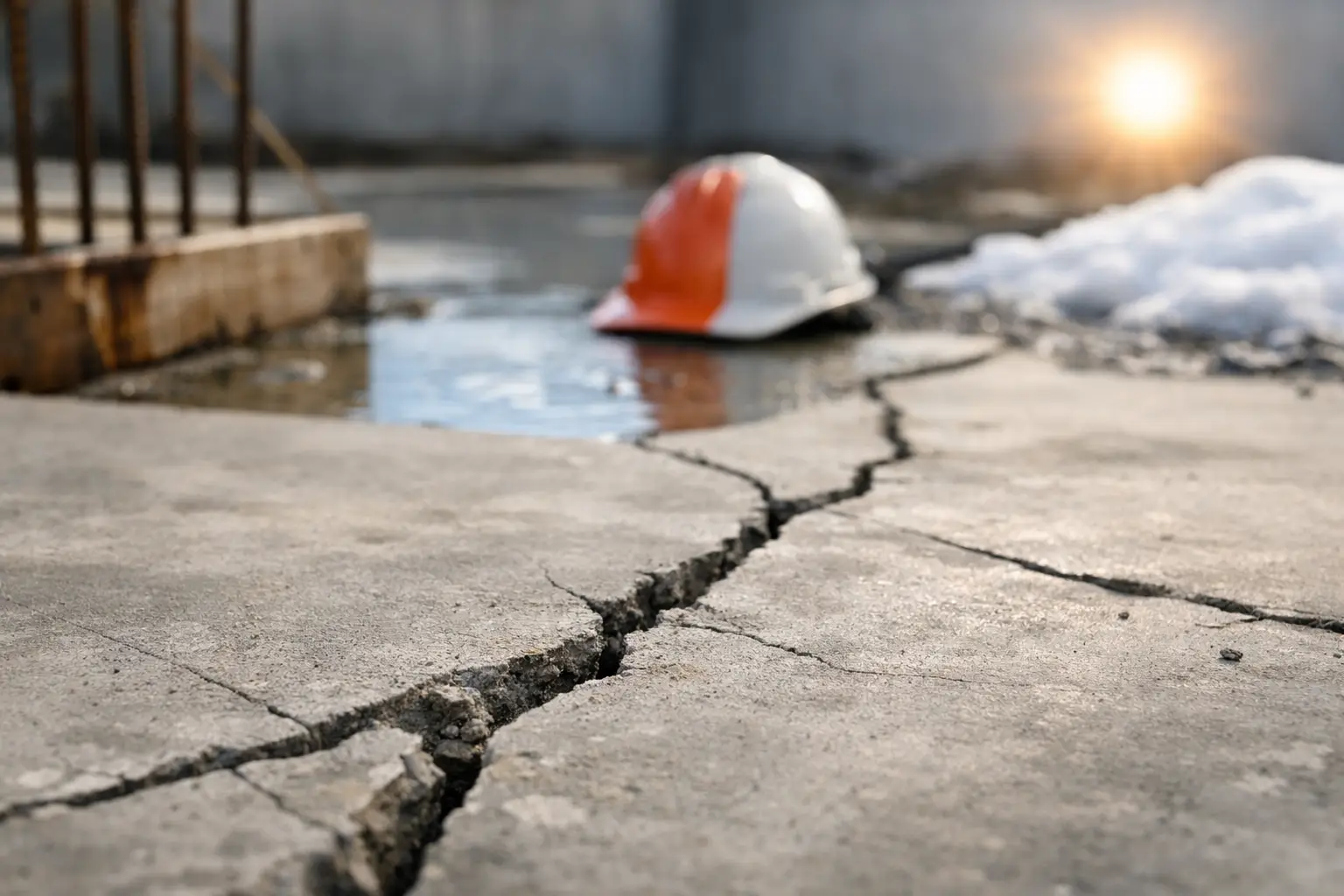
You walk out to the driveway or patio one morning and notice a line that was not there before. That is usually when the question comes up fast: why is concrete cracking, and is this cosmetic or the start of a bigger problem? The short answer is that concrete cracks for a lot of different reasons, and not all of them mean the slab failed. Some cracking is expected. Some points to a problem with soil movement, water, load, or installation.
Concrete is strong in compression, but it is not flexible. It does not handle tension or movement well. Once a slab shrinks, shifts, or gets stressed beyond what it can absorb, a crack forms. The real issue is not just the crack itself. It is what caused it, whether it will keep moving, and what that means for the surface over time.
Why is concrete cracking in the first place?
Concrete changes from the day it is poured. As it cures, it loses moisture and shrinks. That alone can create hairline cracks, especially on large surface areas like driveways, sidewalks, patios, and commercial flatwork. These are often called shrinkage cracks, and in many cases they are more of an appearance issue than a structural one.
But shrinkage is only one part of the story. Concrete also reacts to temperature swings, wet and dry cycles, traffic, and the condition of the ground underneath it. If the slab was placed on weak base material, if water gets under it, or if control joints were skipped or cut incorrectly, cracking becomes much more likely.
In North Texas and surrounding areas, soil movement is a major factor. Expansive clay soils swell when wet and shrink when dry. That repeated movement puts stress on slabs. Even well-poured concrete can crack if the subgrade shifts enough.
Not every crack means the same thing
A lot of property owners assume any crack means the concrete was done wrong. That is not always true. Concrete is a rigid material, and some minor cracking is normal even on quality work. The bigger question is what the crack looks like and how the slab is behaving around it.
A thin, straight hairline crack may be mostly cosmetic. A wider crack with one side higher than the other usually points to movement below the slab. A crack that keeps widening, branches in multiple directions, or shows up with sinking edges can signal an issue that needs more than a surface repair.
That is why context matters. Age, location, traffic load, drainage, soil conditions, and installation quality all play a role.
The most common causes of concrete cracking
Shrinkage during curing
Fresh concrete contains water, and as that water evaporates, the slab shrinks. If that shrinkage is restrained by the ground, reinforcement, or uneven drying, cracks can form. This is one of the most common reasons new concrete develops small surface cracks.
Good finishing practices, proper curing, and correctly placed control joints help manage this. They do not eliminate the risk completely, but they give the concrete a planned place to crack instead of letting it crack randomly.
Poor subgrade preparation
Concrete is only as good as what is under it. If the soil or base below the slab is soft, uneven, or not compacted properly, the slab can settle. Once support is lost in one area, the concrete starts bridging over a weak spot. Cracks often follow.
This is a major issue on driveways, parking areas, and patios where poor site prep may not show up right away. The slab can look fine at first, then crack months later as the base shifts under normal use.
Expansive soil movement
Some areas deal with freeze-thaw cycles. In much of Texas, expansive clay is the bigger problem. When moisture levels change, the soil expands and contracts. That movement pushes and pulls against concrete slabs.
If drainage around the slab is inconsistent, the movement gets worse. One side may stay wet while another dries out. That uneven support creates stress, and cracking is often the result.
Too much water in the mix
Adding extra water to concrete can make it easier to place and finish, but it also weakens the final product. A wetter mix tends to shrink more as it cures, which increases the chance of cracking.
This is one of those trade-offs that matters on the jobsite. A mix needs to be workable, but not at the cost of long-term performance. Getting that balance right is part of professional installation.
Missing or poorly placed control joints
Concrete is going to crack somewhere. Control joints are there to guide where that happens. If joints are too far apart, cut too late, or not deep enough, the slab may crack on its own path instead.
This is why joint layout is not just a finishing detail. It is part of crack control. On larger slabs especially, smart joint placement makes a big difference in how the surface performs and how it looks later.
Heavy loads and daily wear
A residential walkway and a commercial loading area do not face the same stress. If concrete is too thin for the intended use, or if heavy vehicles repeatedly cross areas not designed for that weight, cracking can develop over time.
This happens on driveways that were poured for light vehicle use but end up carrying delivery trucks, trailers, or equipment. Load matters, and thickness matters with it.
Water and drainage problems
Water causes trouble above and below a slab. On the surface, standing water can wear down concrete and expose weak points. Underneath, poor drainage can soften the base and lead to settlement.
If downspouts discharge near the slab, if grading sends water back toward the concrete, or if erosion washes out support from below, cracks can follow. In many cases, fixing the concrete without fixing the drainage only delays the problem.
When cracking is normal and when it is a warning sign
Hairline cracks that stay narrow and level are often not urgent. They can be monitored, sealed if needed, and managed as part of normal aging. That is especially true if they do not trap water and do not create a trip hazard.
The concern goes up when cracks are wide, uneven, growing, or paired with sinking, heaving, or drainage changes. Cracks near corners can point to base failure. Long diagonal cracks across a driveway or slab can suggest movement or stress that is not isolated to one spot.
If a crack is letting water in, that also changes the picture. Water intrusion tends to make concrete problems worse, especially where soils move or base material can wash out.
Why new concrete can still crack
People are often surprised when a fairly new slab develops a crack. But new concrete is not immune. In fact, the first few days and weeks are when shrinkage and curing-related stress are most active.
A new crack does not automatically mean bad workmanship. It can mean the slab cured too fast in hot weather, the joints did not control the movement as intended, the base shifted after rain, or the soil changed moisture content quickly. Sometimes it is one cause. Often it is a combination.
That said, installation quality still matters a lot. Proper grading, base prep, mix selection, reinforcement, joint layout, and curing practices all reduce the odds of problem cracking. They do not create magic concrete. They create better-performing concrete.
Can cracked concrete be repaired, or does it need replacement?
It depends on the type of crack and what is causing it. Surface-level hairline cracks can often be sealed or left alone if they are stable. Wider cracks may be filled, patched, or repaired with products designed for movement and weather exposure.
But if the slab is settling, rocking, heaving, or breaking apart in multiple sections, a patch may only cover the symptom. When support underneath is failing or drainage is wrong, more substantial repair or replacement is usually the smarter move.
This is where a practical inspection matters. A crack is a visible symptom. The real decision should be based on whether the slab is still stable, safe, and draining the way it should.
How to reduce future cracking
There is no such thing as crack-proof concrete. Anyone promising that is overselling it. What you can do is reduce the risk of serious cracking with the right approach from the start.
That means preparing and compacting the subgrade properly, using the right concrete thickness for the application, placing control joints correctly, managing water runoff, and curing the slab in a way that limits rapid moisture loss. For existing concrete, keeping drainage under control and sealing cracks before water gets deeper into the slab can help extend service life.
For property owners, the practical takeaway is simple. Look beyond the crack itself. Ask what changed around the slab, where water goes when it rains, and whether the concrete was built for the way the space is actually used. That is usually where the real answer is.
Concrete cracks because it shrinks, moves, carries weight, and reacts to the conditions around it. Some of that is normal. Some of it is preventable. If you treat cracking as a clue instead of just a cosmetic flaw, you make better decisions about repair, replacement, and how to keep the next slab performing longer.

