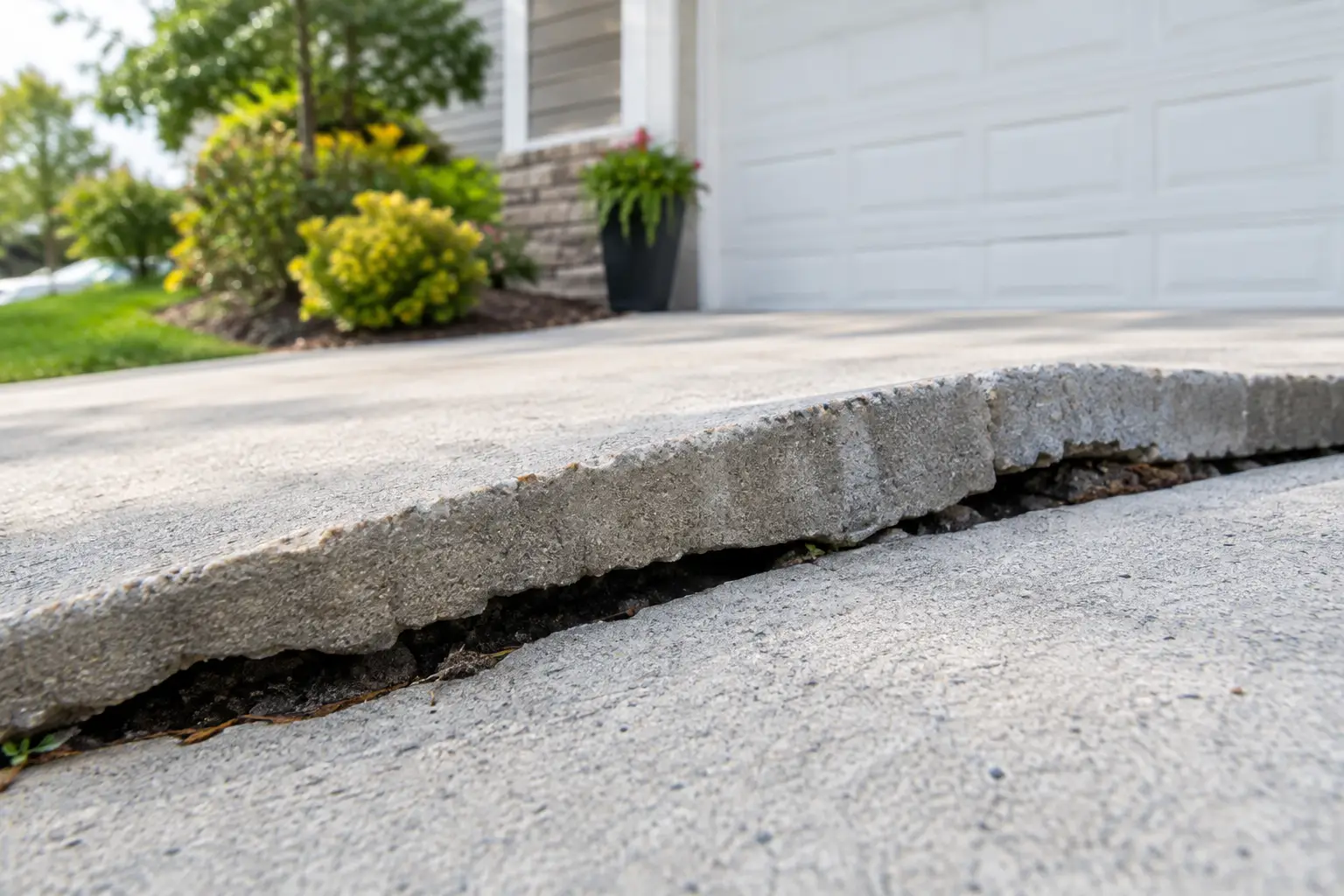
A sidewalk panel that suddenly sits higher than the next one is more than an eyesore. It can create a trip hazard, push against a porch or foundation, trap water, and make a driveway hard to use. If you are asking, why does concrete heave, the short answer is that something underneath the slab is moving or expanding.
Concrete is strong under compression, but it does not flex well. When soil, water, roots, or ice exert upward pressure from below, the slab can lift, tilt, or crack. The right repair depends on what caused the movement in the first place. Treating only the raised concrete without addressing the source can lead to another problem later.
What Concrete Heaving Looks Like
Concrete heave is upward movement of a slab. It is different from settlement, where concrete sinks because the soil below has eroded, compacted, or shifted away. Both issues can cause cracks and uneven surfaces, and sometimes the same driveway or patio has sections that have lifted and sections that have dropped.
Common signs include a raised joint between two slabs, cracks that widen over time, a patio sloping toward the house, or a driveway edge that has pushed upward near a tree or landscape bed. Doors and gates may also begin dragging if nearby flatwork moves into their path.
A raised section does not always mean the entire slab needs replacement. However, it does mean the area should be evaluated before someone grinds down an edge or adds patch material. Those cosmetic fixes may reduce a trip hazard temporarily, but they do not stop active movement below the concrete.
Why Does Concrete Heave? The Main Causes
Expansive Clay Soil and Moisture Changes
For many properties in Dallas-Fort Worth and across North Texas, expansive clay soil is the leading cause of slab movement. Clay particles absorb water and swell. When the soil dries, they shrink. That repeated expansion and contraction can place major pressure on driveways, sidewalks, patios, and other concrete flatwork.
The issue is usually uneven moisture. One side of a slab may receive runoff from a roof, irrigation overspray, or poor yard drainage while the other side remains dry. The wetter soil expands more, lifting part of the concrete and creating a noticeable slope or offset at a joint.
A long dry spell can also set up future heaving. As clay dries and shrinks, voids can develop beneath the slab. When heavy rain returns, the soil may rehydrate and swell irregularly. Texas weather can move quickly from dry conditions to heavy rainfall, so managing water around concrete is not optional.
Poor Drainage or Plumbing Leaks
Water is often the trigger, even when expansive soil is the underlying problem. Downspouts that discharge next to a driveway, a low yard that holds water, broken irrigation lines, and leaking outdoor plumbing can keep soil saturated beneath a slab.
Look for clues around the affected area. Soft ground, persistent puddles, unusually green grass, washed-out soil, or water marks near the slab edge can point to a drainage issue. A leak should be corrected before concrete repair begins. Otherwise, the new or leveled surface may move again as the soil continues to take on water.
Tree Roots
Tree roots can lift concrete when they grow beneath or directly beside a slab. This is common along sidewalks, near patios, and at driveway edges. The lift may be concentrated in one area rather than spread across the whole surface.
Removing roots is not always a simple answer. Cutting large roots can damage or destabilize a mature tree, and removing the tree does not instantly reverse the raised concrete. The practical solution depends on the tree species, root size, slab location, and how much movement has occurred. A contractor may recommend removing and replacing the affected section with better root clearance, modifying the layout, or using another approach that protects both the surface and the property.
Frost Heave in Colder Areas
Frost heave occurs when water in the soil freezes and expands, lifting the concrete. It is less common in much of North and East Texas than it is in colder climates, but hard freezes can expose weak drainage and base conditions. It is also more relevant for properties in Oklahoma, where winter conditions can be more severe.
Frost alone is rarely the main explanation for ongoing concrete movement in the Dallas-Fort Worth area. If a slab rises repeatedly or remains uneven long after winter, moisture-sensitive soil, poor drainage, or roots are more likely factors.
Inadequate Base Preparation
A concrete slab needs a stable, properly compacted base. If the subgrade was not prepared correctly, if loose fill was used, or if the base was too thin for the application, the slab is more vulnerable to movement.
Poor preparation does not always cause upward heave by itself. But it leaves less room for the slab to tolerate normal soil changes. Water can enter cracks and edges more easily, the base can lose support, and the slab may respond unevenly to pressure below it.
Why Heaving Concrete Should Not Be Ignored
A small raised edge may seem manageable, but it can become a safety and drainage problem. Trip hazards create liability concerns for homeowners, landlords, and commercial property managers. Water that once flowed away from a building can be redirected toward a foundation, garage, or entry.
Heaving can also damage nearby structures. A patio slab can push against a house, a driveway can interfere with garage access, and a sidewalk can press against steps or retaining features. Concrete expansion joints are intended to allow small, controlled movement. When the pressure exceeds that allowance, cracking and displacement follow.
The longer active movement continues, the harder it can be to make a repair look and perform properly. Early evaluation gives you more options.
Repair Options Depend on the Cause
There is no single fix for heaved concrete. A sound repair plan starts with identifying whether the slab is lifted by soil expansion, roots, water, or a combination of issues.
Concrete leveling may work when the slab remains structurally sound and the movement is minor or related to isolated voids. It can restore a safer walking surface, but it is not the right answer for a slab that is being pushed upward by expanding soil or roots. Raising an already heaved section further would obviously make the problem worse.
In some cases, removing and replacing the affected concrete section is the better choice. This allows the contractor to correct the base, address drainage, install proper joints, and create a controlled transition to adjacent concrete. Replacement is often appropriate when the slab is badly cracked, severely tilted, thin, or displaced by tree roots.
For larger areas, repairs may need to be phased. A property owner may choose to address the worst trip hazards first, correct drainage, and then replace additional driveway or patio sections as the budget allows. That is a reasonable approach as long as the repair plan does not trap water or create new elevation issues.
How Proper Installation Helps Prevent Future Heave
No contractor can stop natural soil from responding to moisture, especially in clay-heavy parts of Texas. Proper installation can reduce the risk and help concrete perform better through seasonal movement.
The work begins below the surface. The subgrade should be evaluated, shaped for drainage, and compacted as needed. A suitable base provides more consistent support. Concrete thickness should match the use of the slab, because a residential patio does not face the same loads as a vehicle driveway or commercial access area.
Control joints matter as well. They encourage cracking to occur in planned locations rather than randomly across the slab. Expansion material is used where concrete meets structures or other fixed elements so the slab has space for limited movement.
Water management remains part of the long-term plan. Downspouts should direct water away from the slab and foundation. Irrigation should not soak one edge of a driveway every day. Landscaping should preserve drainage paths instead of creating a dam against the concrete.
When to Call a Concrete Professional
Call for an evaluation when a raised edge becomes a tripping risk, cracks are widening, water is running toward the building, or the concrete is pressing against a structure. Take photos after major rain events and note whether the movement appears to change with the seasons. That information can help identify whether water and soil conditions are involved.
Fantastico Concrete evaluates concrete problems with the full site in mind, not just the visible crack. The best repair is the one that restores a safe, usable surface while accounting for the conditions that caused it to move.
A heaved slab is a message from the ground below it. Address the water, soil, roots, or base issue behind that message, and your repair has a much better chance of lasting.

