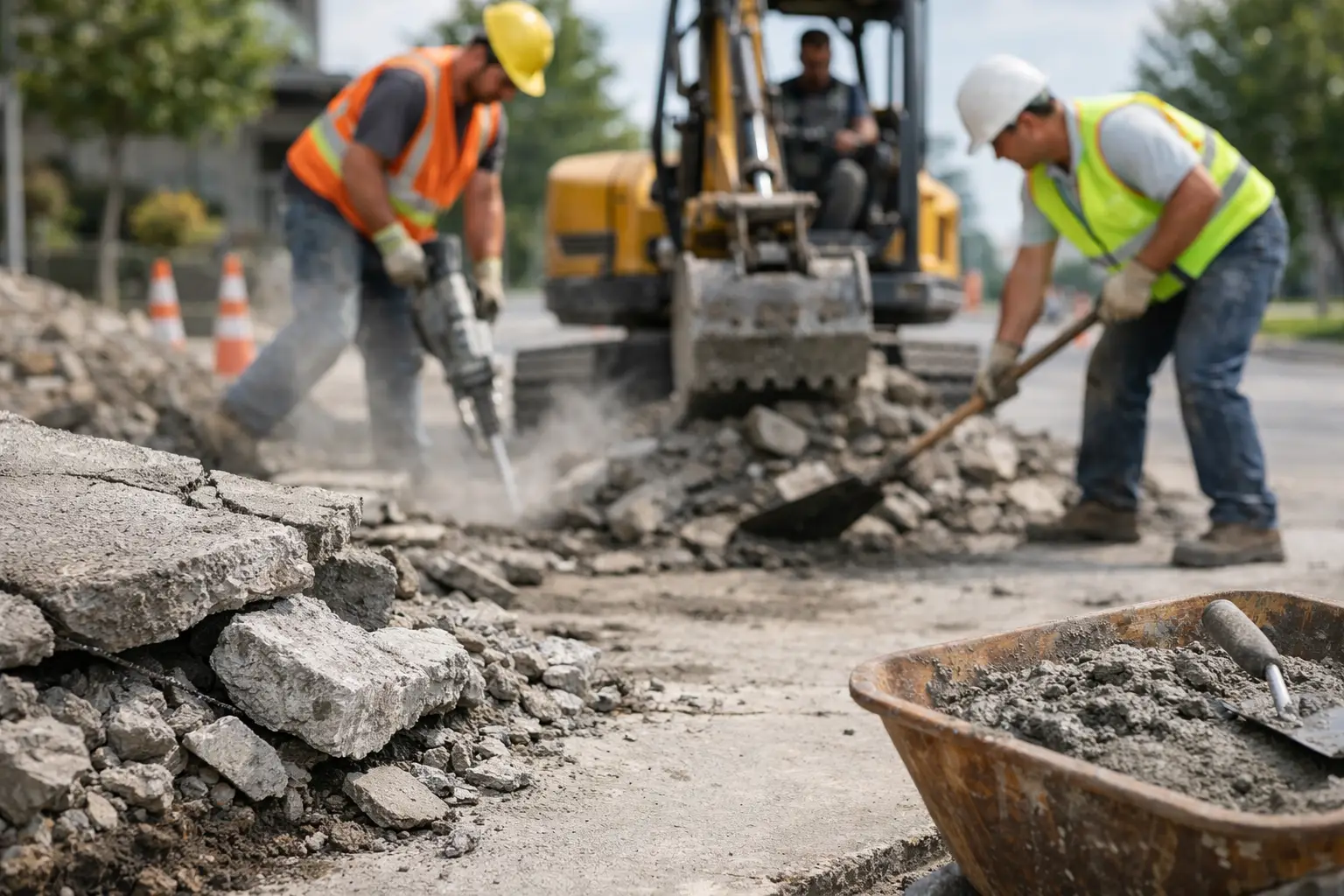
A few small cracks in a driveway do not always mean the whole slab is done. But there comes a point where patching stops being practical, and replacement becomes the smarter move. If you are asking when should concrete be replaced, the real answer depends on structural condition, safety, drainage, and whether repairs will actually hold.
Concrete is durable, but it does not last forever. Weather, soil movement, water intrusion, tree roots, heavy loads, and poor installation can all shorten its life. Some surfaces can be repaired and kept in service for years. Others keep failing because the problem is deeper than the visible damage.
When should concrete be replaced instead of repaired?
The line between repair and replacement usually comes down to scale and cause. If damage is isolated and the slab is still stable, a repair may be enough. If the slab is moving, sinking, breaking apart, or creating a safety issue, replacement is often the better investment.
Hairline shrinkage cracks are common and not always a major concern. Surface discoloration, minor chipping, or a few small cracks can sometimes be handled without tearing everything out. The issue changes when cracks widen, sections shift out of plane, or water starts working under the slab.
A good rule of thumb is this: if the concrete still has a sound base and the damage is mostly cosmetic, repair is worth considering. If the base has failed or the slab is no longer performing safely, replacement makes more sense.
Signs your concrete is past the repair stage
Large cracks are one of the clearest warnings. A single narrow crack may be manageable. Multiple wide cracks running across a driveway, patio, sidewalk, or slab usually point to movement below the surface. If one side of a crack sits higher than the other, that is not just a cosmetic issue. It often means settlement, heaving, or underlying instability.
Spalling is another sign to watch. This is when the top surface flakes, pits, or breaks away. Light surface wear can sometimes be corrected, but deep or widespread spalling often means the slab has taken enough damage that patching will not blend well or last long.
Sinking concrete is a bigger problem than many property owners realize. Sunken panels can create trip hazards, poor drainage, and stress on adjacent sections. In some cases, lifting methods may help. In others, especially when the settlement is severe or the soil conditions are poor, replacement is the cleaner and more durable fix.
Concrete that rocks, flexes, or sounds hollow in places should also be taken seriously. That can suggest voids under the slab or loss of base support. No surface patch will solve that.
Safety matters more than appearance
Ugly concrete is one thing. Unsafe concrete is another.
If a sidewalk, entry path, parking area, or patio has uneven sections that can catch a foot or wheel, the problem needs attention. This matters even more for rental properties, commercial sites, and high-traffic residential areas. Liability alone can make replacement the smarter decision.
Driveways deserve the same standard. Broken edges, major settlement, and severe cracking can affect vehicle access and create ongoing wear. For commercial properties, loading areas and walkways need to hold up under repeated use. A slab that is no longer safe or functional has already crossed the line from repair candidate to replacement candidate.
Drainage problems often mean bigger trouble
One of the most overlooked reasons to replace concrete is poor drainage. If water pools on the surface for long periods or runs back toward a house, garage, or building, the slab may be graded wrong or may have shifted over time.
That is not just a nuisance. Standing water speeds up surface wear, seeps into cracks, and can contribute to foundation and soil issues nearby. In North Texas and surrounding areas, shifting soils can make drainage mistakes more serious over time. A patch does not fix bad pitch. If the slab no longer drains correctly, replacement may be the only way to restore proper slope and protect the property.
Age matters, but condition matters more
People often want a number. How many years should concrete last before it needs replacement?
There is no universal answer. Well-installed residential concrete can last decades. Commercial concrete under heavier traffic may wear faster. Climate, usage, soil conditions, reinforcement, thickness, and maintenance all affect lifespan.
An older slab is not automatically a failed slab. Some old concrete is still performing well because it was installed on a solid base and drains properly. On the other hand, a newer slab can fail early if the subgrade was poorly prepared or the concrete was not placed and cured correctly.
That is why age alone should not drive the decision. Condition tells the real story.
When repair still makes sense
Not every damaged slab needs replacement. If the concrete is structurally sound and the issue is limited, repair can be the practical move.
Minor crack filling, joint repair, localized patching, or surface treatment may help extend the life of a slab that still has a good foundation. Small isolated chips at the edge of a patio or a few non-moving cracks in a walkway may not justify the cost of full replacement.
The trade-off is longevity and appearance. Repairs can solve specific problems, but they do not turn old concrete into new concrete. Color and texture may not match perfectly. And if the slab has broad wear across the entire surface, spot repairs can start to feel like temporary fixes on a bigger issue.
Replacement is often cheaper in the long run
This is where many property owners get stuck. Repair usually costs less upfront. But that does not always make it cheaper overall.
If a slab has repeated cracking, settlement, drainage failure, or widespread surface breakdown, ongoing patchwork adds up. You pay for one repair, then another, then a larger correction later. At some point, replacement stops being the expensive option and starts being the efficient one.
A new slab also gives you a fresh start on the things that actually matter: proper base prep, correct thickness, reinforcement where needed, clean finish work, and drainage that works. That is especially important for driveways, commercial flatwork, sidewalks, and patios that see regular use.
What a contractor should evaluate
Before deciding, the slab should be evaluated as a system, not just as a surface. The visible damage is only part of the picture.
A solid assessment should look at crack pattern, width, and movement. It should also consider settlement, base condition, drainage, load demands, nearby root intrusion, edge breakdown, and whether adjacent concrete is affected. If the slab connects to structures, transitions, or other hardscape, those relationships matter too.
This is why a quick surface patch recommendation is not always enough. The right decision comes from understanding why the concrete failed in the first place.
When should concrete be replaced on specific surfaces?
Driveways should usually be replaced when cracks are widespread, panels are settling, edges are crumbling, or the slab no longer supports vehicles without further breakdown. For patios, replacement is often the better route when the surface is badly uneven, drainage is poor, or patching would leave a mismatched and short-lived result.
Sidewalks should be replaced when trip hazards are present or when multiple sections have shifted. Slabs for shops, pads, and commercial areas need replacement when structural performance is compromised, not just when the surface looks rough.
Different surfaces fail in different ways, but the same principle applies across all of them: if the concrete cannot do its job safely and consistently, replacement should be on the table.
The practical way to make the call
If you are unsure, do not focus only on the crack you can see today. Look at the pattern. Has the damage spread? Is the slab moving? Does water sit where it should drain? Are repairs becoming routine instead of occasional?
That is usually how the decision becomes clear. Concrete should be replaced when the damage is no longer isolated, when safety or drainage is compromised, or when repair costs are starting to protect a slab that has already reached the end of its useful life.
A well-built replacement is not just about appearance. It gives you a surface that works the way it should, holds up better, and removes the uncertainty that comes with trying to save failing concrete. If you are weighing repair against replacement, the best next step is to judge the cause of the damage, not just the cost of the patch.

