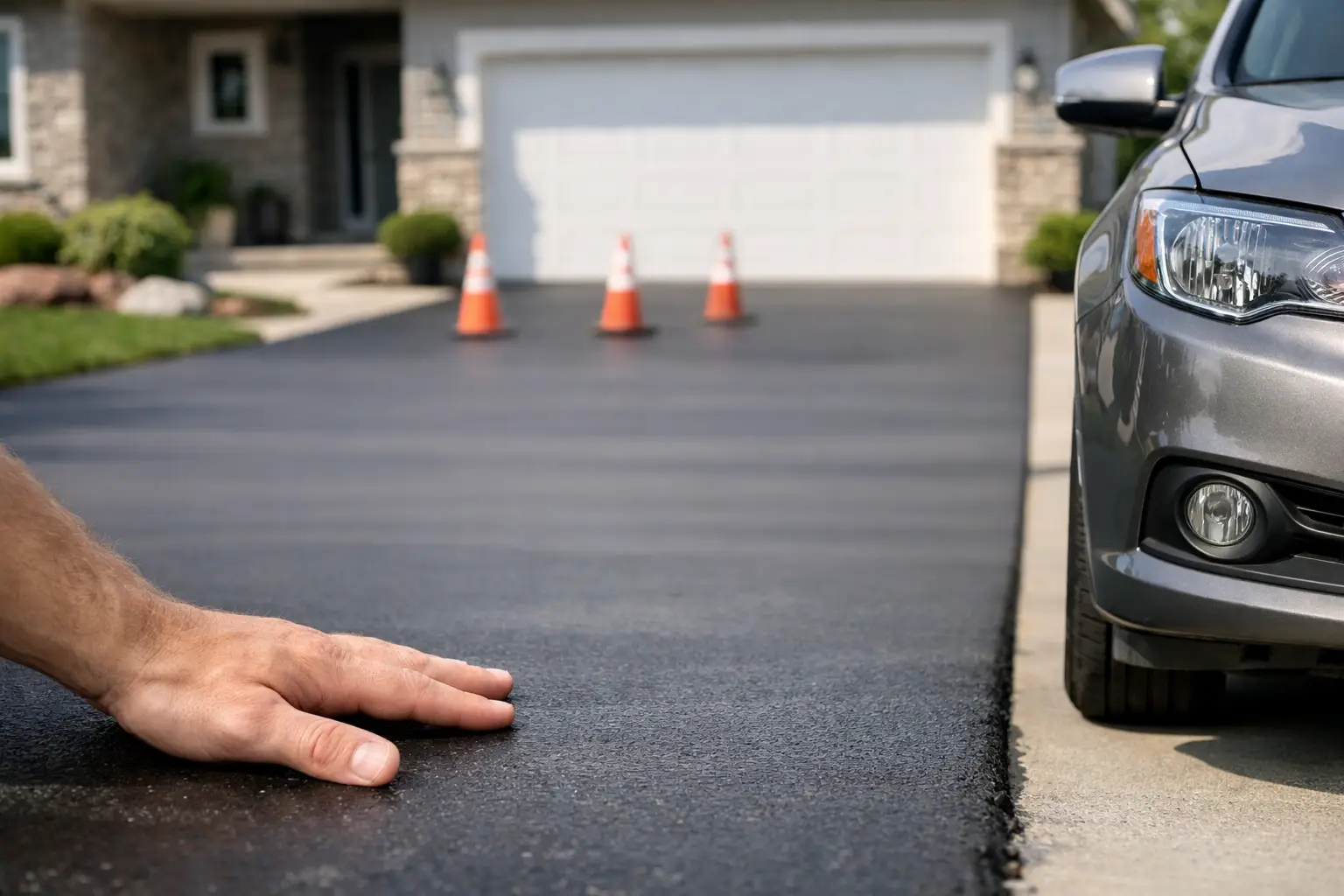
Fresh concrete can look finished in a day or two, but that does not mean it is ready for a vehicle. If you are asking when can you park on new driveway concrete, the short answer is usually about 7 days for passenger vehicles, and longer for heavier trucks or anything with concentrated weight. The real answer depends on thickness, weather, mix design, and how the slab was installed.
That gap between looking done and being ready matters. Park too soon and you can leave tire marks, create surface damage, or put stress on concrete that has not built enough strength yet. A driveway is supposed to hold up for years. It makes no sense to rush the last few days and risk the whole job.
When can you park on new driveway concrete?
For most standard residential driveways, foot traffic is usually fine after 24 to 48 hours. Passenger cars are often safe after 7 days. Heavier vehicles, loaded trucks, trailers, dumpsters, and equipment should usually wait 14 to 28 days unless your contractor gives you a different timeline.
Concrete does not dry into strength overnight. It cures over time as hydration continues inside the slab. That is why you may hear two different answers that both sound reasonable. One person says, "It was poured last week, go ahead." Another says, "Wait 28 days." Both are pointing to the same fact - concrete keeps gaining strength for weeks, with 28 days being the standard benchmark for full design strength.
If you want the safest simple rule, wait at least 7 days before parking a normal car on a new driveway, and ask the installer before putting anything heavier on it.
Why cure time is not the same as dry time
A lot of homeowners hear "let it dry" and assume the job is ready once the surface no longer looks wet. Concrete does not work like paint. It hardens through a chemical reaction between cement and water. That process takes time, and it continues below the surface even when the top looks complete.
This is why a driveway can be firm enough to walk on but still too green for a vehicle. Shoes spread out light weight. Tires do not. A parked car can put repeated pressure in the same spots, especially where the vehicle turns, brakes, or sits for hours in hot weather.
Surface appearance can also fool you. New concrete often lightens in color as it cures, but color change is not a reliable sign that it has enough strength for traffic.
What changes the waiting time
No two driveway pours cure at exactly the same rate. A few factors can speed things up or slow them down.
Thickness of the slab
A standard residential driveway is often 4 inches thick, with 5 or 6 inches used in areas that need more strength. Thicker concrete can handle more load when properly built, but it still needs cure time. Thickness helps long-term performance more than it shortens the waiting period.
Concrete mix and strength rating
Some mixes are designed for faster early strength gain. Others are more standard and need the usual timeline. If your contractor used a higher-strength mix or approved additives, they may clear the driveway sooner. If not, expect the normal wait.
Weather conditions
Hot weather can make the surface seem ready fast, but that does not always mean better curing. In North Texas and nearby markets, summer heat can dry the top too quickly if the slab is not cured properly. That can lead to shrinkage issues or a weaker surface.
Cold weather slows curing. If temperatures drop too much, the driveway may need a longer protection period before vehicle traffic. Rain can also complicate early curing, especially if it hits at the wrong time during finishing or the first stages of set.
Base preparation and reinforcement
A driveway is only as good as what is underneath it. Proper grading, compaction, and base prep matter. So do reinforcement choices when they are part of the design. A slab placed over weak support may be more vulnerable to early stress, even if the concrete itself is curing on schedule.
Type of vehicle
A compact sedan is not the same as a work truck. An SUV is not the same as a loaded trailer. Heavier vehicles create more stress, and some vehicles concentrate weight in smaller contact areas. If you drive a pickup, delivery van, or large SUV, it is worth being more cautious.
The biggest mistake: turning wheels on young concrete
Parking too early is one problem. Twisting tires on new concrete is another. Even when a slab is technically ready for a vehicle, aggressive turning can scuff the surface, especially during the early cure period.
This often happens when someone backs out with the wheel cranked hard, or turns in place while entering the driveway. The driveway may support the weight, but the surface is still young enough to mark or abrade under that motion.
If you do use the driveway after the recommended wait, keep steering smooth and avoid sharp pivoting for a while longer. Straight in and straight out is better than scrubbing the tires across the slab.
How to protect a new driveway during the first month
The first week is the most sensitive period, but the first month still matters. Concrete is building toward its intended strength during that whole window.
Keep heavy vehicles off the slab unless your contractor says otherwise. Avoid placing dumpsters, pallets of material, lifts, or similar loads on it. If you are planning landscaping, fencing, roofing, or another project right after the driveway pour, coordinate the schedule so crews do not use the new concrete as a staging area.
It is also smart to stay off edges with vehicle weight. Driveway edges are more vulnerable than the middle, especially if the surrounding soil has not been backfilled and compacted properly yet. Parking with one tire near the edge too soon can create cracking or breakage where support is weakest.
If your contractor gave curing instructions, follow them exactly. That may include keeping the slab moist, leaving cure-and-seal products undisturbed, or staying off specific sections longer than others.
When can you park on new driveway if it is hot outside?
Hot weather changes the feel of curing, not the basic rules. In warm conditions, concrete may set faster and be ready for foot traffic sooner, but that does not mean it can take a vehicle earlier than normal. Fast surface set can actually create a false sense of security.
In Texas and Oklahoma heat, the bigger concern is moisture loss and surface stress. If the slab dries too quickly on top, the surface can become more prone to cosmetic issues or reduced durability. That is one reason professional curing practices matter so much in summer pours.
If your driveway was poured during very hot weather, treat the 7-day vehicle guideline as a minimum, not a target to beat.
Signs you should wait longer
Sometimes the right answer is simply to be patient. If the concrete still looks blotchy and dark in places, if weather has been poor, or if your contractor specifically told you to hold off, listen to that advice.
You should also wait longer if the driveway will be used by moving trucks, delivery trucks, work vans, or anything towing a trailer. The cost of waiting a few more days is minor. The cost of damaging a brand-new driveway is not.
If you are unsure, ask the installer one direct question: "Is it ready for my specific vehicle?" That gets a better answer than asking for a generic cure time.
What happens if you park too soon?
The damage is not always dramatic right away. Sometimes it shows up as tire impressions, scuffing, or surface flaking. Sometimes the slab takes stress that affects long-term durability instead of creating an obvious immediate failure.
Early loading can also contribute to cracking if the concrete was still gaining strength or if the subgrade had any weak spots. Once that damage is in the slab, there is no easy fix that makes it brand new again.
That is why good contractors are conservative about access. The goal is not just getting through the pour. The goal is delivering a driveway that performs the way it should.
The practical rule most property owners can use
If you want one straightforward answer, here it is. Walk on it after 24 to 48 hours if your contractor says it is okay. Wait about 7 days for a normal passenger car. Wait 14 to 28 days for heavier vehicles or anything with higher wheel loads.
That rule will fit most new concrete driveways, but it is still not a substitute for job-specific guidance. Mix design, site conditions, slab thickness, reinforcement, weather, and curing method all matter.
A new driveway is one of those projects where the final step is doing less, not more. Give it the time it needs, use it carefully at first, and you will get a lot more value out of the concrete you just paid for.
A few extra days of patience is usually the cheapest insurance you can buy for a brand-new driveway.

