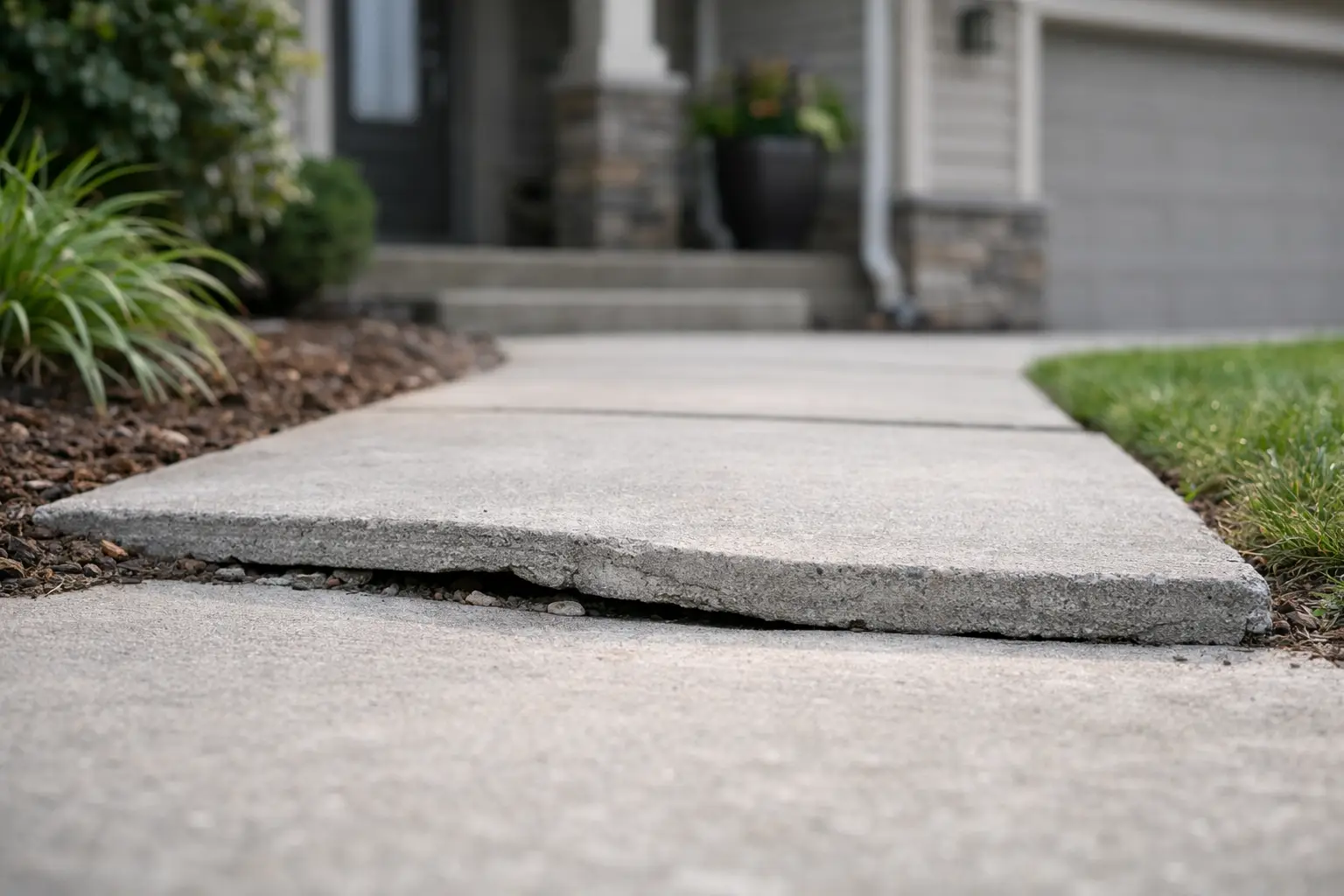
A concrete slab usually does not sink all at once. It starts with a corner that sits a little lower than it used to, a section of sidewalk that catches water, or a driveway panel that turns into a trip hazard. If you are wondering what causes sunken concrete slabs, the short answer is loss of support under the slab. The real answer is usually a mix of soil movement, moisture problems, drainage issues, and how the slab was built in the first place.
Concrete is strong in compression, but it is only as reliable as the base beneath it. When the ground under a slab shifts, washes out, compresses, or shrinks, the concrete above can settle with it. That is why a slab can look solid on top while hiding a support problem underneath.
What causes sunken concrete slabs in the first place?
Most sunken slabs come back to one basic issue: the subgrade is no longer doing its job. A slab needs consistent, compacted support across the entire area. If part of that support disappears, the concrete starts to drop in that spot.
This can happen in a residential driveway, a backyard patio, a pool deck, a warehouse floor, or a commercial walkway. The exact cause depends on site conditions, weather exposure, age, and construction quality. In North Texas and nearby markets, long dry periods followed by heavy rain can make soil movement even more noticeable.
Poor soil compaction
One of the most common causes is poor compaction before the concrete was poured. If the soil or base material was not compacted properly, it may settle over time under the weight of the slab, vehicles, foot traffic, or equipment.
This problem does not always show up right away. A new slab can look fine for months or even years before the weak area underneath compresses enough to create visible settlement. That delayed failure is part of what makes sunken slabs frustrating. The concrete may not be the original problem at all.
Soil erosion under the slab
Water is another major reason slabs sink. If water flows under the concrete and carries away soil, it creates voids. Once enough support is gone, the slab starts to settle into the empty space.
Erosion often happens when downspouts discharge too close to the slab, sprinklers keep the area overly wet, plumbing leaks go unnoticed, or drainage directs runoff beneath paved surfaces. Sometimes the signs are obvious, like standing water or washed-out edges. Other times, the slab sinks before the water problem is easy to spot.
Expansive clay soil movement
In many parts of Texas, clay-heavy soil plays a big role. Expansive clay swells when it absorbs moisture and shrinks when it dries out. That repeated cycle puts stress on slabs and can cause uneven support.
A slab may lift during wetter periods and settle during drought. Over time, that movement can leave sections lower than others, especially if moisture levels are inconsistent around the slab. For example, one side may stay wetter because of runoff while the other side dries and shrinks. That uneven moisture balance leads to uneven slab behavior.
Water problems that lead to slab settlement
If you want to know what causes sunken concrete slabs more than anything else, look at water control. Water changes the soil, moves the soil, and exposes weak spots in the base.
Bad drainage around the slab
Improper drainage is a frequent cause of settlement. If the ground slopes toward the slab instead of away from it, water collects where it should not. That repeated saturation can soften the subgrade and reduce its load-bearing ability.
Drainage problems can come from grading mistakes, clogged drains, short downspouts, poor gutter performance, or landscape changes made after the slab was installed. A patio that was fine for years can start sinking after surrounding beds are raised or runoff patterns shift.
Plumbing leaks and hidden moisture
In some cases, underground leaks contribute to slab movement. A leaking line can slowly saturate the soil, causing erosion or weakening the base. This is more likely around structures or utility-served areas, but it can affect exterior slabs too.
The tricky part is that the concrete symptom shows up before the moisture source is confirmed. If a slab keeps moving after repair, an active water issue may still be in play.
Construction factors that make sinking more likely
Not every sunken slab is caused by age or weather alone. Sometimes the original installation left little room for long-term stability.
Weak base preparation
A slab needs more than wet concrete poured on dirt. It needs the right excavation, a stable base, proper compaction, and site-specific prep based on use and soil conditions. If any of that was skipped or rushed, settlement becomes more likely.
This matters even more for slabs carrying vehicles or regular commercial traffic. A walkway and a driveway do not need the same support. A one-size-fits-all approach to base prep often shows up later as sinking, cracking, or both.
Thin concrete or poor reinforcement
Thin concrete and weak reinforcement do not usually cause settlement by themselves, but they make the results worse when support is lost. A stronger slab may bridge a small void for a while. A weaker slab tends to crack, tilt, or break sooner.
That is why two slabs on similar soil can fail differently. One may settle slightly and remain usable. Another may drop fast and become a safety issue.
Signs the slab is sinking and not just cracking
A crack alone does not always mean the slab is sinking. Concrete cracks for several reasons, including shrinkage and normal movement. What points more clearly to settlement is a change in elevation.
You may notice one section lower than the next, pooling water where it never used to sit, gaps forming under slab edges, steps becoming uneven, or doors and gates nearby no longer lining up the same way. Trip hazards along sidewalks and driveways are another common clue.
If the slab feels hollow in spots or you can see soil missing beneath the edge, that strongly suggests erosion or voids. The more those conditions are ignored, the more likely the slab is to continue moving.
Can tree roots cause a sunken slab?
Sometimes, but not as often as people think. Tree roots are more likely to lift concrete than cause it to sink directly. The bigger issue is how trees affect soil moisture.
Large roots can draw significant moisture from clay soil, causing shrinkage in the surrounding ground during dry conditions. That shrinkage can reduce support beneath part of a slab. So while the root itself may not be pulling the slab down, the moisture imbalance around the root zone can contribute to settlement.
This is one of those situations where it depends. Near mature trees, both lifting and sinking are possible, sometimes in the same slab over time.
What causes sunken concrete slabs to get worse?
Once a slab has lost support, it rarely fixes itself. Water keeps finding the low point. Traffic keeps stressing the weak area. Small voids become larger ones. A minor height difference turns into a bigger separation.
That is why early action matters. A slightly settled panel may still be repairable without full replacement, but a badly broken slab with ongoing drainage issues often needs a more involved solution. The right approach depends on how much movement has happened, why it happened, and whether the concrete is still structurally worth saving.
Repair depends on the cause, not just the symptom
The mistake many property owners make is focusing only on the visible drop. Lifting a slab without dealing with drainage, erosion, or unstable soil can lead to repeat problems.
Some slabs can be raised if the concrete is in good condition and the underlying issue is addressed. Others need replacement because the slab is too cracked, too thin, or too compromised to perform well long term. There is no honest one-answer fix for every sinking slab.
A good evaluation looks at the slab condition, surrounding grade, water patterns, base failure, and site use. A residential patio may allow more repair flexibility than a commercial walkway with liability concerns or a driveway carrying heavier loads.
For property owners, the practical question is not just why the slab sank. It is whether the cause is still active. If water is still washing soil away or moisture swings are still extreme, the slab is likely to keep moving no matter how level it looks right after a quick patch.
Sunken concrete usually starts below the surface, long before the problem becomes obvious on top. Catching it early gives you more repair options, lower risk, and a better chance of fixing the real issue instead of just covering up the result. If a slab has started to settle, the smartest next step is to look under the problem, not just at it.

