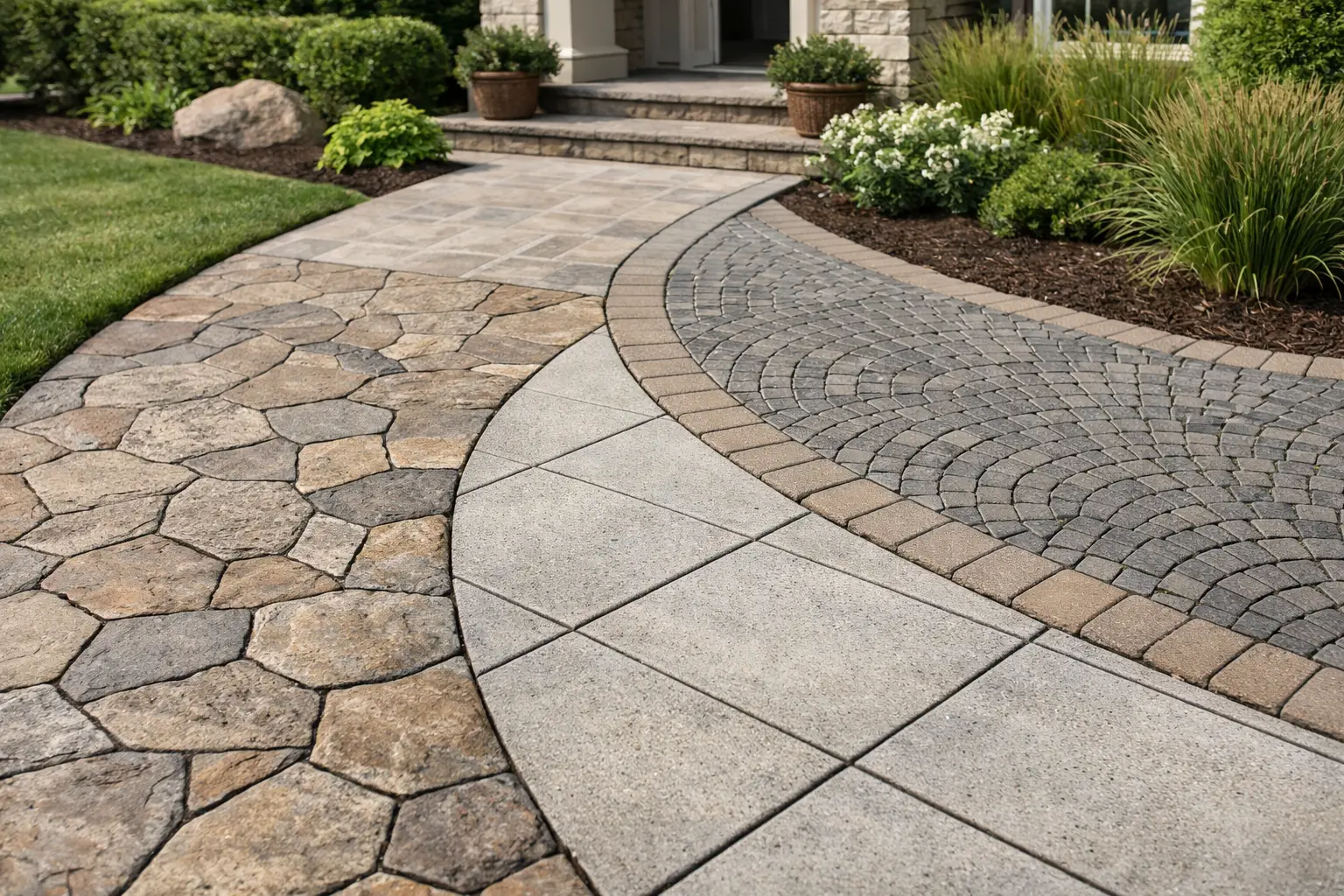
A walkway does more than connect a driveway, porch, gate, or patio. It directs foot traffic, affects drainage, and creates one of the first finished surfaces people notice. The top concrete walkway patterns balance appearance with traction, durability, and a layout that fits the property instead of competing with it.
For North Texas homes and commercial sites, that balance matters. High summer heat, sudden heavy rain, shifting clay soils, and regular foot traffic can expose shortcuts quickly. A good pattern is only part of the job. Proper base preparation, reinforcement, joint placement, slope, and curing determine whether the walkway still looks right years after installation.
Top Concrete Walkway Patterns That Work Hard
Broom-finished concrete
A broom finish is one of the most dependable choices for a residential sidewalk, front entry path, pool-adjacent route, or commercial access walk. After the concrete is placed and leveled, a broom is pulled across the surface to create fine, consistent texture.
The result is clean, practical, and slip-resistant without looking overly industrial. It works especially well when the goal is a simple walkway that complements brick, stone, siding, or landscaping rather than becoming the main visual feature.
The trade-off is that a standard broom finish offers limited decorative detail. Homeowners looking for a more custom appearance can add saw-cut control joints, a contrasting border, or integral color while keeping the safe texture that makes broom-finished concrete a smart choice.
Scored or saw-cut geometric patterns
Scored concrete gives a walkway a more deliberate, finished layout without the cost and maintenance concerns of separate pavers. Straight or angled lines can create squares, rectangles, running-bond sections, or larger panels that fit the architecture of the property.
This pattern works well for front walks where a plain slab feels too basic but an elaborate stamped surface would be out of place. A scored design can also visually widen a narrow path or break up a long stretch of concrete between the driveway and front door.
There is an important distinction between decorative scoring and control joints. Concrete needs properly planned joints to manage shrinkage cracking. Decorative lines should be designed around the joint layout, not used as a substitute for it. When those two elements are coordinated correctly, the walkway has a cleaner appearance and cracks are more likely to occur where they are less noticeable.
Stamped concrete patterns
Stamped concrete can give a walkway the appearance of natural stone, flagstone, slate, brick, wood planks, or tile while retaining the strength of a continuous concrete slab. For properties with a large patio, outdoor kitchen, or decorative entry, stamping can tie the walkway into the rest of the hardscape.
Stone and slate patterns are common choices because they provide variation without requiring the exact repetition of a brick layout. A light base color with a darker release color can add depth, while a simpler single-color approach keeps the surface more understated.
Stamped concrete needs thoughtful selection. Deeply textured patterns may be less comfortable for wheeled carts, strollers, or mobility devices. Some high-gloss sealers can also become slick when wet, so the sealer and traction level should match the location. A stamped path is a strong option for visual impact, but it should not override safe, comfortable use.
Exposed aggregate
Exposed aggregate reveals small stones within the concrete surface after the top layer of cement paste is removed. The finish has natural texture, visual depth, and excellent traction, making it a good fit for garden paths, side yards, pool routes, and contemporary exterior designs.
Because the aggregate becomes part of the visible surface, color selection matters. Warm-toned aggregate can complement tan brick and natural stone, while gray or black blends suit cleaner, modern exteriors. The finished look is more textured than a broom finish but less formal than a stamped pattern.
This option does require a contractor who can control the timing of the surface exposure. Remove material too soon and aggregate can loosen. Wait too long and the finish may look uneven. It is a durable pattern when installed correctly, but it is not the right place to cut corners.
Salt-finished concrete
A salt finish creates small, shallow pits across the surface. Rock salt is pressed into fresh concrete and later washed away, leaving a subtle, organic texture. It is often used near pools, patios, and informal outdoor walkways because it adds grip without the sharp texture of exposed aggregate.
For a walkway, salt finish works best when the surface is poured and finished carefully. The pits should look evenly distributed rather than random or overly deep. It is usually a better fit for casual outdoor spaces than a formal front-entry route, although the final result depends on the surrounding design.
Borders and mixed-finish walkways
Some of the best walkway designs use more than one finish without overdoing the decoration. A broom-finished field with a smooth or colored border can frame a front walk neatly. A stamped border around a simpler center section can add curb appeal while keeping the main travel path easier to maintain.
Mixed finishes are also useful when a walkway needs to connect different outdoor areas. For example, a plain broom-finished side path can transition into a stamped patio border near the backyard. The pattern changes with the purpose of the space, but the concrete still feels connected.
Choose the Pattern Around How the Walkway Will Be Used
A front walkway should usually prioritize clean lines, drainage, and a surface that remains safe in rain. Broom finishes, light scoring, and restrained borders are often the strongest choices. They look appropriate with most home styles and do not demand constant attention.
A backyard garden path has more freedom. Exposed aggregate, salt finish, curved edges, and gentle color variation can suit a more relaxed landscape. Still, curves should have enough width for comfortable walking, and the path should not trap water against the house or in planting beds.
For commercial properties, durability and accessibility come first. The pattern must provide reliable traction and should not create unnecessary trip points or rough transitions. Decorative details can improve the entrance, but they need to work within the practical needs of customers, tenants, deliveries, and maintenance crews.
Pattern Is Only One Part of a Durable Walkway
A well-designed pattern cannot fix poor concrete installation. Before placement, the area needs stable preparation and a plan for water movement. A walkway should generally slope away from structures so rainwater does not collect near foundations or create a slick surface at an entry.
Thickness and reinforcement depend on the use of the walkway and site conditions. A pedestrian path does not need to be built like a driveway, but it still needs a properly prepared base and correct joint spacing. In Dallas-Fort Worth and surrounding areas, expansive clay soil can move significantly as moisture levels change. That makes preparation and drainage especially important.
Color should also be chosen with the Texas sun in mind. Dark surfaces can absorb more heat, which may make a barefoot pool path uncomfortable and can make a front walk feel hotter during summer afternoons. Lighter gray, tan, and earth-tone finishes often stay more comfortable while showing less dirt than bright white concrete.
Sealing can help protect decorative concrete from stains and weathering, particularly on stamped or colored work. But it is not a permanent fix. Sealers wear over time, and the surface should be cleaned and resealed when needed according to its exposure and use. A maintenance plan is part of choosing a decorative finish.
Make the Layout Match the Property
The walkway should feel naturally placed, not like a strip of concrete dropped into the yard. Straight runs fit formal entries and tight side yards. Curved routes can soften a large lawn or lead visitors through landscaping, but they need a clear destination and enough width to be useful.
Think about where people actually walk. If guests step from the driveway to the front door, the path should make that route obvious. If trash bins, lawn equipment, or a gate are part of the daily routine, the walkway should accommodate them without forcing people onto grass or around tight corners.
Fantastico Concrete approaches walkway work as functional flatwork first and a finished exterior feature second. The best result is a pattern that suits the property, a surface that is comfortable to use, and an installation built to handle real weather and real traffic.
A good walkway should not need to shout for attention. When the pattern, drainage, texture, and layout are handled correctly, it simply makes the property easier to use and better to approach every day.

