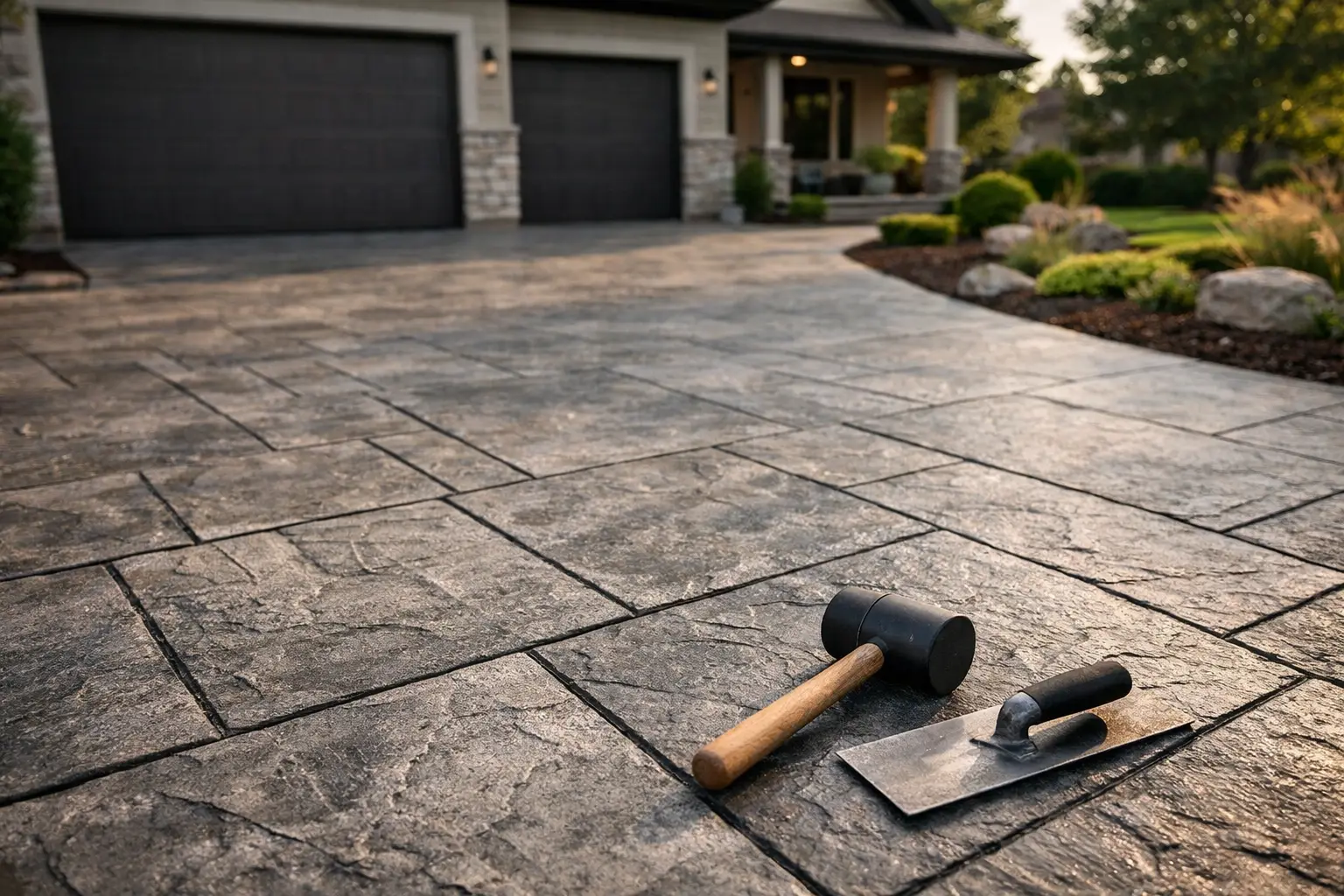
A driveway has to do more than look good from the street. It carries daily vehicle traffic, handles runoff, and takes a beating from hot North Texas summers. This stamped concrete driveway review looks past the showroom appeal to answer the practical question: is a decorative concrete driveway a smart investment for your property?
Stamped concrete can deliver the upscale look of stone, brick, slate, or tile without installing individual pavers. When the concrete is properly placed, reinforced, finished, colored, and sealed, it creates a continuous surface with strong curb appeal. But it is still concrete. The quality of the base, drainage, control joints, installation, and long-term care will determine whether it performs well over time.
What You Are Actually Getting With Stamped Concrete
Stamped concrete starts as a standard concrete slab. While the surface is still workable, a contractor applies color hardener or integral color, release agents, and textured stamping mats to create a pattern. After curing, the surface is cleaned and sealed to deepen the color and help protect it from moisture, stains, and wear.
The result can resemble materials that cost more to install individually. Ashlar slate, flagstone, brick, and wood-plank patterns are common choices. Borders can be added in a contrasting color or pattern to frame the driveway and tie it into a patio, walkway, or front entry.
That visual flexibility is the main reason homeowners choose stamped concrete. A plain gray driveway is functional, but a stamped finish can make the front of a home feel more finished without changing the driveway layout itself.
Stamped Concrete Driveway Review: The Real Advantages
A stamped driveway offers a clean, continuous surface. Unlike pavers, there are no individual units that can shift, loosen, or develop weed-filled joints. That makes it especially appealing for homeowners who want a decorative hardscape with less joint maintenance.
It also works well when curb appeal matters. For a home being prepared for sale, a rental property receiving an exterior upgrade, or a custom home needing a driveway that matches the architecture, stamped concrete creates a more intentional first impression than basic broom-finished concrete.
Another advantage is design control. You can select the pattern, base color, accent color, border treatment, and layout. A light stone-style pattern may suit a traditional home, while darker slate tones and cleaner border lines can fit a more modern exterior. The right design should complement the house, not compete with it.
From a structural standpoint, a stamped driveway can be every bit as capable as conventional concrete when it is designed and installed for the expected use. Proper thickness, reinforcement where appropriate, sound subgrade preparation, and drainage planning matter much more than the decorative pattern on top.
The Trade-Offs Homeowners Should Know
Stamped concrete is not the cheapest driveway option. It costs more than plain concrete because the job requires added labor, materials, timing, and finishing skill. Intricate patterns, multiple colors, borders, and difficult site access can increase the price further.
It also needs periodic resealing. In the Dallas-Fort Worth area and across North Texas, intense sun, vehicle traffic, rain, and temperature swings gradually wear down the sealer. Most driveways benefit from resealing every few years, though the schedule depends on exposure, traffic, and the products used. Skipping this maintenance can leave the color looking faded and make stains harder to remove.
Texture deserves careful consideration as well. A deep stamp pattern can improve traction, but high-gloss sealer or a slick surface treatment can become slippery when wet. A qualified contractor can recommend a sealer and non-slip additive that protect the finish without turning the driveway into an ice-rink effect during rain.
Finally, repairs are possible but not always invisible. If a section cracks, settles, or must be removed for underground utility work, matching the existing pattern and aged color can be difficult. A skilled repair may blend well from a distance, but a patch can still be noticeable up close. This is one area where individual pavers have an advantage because a damaged unit can often be replaced more discreetly.
Durability Depends on What Happens Below the Surface
The most attractive stamped driveway will not hold up if the foundation beneath it is poorly prepared. Weak or improperly compacted soil can lead to settlement. Water that drains under or along the slab can wash out supporting material. A driveway that is too thin for trucks, trailers, or frequent heavy loads can crack prematurely.
Before installation, the contractor should evaluate the existing site conditions. That includes removing unstable material, establishing the proper grade, compacting the base, planning drainage, and setting forms to produce the needed thickness and slope. On many residential driveways, details such as transitions to the garage, sidewalks, streets, and gates need attention so water moves away from the structure and vehicles do not bottom out.
Control joints are another necessary part of the job. Concrete shrinks as it cures, and joints encourage cracking to occur in planned locations. Stamped concrete still needs those joints. A contractor can place them thoughtfully within the pattern, but no honest stamped concrete driveway review should promise a completely crack-free slab. Concrete can crack. The goal is to reduce the risk and control where cracks are most likely to appear.
Is Stamped Concrete Right for Your Driveway?
Stamped concrete is a strong fit for homeowners who want a decorative, permanent driveway surface and are prepared to maintain the sealer. It makes particular sense when the driveway is highly visible, the home already has stone or masonry details, or the property needs a more polished entry without the separate pieces and joints of pavers.
It may be less suitable if your main priority is the lowest upfront cost. Plain broom-finished concrete is usually the more economical choice and remains a dependable option when installed correctly. It may also be worth reconsidering a heavily textured or dark design if the driveway gets constant direct sun, collects a lot of dust, or sees frequent heavy work trucks.
For commercial properties, the question is more specific. Decorative stamped concrete can work well at entries, drop-off areas, walkways, and low-speed feature zones. A high-traffic loading area or a route used by heavy equipment usually calls for a more utilitarian surface design built around load requirements first.
Choosing a Pattern and Color That Will Age Well
The best stamped concrete designs are usually restrained. A pattern should add texture and character without looking overly busy across a large driveway. Large stone or slate patterns often read better at driveway scale than small, repetitive textures.
Color selection should account for the home, roof, landscaping, and sunlight. Mid-tone earth colors tend to hide dirt and tire marks better than very light finishes. Extremely dark colors can absorb more heat and may show dust, scratches, and fading more clearly. A subtle base color with a darker release color often creates depth without making the driveway look artificial.
Ask to see physical samples when possible. Color charts help narrow options, but actual stamped concrete can look different depending on lighting, sealer sheen, texture, and surrounding materials. A small test area can be valuable for a custom project.
Questions to Ask Before You Approve the Work
A good contractor should be able to explain the driveway thickness, base preparation, reinforcement approach, drainage plan, joint layout, stamp pattern, color system, and sealer type in straightforward terms. If the driveway will carry an RV, work truck, trailer, or frequent deliveries, say so before the estimate is prepared.
Also ask how the existing driveway will be removed, where concrete trucks and equipment will access the site, and how the new work will tie into the garage and street. These details affect both the price and the finished result. The lowest estimate is not always the best value if it leaves out excavation, base correction, drainage work, or proper finishing steps.
For North Texas properties, local experience matters. Expansive soils, heat, heavy rain, and neighborhood drainage conditions can all affect a concrete project. Fantastico Concrete approaches decorative driveway work with the same priorities as structural flatwork: stable preparation, correct placement, clean finishing, and a surface built for real use.
A stamped driveway should feel like an upgrade every time you pull in, not like a surface you have to worry about. Choose a design that fits the property, plan for routine resealing, and put the installation details ahead of the pattern. That is how decorative concrete earns its value long after the first impression.

