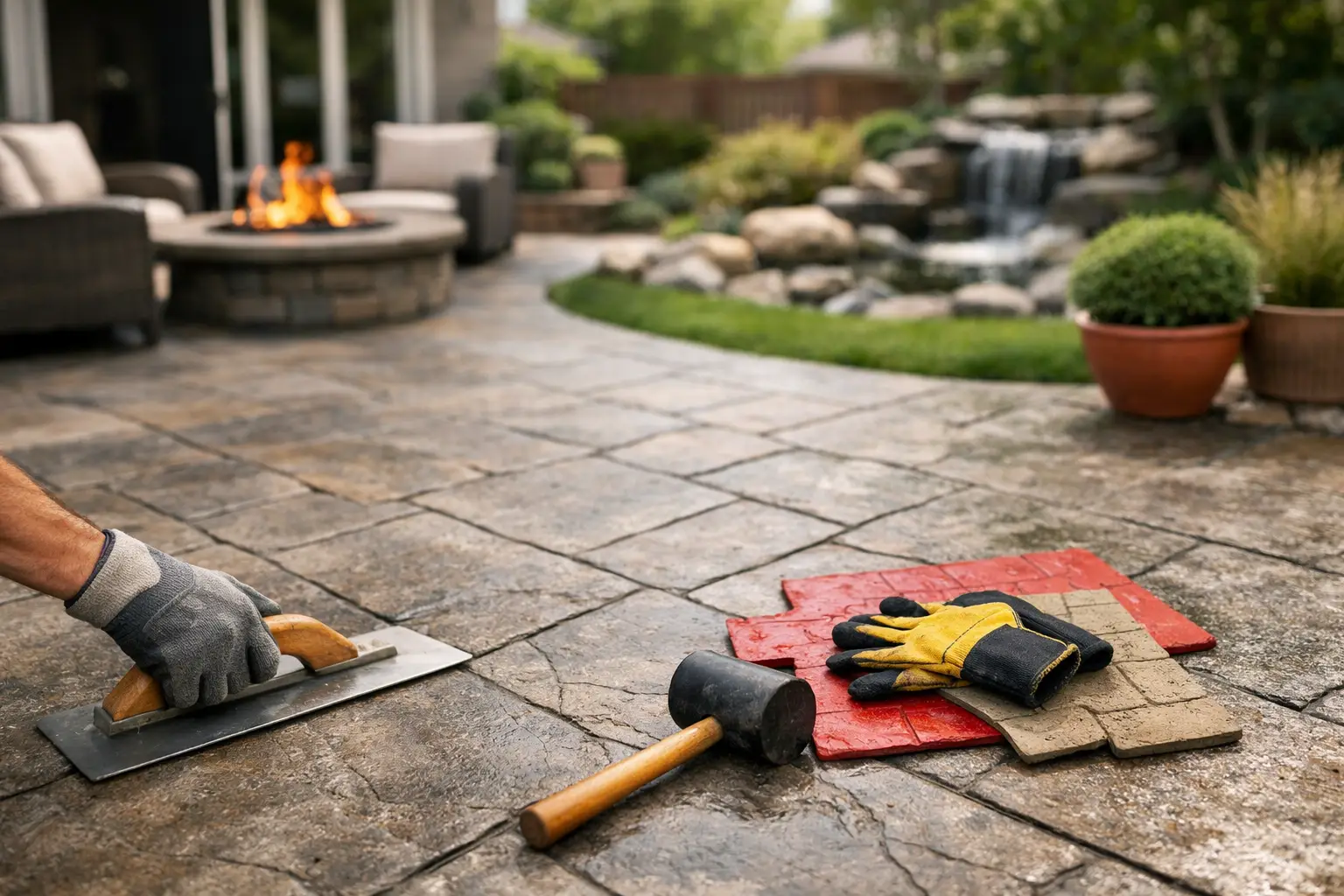
A plain gray patio can do its job for decades, but it may not be the surface you want outside a front entry, pool, outdoor kitchen, or retail storefront. Stamped concrete gives property owners a way to create the visual character of stone, brick, slate, or wood while keeping the strength and continuous surface of concrete.
The finished look can be impressive, but stamped work is not simply standard concrete with a pattern pressed into it. The base, mix placement, timing, color application, joint layout, and sealer all affect the result. If one part is handled poorly, the surface can look artificial, wear unevenly, or develop avoidable cracking.
For homeowners and commercial property owners in North Texas, the right decision starts with understanding where stamped concrete makes sense and where a simpler finish may be the better investment.
What Is Stamped Concrete?
Stamped concrete is poured concrete that is colored, textured, and patterned while it is still workable. Contractors place flexible or rigid stamping mats into the surface to create a repeating texture. Common patterns resemble flagstone, ashlar slate, brick, travertine, cobblestone, and wood planks.
Color is usually created with a base color mixed into the concrete or applied as a color hardener. A secondary release color is often added before stamping to keep mats from sticking and to create darker, more natural-looking detail in the joints and low areas. Once the concrete has cured, the surface is cleaned and sealed.
The goal is not to make concrete indistinguishable from natural stone at arm's length. The goal is to create a durable decorative slab that complements the property, costs less than many individual paver or stone installations, and remains easier to keep free of weeds and shifting joints.
Where Stamped Concrete Works Best
Stamped concrete performs well in areas where a continuous, decorative hardscape is useful. Patios are the most common application because they benefit from a finished appearance without needing the heavy traffic performance of a commercial driveway. Front walks, porches, pool decks, courtyard spaces, and outdoor entertaining areas are also strong candidates.
Driveways can be stamped, but they require more planning. Vehicle loads, turning tires, oil drips, and daily sun exposure put more stress on a driveway than on a patio. A driveway needs the right slab thickness, a properly compacted base, reinforcement where appropriate, sound drainage, and control joints that are planned around the pattern. Decorative work cannot compensate for a weak base or poor water management.
For commercial properties, stamped concrete can improve an entry plaza, pedestrian walkway, courtyard, or designated gathering area. It is generally less practical for loading areas, heavy vehicle lanes, or surfaces that will see frequent forklift traffic. In those locations, durable plain concrete often makes better business sense.
The Surface Must Fit the Use
The pattern and sealer should match how the area will be used. A deeply textured pattern may look great around a landscape bed but be less comfortable for patio furniture, wheeled equipment, or people walking in dress shoes. Around pools and on sloped walkways, slip resistance deserves special attention. A contractor can select an appropriate texture and sealer additive, but no decorative finish should be treated as automatically slip-proof.
Cost Factors That Matter More Than Square Footage
Stamped concrete usually costs more than a standard broom-finished slab because it requires additional materials, labor, tools, and careful timing. The pattern itself is only one piece of the price.
A small patio with tight access may cost more per square foot than a large open area because crews still need to mobilize equipment, prepare the site, form the edges, place concrete, color it, stamp it, cut joints, and seal it. Demolition of an old patio, hauling debris, grading, drainage correction, steps, retaining edges, and complex curves can all change the project scope.
Color choices matter as well. A single integral color with a straightforward pattern is generally less involved than a multi-color finish with detailed borders and hand-applied accent work. Borders can make a patio look more intentional, but they add layout and labor.
The lowest quote is not always the lowest long-term cost. Ask what is included in site preparation, slab thickness, reinforcement, control joints, coloring, sealing, cleanup, and removal of existing concrete. A clear proposal protects both the property owner and the contractor from assumptions once work begins.
The Installation Details That Protect the Finish
Decorative concrete has to be built like concrete first. That means the ground below it matters as much as the pattern above it. Loose soil, poor compaction, tree roots, standing water, and drainage toward the house can lead to movement and cracking regardless of how attractive the surface looked on day one.
A qualified contractor starts by evaluating elevation, slope, access, and drainage. Water should move away from structures and should not collect at low points on the slab. In Dallas-Fort Worth and across Texas and Oklahoma, expansive clay soils can create movement challenges. Proper preparation and realistic joint placement are essential.
Control joints are especially important. Concrete naturally shrinks as it cures, so joints create planned locations for movement and help manage cracking. On stamped surfaces, joint locations should be coordinated with the pattern whenever possible. They may not disappear completely, but thoughtful layout makes them less visually distracting.
Weather also affects the work. Stamping has a limited timing window. High heat can cause concrete to set faster, while cold, rain, or wind can complicate finishing and curing. An experienced crew adjusts the schedule and methods to conditions instead of rushing decorative work because the calendar says it is time to pour.
What to Expect From Color and Pattern
Stamped concrete has natural variation. Release color, texture depth, hand work along edges, and changing light conditions all contribute to the final appearance. A sample panel or color chart is useful, but it is not a guarantee that every square foot will look identical.
This variation is often what keeps the surface from looking flat. Still, homeowners should be clear about their expectations before installation. If the goal is a uniform, solid-color driveway, a broom finish or exposed aggregate may be a better fit. If the goal is a stone-inspired patio with visual depth, variation is part of the appeal.
Color can also change over time. Strong Texas sun, weather, foot traffic, and missed maintenance can gradually dull the surface. Quality sealer helps protect and enrich color, but it is not permanent. Resealing is a normal ownership task, not a sign that the original installation failed.
How to Maintain Stamped Concrete
Stamped concrete is relatively low-maintenance, but it is not maintenance-free. Regular sweeping and rinsing prevent dirt, leaves, and grime from building up in textured areas. Clean spills quickly, especially oil, grease, fertilizer, and harsh chemicals that can stain or affect the sealer.
Avoid aggressive pressure washing at close range, particularly on an older sealed surface. It can strip sealer or leave uneven marks. Use a mild cleaner suited to concrete when needed, and test any product in an inconspicuous area first.
Resealing intervals depend on sun exposure, traffic, weather, and the type of sealer used. A sunny driveway may need attention sooner than a covered patio. Before resealing, the surface must be properly cleaned and allowed to dry. Applying fresh sealer over dirt, moisture, or failing sealer can create a cloudy or patchy appearance.
In winter, avoid deicing products that can damage concrete or affect its finish. Sand is often a safer choice for temporary traction. Keep heavy metal shovels and sharp tools from scraping the surface whenever possible.
When Another Finish Is the Better Choice
Stamped concrete is not the right answer for every project. A large utility slab, equipment pad, warehouse approach, or budget-focused driveway may be better served by a clean broom finish. It offers dependable traction, straightforward repairs, and a lower installation cost.
Pavers may be a better choice when future access to utilities is likely or when a property owner wants the ability to replace individual damaged units. Natural stone can be the right premium option when its specific texture and variation are central to the design. Each material has trade-offs in cost, maintenance, drainage, and long-term movement.
A good contractor should be willing to recommend a simpler surface when it fits the job better. Decorative concrete should solve a practical need and improve the property, not add expense where it provides little value.
The best stamped surface begins with a clear plan: choose a pattern that suits the property, prepare the ground correctly, manage water, and commit to basic care after the pour. Done with those priorities in place, it can give an ordinary outdoor area a finished, durable surface that feels built for the property rather than added as an afterthought.

