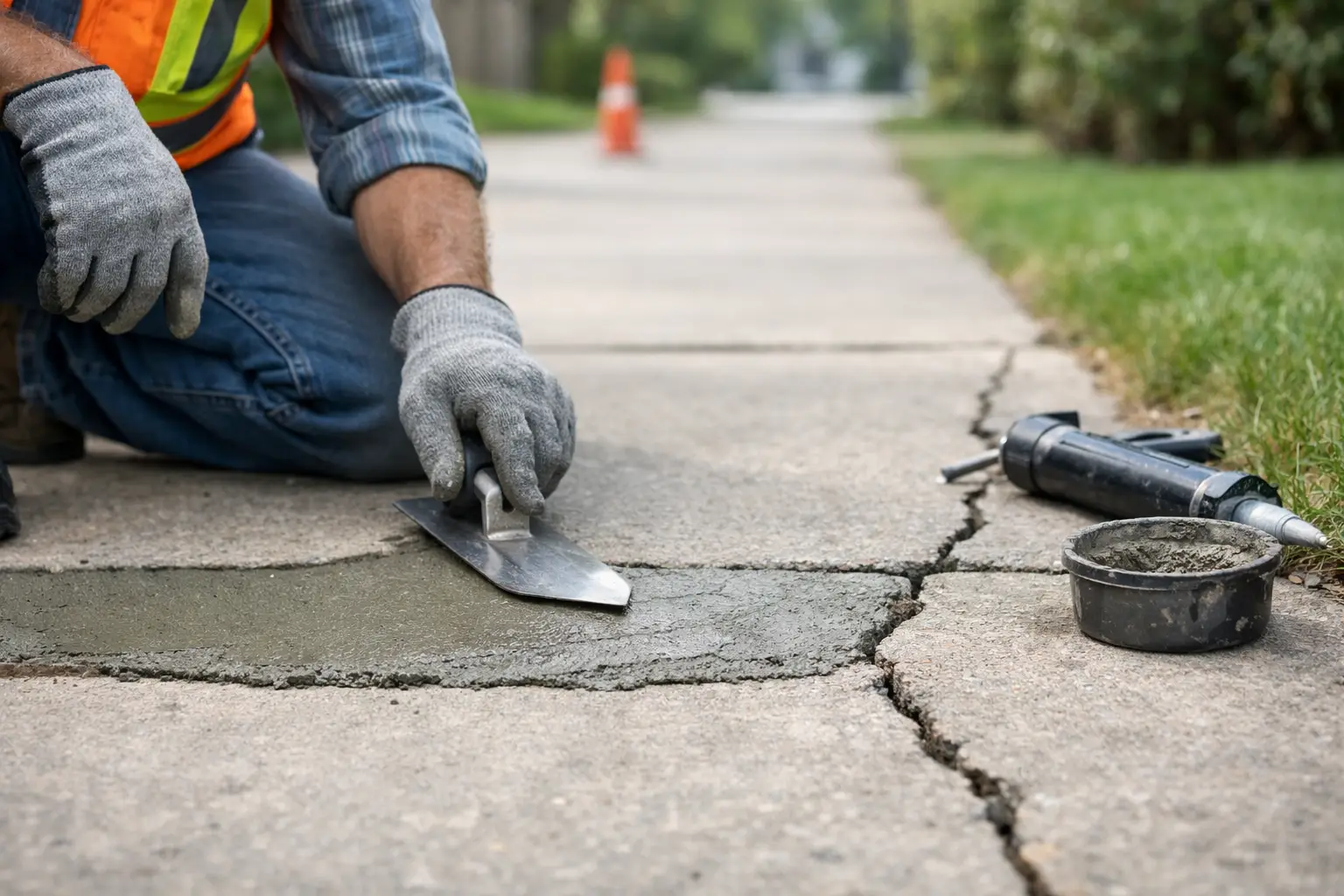
A small sidewalk crack rarely stays small for long. One season of heat, rain, foot traffic, and soil movement can turn a surface flaw into a trip hazard, drainage problem, or a section that needs full replacement. That is why sidewalk concrete repair should be handled based on the cause of the damage, not just the way it looks on the surface.
For homeowners, property managers, and commercial property owners, the real question is not whether the concrete looks rough. It is whether the sidewalk is still safe, stable, and worth repairing. Some sections can be restored with targeted work. Others are already failing underneath, and a cosmetic fix will not hold up.
What causes sidewalk concrete damage
Concrete sidewalks take more abuse than most people realize. They deal with constant sun exposure, shifting soil, heavy use, water runoff, and expansion and contraction through temperature swings. Over time, even well-installed concrete can start to show wear.
In North Texas and nearby areas, soil movement is often a major factor. Expansive clay soils can swell when wet and shrink during dry periods. That movement puts stress on sidewalk panels and can lead to cracking, settling, or uneven joints. Water also plays a big role. If drainage pushes runoff under the slab, the base can wash out and leave sections unsupported.
Tree roots are another common issue. A healthy tree may be good for the yard, but roots can lift sidewalk panels and create abrupt height changes. In other cases, the problem is age and plain wear. Surface scaling, edge breakdown, and repeated freeze-thaw exposure in colder periods can all shorten the life of a sidewalk.
When sidewalk concrete repair makes sense
Not every damaged sidewalk needs to be torn out. Repair is often a practical option when the concrete is structurally sound overall and the problem is limited to specific areas.
Hairline cracks, minor surface defects, small spalled areas, and isolated joint deterioration can often be repaired effectively. If one panel has settled slightly but the surrounding concrete is in good condition, leveling or localized replacement may solve the problem without redoing the entire run.
The key is knowing whether the damage is isolated or part of a broader failure. If multiple panels are cracking in the same pattern, if the slab is moving because of base failure, or if drainage is still pushing water where it should not go, simple patching may only buy a short amount of time.
When repair is the wrong move
There are cases where sidewalk concrete repair is not the best investment. If the sidewalk has widespread cracking, significant heaving, major settling, or severe surface deterioration, replacement usually makes more sense.
This is especially true when the base under the sidewalk has failed. Concrete is only as reliable as the support beneath it. If soil erosion, voids, or chronic moisture problems are causing movement, a surface repair will not fix the root issue. The same applies when a lifted sidewalk is being pushed by roots that will keep growing.
There is also the safety factor. If the sidewalk creates a clear trip hazard, accessibility issue, or liability concern, the repair approach needs to bring the surface back to proper, usable condition. A low-cost patch that still leaves uneven transitions is not much of a solution.
Common sidewalk repair methods
The right repair method depends on the type and severity of damage. There is no single fix that works for every sidewalk.
Crack filling can help seal narrow cracks and reduce water intrusion, but it does not restore structural strength to a badly failing panel. Surface patching can improve small damaged areas, especially where minor spalling or edge wear has started. This works best when the surrounding concrete is still solid and the repair material is matched and applied correctly.
Grinding is sometimes used to address slight height differences between panels. It can reduce trip hazards without replacing concrete, but only when the height change is minor and the slab itself is still stable. If the movement is ongoing, grinding only treats the symptom.
Lifting or leveling methods may be used when a panel has settled because of voids or poor support. This can restore elevation without full removal, but the slab must still be in decent condition. If it is badly cracked or weakened, lifting may not give a lasting result.
For more serious damage, partial replacement is often the smartest route. Removing and replacing one or several affected panels allows the contractor to correct the base, reset proper grades, and provide a cleaner long-term repair.
Why matching the repair to the cause matters
A lot of sidewalk repairs fail because they are chosen for speed instead of fit. A patch over active movement usually cracks again. A sealed crack over a drainage problem will reopen. A lifted section caused by roots may keep rising until the hazard returns.
Good repair work starts with diagnosis. Is the issue coming from soil movement, water, roots, age, poor original installation, or repeated loading? Once the cause is clear, the repair can be designed around it.
That may mean improving drainage before replacing a panel. It may mean removing root pressure where possible. It may mean rebuilding the base instead of just reworking the surface. The repair itself matters, but the prep and underlying correction matter just as much.
Residential sidewalks vs. commercial walkways
The repair standard is not always the same for every property. A front walk at a home and a sidewalk serving a commercial site may have different expectations, traffic levels, and liability concerns.
For residential properties, owners often care about safety and curb appeal in equal measure. A cracked, stained, or uneven sidewalk affects the way the home looks, but it also creates a real risk for family members and guests. In many cases, a clean repair or panel replacement improves both function and appearance right away.
Commercial and multi-unit properties usually require a more strict look at access, durability, and public safety. Higher foot traffic means weak areas break down faster. Property managers and investors also have to think about maintenance cycles and risk exposure. In these settings, a short-term cosmetic repair may cost more in the long run if it leads to repeat work or complaints.
What to expect from a professional evaluation
A proper sidewalk assessment should go beyond pointing at a crack and naming a price. The contractor should look at slope, drainage patterns, panel movement, adjoining surfaces, expansion joints, and the condition of the base where signs of failure are visible.
Measurements matter too. The amount of displacement between panels, the width and pattern of cracks, and the location of damage all help determine whether repair is realistic. A good contractor should also be clear about trade-offs. Sometimes the lower-cost option is reasonable. Sometimes it is just a temporary measure, and that should be said upfront.
This is where experience counts. Concrete problems often look similar from a distance, but the long-term fix depends on what is actually happening below and around the slab.
How to get more life out of repaired sidewalks
Even a good repair needs the right conditions to last. Water control is one of the biggest factors. If downspouts, grading, or hardscape layout are directing runoff toward the sidewalk, that should be corrected where possible. Keeping joints sealed and watching for early signs of movement can also prevent small issues from becoming major ones.
Heavy impacts and neglected edge erosion shorten sidewalk life too. Once the edge starts breaking down, water gets in faster and damage spreads. Prompt maintenance usually costs less than waiting until a full section fails.
If the sidewalk is older, there is also a point where repeated repairs stop making financial sense. A targeted fix can be the right move for a sound slab. But if several panels are near the end of their service life, replacement may be the more practical investment.
Choosing the right approach for sidewalk concrete repair
The best sidewalk concrete repair plan is the one that solves the actual problem, fits the condition of the slab, and holds up under real use. That might mean a minor repair, leveling work, or a controlled panel replacement. It depends on the damage, the cause, and how long you need the result to last.
For property owners, the smartest move is to treat sidewalk damage early and treat it honestly. A clean-looking patch is not enough if the slab is still moving, draining poorly, or creating a hazard. Solid concrete work is supposed to be durable, safe, and straightforward. The repair should be too.
If your sidewalk is starting to crack, shift, or break down, do not wait for the damage to spread across the whole run. A well-timed repair keeps a manageable problem from turning into a bigger one.

