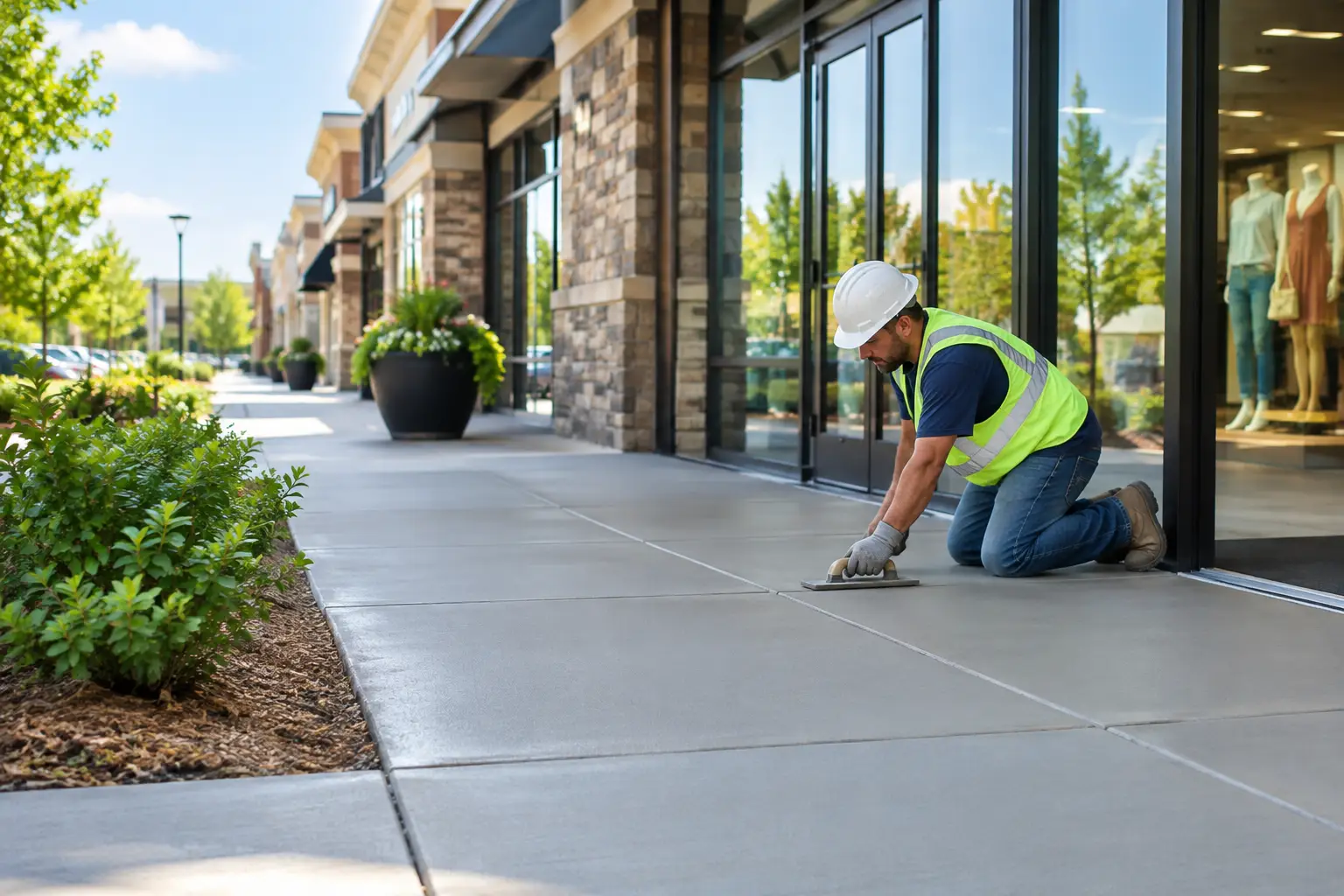
A cracked storefront sidewalk is more than an appearance issue. Uneven panels, standing water, loose edges, and settlement can create trip hazards, interfere with customer access, and make an otherwise well-maintained property look neglected. Retail sidewalk replacement is often the practical answer when patching no longer provides a safe, durable surface.
For retail owners and property managers, the job is not just about pouring new concrete. It requires planning around pedestrian traffic, tenant operations, drainage, access requirements, and the condition of the base below the sidewalk. Getting those details right helps prevent a new slab from developing the same problems as the old one.
When Retail Sidewalk Replacement Makes More Sense Than Repair
Small, isolated cracks do not always mean a sidewalk needs to be removed. A sound slab with minor cosmetic cracking may be a candidate for sealing, joint repair, or localized concrete work. Replacement becomes the better investment when the concrete has moved, broken apart, or stopped draining correctly.
Common signs that replacement is warranted include slabs that have settled or heaved enough to create a noticeable change in elevation, widespread cracking across multiple panels, broken corners and spalling surfaces, or water that consistently ponds near an entry. Replacement should also be considered when prior patching has failed or when the sidewalk no longer provides a reliable path to doors, ramps, parking areas, or loading zones.
The key question is not whether the concrete has a crack. Nearly all concrete eventually cracks to some degree. The question is whether the sidewalk still performs its job safely and directs water where it needs to go.
Find the Cause Before Replacing the Concrete
Concrete is usually the visible symptom, not the original problem. If the underlying cause is left in place, a new sidewalk can settle, crack, or hold water just like the old one.
In North Texas, expansive clay soils are a frequent factor. Soil movement during long dry periods and heavy rain cycles can shift support beneath slabs. Poor drainage compounds that movement. Downspouts that discharge beside the sidewalk, irrigation leaks, poorly graded landscape beds, and runoff from roofs or parking lots can wash out or soften the soil under the concrete.
Tree roots can also lift sidewalk panels, especially near mature landscaping. On commercial sites, utility work, trench backfill, and vehicle traffic crossing areas not designed for loading can create weak points beneath the slab.
Before work begins, a contractor should inspect the surrounding grades, nearby drainage paths, existing joints, curb lines, building entries, and adjacent pavement. The replacement plan may need to include base repair, grading adjustments, root management, or drainage improvements. Removing and repouring concrete without addressing these issues can be a short-term fix at a long-term price.
Protecting Building Entries and Storefront Access
The sidewalk near a retail entrance deserves extra attention. This area handles the highest pedestrian traffic and is often where water problems become most disruptive. Concrete must slope correctly so rain moves away from the building rather than toward doors, thresholds, and storefront walls.
A slight slope is necessary, but excessive slope can create comfort and accessibility concerns. The exact requirements depend on the site layout and applicable local codes. A qualified contractor can coordinate the work with the property owner, manager, or project team so grades, transitions, and access routes are addressed before concrete is placed.
Plan the Work Around Customers and Tenants
A retail sidewalk replacement project has to work around business operations. Closing a main entrance without a clear alternative can frustrate customers, interrupt deliveries, and affect tenant revenue. The best approach is usually to phase the work.
A contractor may replace one section at a time, maintain a marked temporary pedestrian route, and schedule noisy demolition or access interruptions during lower-traffic hours when practical. For a small storefront, the work may be completed in a compact sequence. For a shopping center or multi-tenant building, the project may need a more detailed plan for entrances, parking, deliveries, and safety barriers.
Property managers should notify tenants early, especially if the work affects a primary route, patio area, pickup zone, or accessible parking path. Clear communication helps tenants prepare their staff and place temporary signs for customers. It also reduces last-minute changes that can slow down the project.
Fresh concrete needs time before it can handle foot traffic and more time before it can support carts, equipment, or vehicles. The schedule should account for demolition, base preparation, placement, curing, cleanup, and the return of normal access. Fast completion matters, but rushing the curing process is not a good trade-off.
What a Proper Sidewalk Replacement Scope Includes
A complete scope should explain more than the square footage of new concrete. It should identify how the existing sidewalk will be removed, how the base will be prepared, where joints will go, and how the site will be protected during construction.
For most retail sidewalk replacement projects, the work should address these core items:
- Removal and disposal of failed concrete without damaging nearby curbs, landscaping, storefronts, or pavement.
- Evaluation and preparation of the subgrade, including correction of soft, washed-out, or uneven areas.
- Proper formwork, thickness, reinforcement when the application calls for it, and control joints placed to manage normal concrete movement.
- Finishing, curing, cleanup, and a plan for reopening the area safely.
The details vary by location. A standard pedestrian walk is different from a sidewalk that crosses a drive lane, supports delivery carts, or ties into a ramp and parking area. Thickness, reinforcement, base material, and joint layout should match the expected use.
Concrete Details That Affect Long-Term Performance
Good concrete work starts below the surface. A compacted, stable base gives the slab consistent support. If one area is supported by firm soil and another sits over loose fill or erosion, the concrete is more likely to crack or settle at the transition.
Joint placement also matters. Control joints create planned locations for concrete to crack as it shrinks during curing. They do not prevent cracking altogether, but they help produce a cleaner, more controlled result. Expansion material may be needed where new concrete meets buildings, existing slabs, or other fixed structures.
The finish should fit the use of the space. Most retail sidewalks need a slip-resistant broom finish rather than a slick decorative surface. Edges should be clean, transitions should be smooth, and drainage should be checked before the crew leaves the site.
Weather affects concrete work as well. Heat can shorten working time and increase the need for careful curing. Rain can damage a fresh finish or delay placement. Cold conditions can slow strength development. In Dallas-Fort Worth and throughout Texas and Oklahoma, a contractor should watch the forecast and schedule the pour around conditions that could affect quality.
Budget for the Right Scope, Not Just the Lowest Number
Retail sidewalk replacement costs depend on more than the visible concrete area. Demolition access, haul-off, depth of removal, base repairs, drainage corrections, reinforcement, site protection, and the need to work in phases all influence the final price.
A simple replacement along an open storefront can be straightforward. A sidewalk between active tenant entrances, landscaping, utility boxes, and parking may require more labor and coordination. That does not mean every project needs an oversized scope. It means the estimate should explain what is included and why.
When comparing proposals, look for clear information on concrete thickness, preparation work, jointing, reinforcement, drainage adjustments, cleanup, and how access will be handled. A vague low bid can become expensive if it leaves out base repairs, disposal, traffic control, or other necessary work.
Choose a Contractor Who Understands Commercial Conditions
Commercial concrete work requires more than the ability to pour a flat slab. The contractor needs to understand how customers move through the property, where water flows, how adjacent surfaces connect, and how to keep the site organized during construction.
Ask how the crew will protect the storefront and landscaping, maintain pedestrian access, handle unexpected base problems, and determine when the sidewalk can safely reopen. It is also reasonable to ask whether the proposed slope and transitions will be reviewed before placement. Direct answers are a good sign that the contractor has thought through the job rather than pricing it as a basic tear-out and pour.
A well-planned sidewalk gives customers a safe, clean path to the door and gives property managers one less recurring maintenance problem. Fantastico Concrete approaches retail concrete work with that practical goal in mind: build the surface correctly, address the conditions beneath it, and leave the property ready for business.

