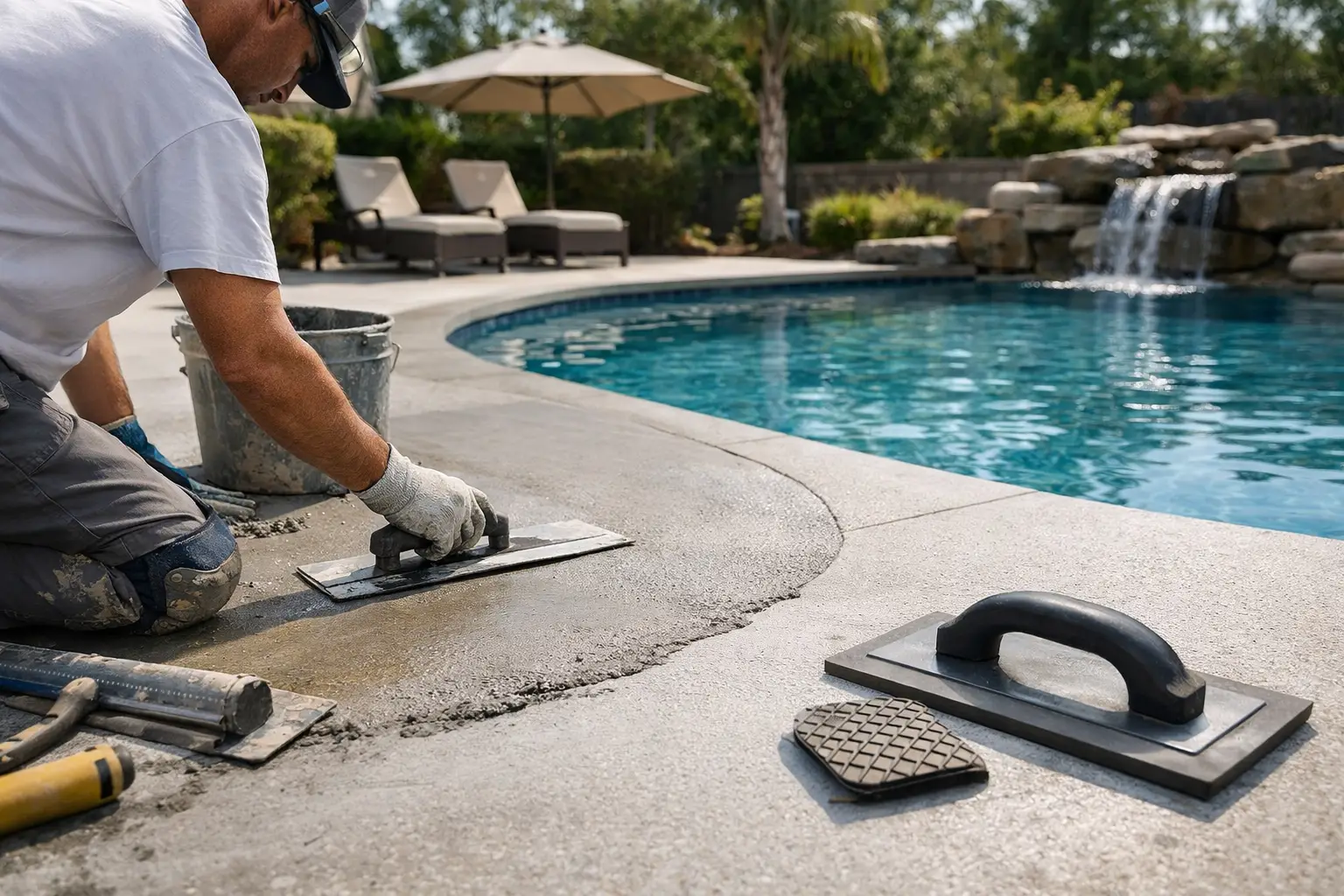
A pool deck usually starts looking rough long before it actually fails. The color fades, the surface gets chalky, hairline cracks spread, and slick spots become more noticeable when the deck is wet. That is where pool deck concrete resurfacing makes sense. If the slab is still structurally sound, resurfacing can give the area a cleaner look, better texture underfoot, and more years of service without tearing everything out.
For homeowners and property managers, that matters for more than appearance. A worn pool deck is a safety issue, a maintenance issue, and in some cases a liability issue. People walk on it barefoot, it gets soaked constantly, and it takes direct sun for long stretches. Any repair approach has to hold up under real use, not just look good for a few weeks.
What pool deck concrete resurfacing actually does
Concrete resurfacing is not the same as patching random cracks with a bag mix from the hardware store. It is a process that renews the top layer of an existing slab using specialized materials designed to bond to properly prepared concrete. The goal is to improve the surface condition, appearance, and traction while extending the useful life of the deck.
That said, resurfacing is not a fix for every problem. If the slab is heaving, settling badly, draining toward the pool, or breaking apart in multiple sections, a surface coating will not solve the root issue. In those cases, replacement or more extensive repair may be the better move.
A good contractor starts by figuring out which condition the deck is actually in. That step matters more than the finish color or pattern. If the base concrete is stable, resurfacing can be a smart and cost-conscious option. If the slab is failing, putting a new finish over it only delays the real repair.
When resurfacing is a good option
The best candidates for pool deck concrete resurfacing are decks with cosmetic wear and minor surface damage. That includes light cracking, discoloration, scaling, shallow pitting, and areas that have become unpleasant to walk on. Older broom finishes and plain gray concrete can also be resurfaced when the goal is to update the look without full demolition.
This approach is often a fit when the owner wants a cleaner appearance and safer footing but does not want the time, disruption, and cost that come with replacing the entire deck. Around pools, that can be a major advantage. Full replacement is messier, more invasive, and usually takes longer to complete.
Still, there are limits. Deep structural cracks, widespread movement, soft subgrade problems, and major drainage issues should be addressed before anyone talks about coatings or overlays. A deck can look worn out and still be a good resurfacing candidate. It can also look only moderately damaged and still need replacement. The condition below the surface decides that.
Why preparation matters more than the coating itself
Most resurfacing failures come down to poor prep. If the existing concrete is dirty, weak, contaminated, or not profiled correctly, the new material may not bond the way it should. It might peel, blister, or wear unevenly.
Proper surface preparation usually includes a close inspection, cleaning, removal of failing material, crack and patch repair, and mechanical profiling when needed. Around pool decks, there may also be concerns about sunscreen residue, mineral buildup, mildew, and chemical exposure. Those issues have to be dealt with before resurfacing begins.
This is one reason professional work tends to hold up better. Resurfacing sounds simple because the finished product looks thin, but the performance depends on disciplined prep work and the right material for the deck's condition and use.
Finish options for a pool deck
Not every resurfaced pool deck should look the same. The right finish depends on how the space is used, how much direct sun it gets, the style of the property, and how much ongoing maintenance the owner is willing to deal with.
A textured overlay is a common choice because it improves traction and hides minor imperfections well. Spray textures are also popular around pools because they can create a more comfortable, slip-resistant surface. Decorative scoring, tinting, and stone-like patterns can change the appearance without replacing the underlying slab.
The practical side matters just as much as the look. Around a pool, texture should be firm enough for grip but not so aggressive that it is rough on bare feet. Color choice matters too. Lighter shades usually stay cooler in the Texas sun, while darker finishes may create more heat than some owners expect.
Safety, comfort, and heat retention
Pool decks are different from driveways and patios because people use them barefoot and wet. That changes the standard. A finish that works fine on a front walkway may not be right next to a pool.
Slip resistance is a top concern, but it should be balanced with comfort and cleanability. An overly rough texture can be hard to maintain and unpleasant to walk on. A surface that is too smooth may look sharp but become slick when water and sunscreen build up. The right resurfacing system aims for traction without turning the deck into sandpaper.
Heat is another factor owners often underestimate. In Dallas-Fort Worth and across North Texas, summer temperatures can make the wrong surface difficult to use in the middle of the day. Material selection, texture, and color all affect how hot the deck feels. That is why resurfacing should be planned around real site conditions, not just a sample board.
How long resurfacing lasts
A resurfaced pool deck is not permanent, but it can provide solid service life when the slab is sound and the installation is done correctly. Longevity depends on the existing concrete, the prep, the resurfacing product, the amount of pool traffic, weather exposure, and maintenance habits.
A deck that gets routine cleaning and is not abused by harsh pressure washing or neglected crack repair will generally perform better over time. Chemical exposure from pool water and cleaning products also plays a role. No contractor should promise that every resurfaced deck will wear the same way because site conditions vary too much.
What owners should expect is practical improvement, not magic. Resurfacing can restore appearance, improve usability, and delay replacement. It does not make old concrete brand new all the way through.
What the process usually looks like
Most projects begin with an inspection to determine whether resurfacing is appropriate. Once that is confirmed, the deck is cleaned and prepared, damaged areas are repaired, and the chosen resurfacing material is applied in one or more stages. Depending on the system, that may include base coats, texture coats, color, pattern work, and sealer.
Cure time and return-to-service timing depend on the product and weather. That is another area where expectations should stay realistic. Fast turnaround is possible on some jobs, but temperature, humidity, and site conditions affect scheduling.
For commercial properties and busy residential settings, planning matters. Access routes, pool use, furniture movement, and protection of nearby surfaces should all be considered before work starts.
When replacement is the smarter investment
Sometimes resurfacing is the wrong answer, even if it is cheaper upfront. If the slab has major structural failure, poor drainage, extensive settling, or repeated cracking from movement, replacement may save money over the long run. Covering those issues with a fresh surface can leave the owner paying twice.
A straightforward contractor should say that clearly. Surface improvements only work when the base concrete can still do its job. If not, the deck needs more than a cosmetic reset.
That is especially true for older properties where years of movement, tree roots, soil changes, or previous patch jobs have left the slab inconsistent. In those cases, a full replacement may be the cleaner and more dependable solution.
Choosing the right contractor for pool deck concrete resurfacing
This kind of work sits in the gap between decorative finish work and real concrete repair, so experience matters. You want a contractor who understands both. That means knowing how to evaluate slab condition, fix surface defects properly, manage drainage concerns, and recommend finishes that make sense for pool use.
The right contractor should also be honest about trade-offs. Some finishes look better but require more upkeep. Some textures offer stronger grip but feel rougher underfoot. Some decks can be resurfaced now but may still need replacement years earlier than a newer slab would. Clear answers are better than sales talk.
For property owners, the best result usually comes from treating the pool deck as part of the overall site, not just as a decorative surface. The concrete has to look good, but it also has to stay safe, drain correctly, and handle daily use in real weather. If your deck is worn but still structurally sound, resurfacing can be a strong option. If it is beyond that point, knowing sooner is what protects the investment.

