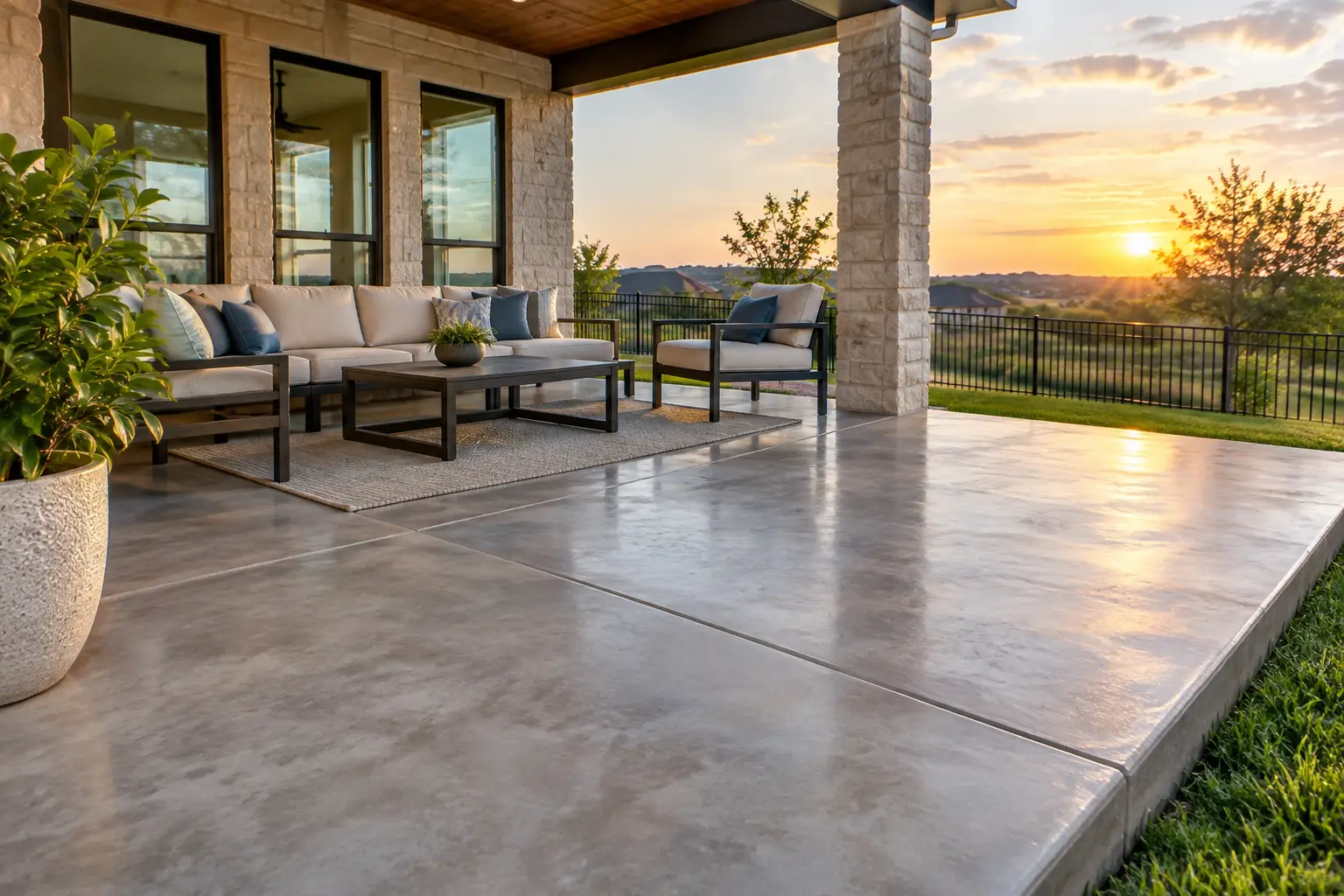
A patio can look completely different depending on the final texture placed on top of the same concrete slab. This patio concrete finish guide explains what each option does well, where it can fall short, and how to choose a surface that works for your home instead of just looking good on installation day.
For homeowners in Dallas-Fort Worth and across North Texas, the decision matters even more. Hot summers, sudden rain, pool traffic, outdoor furniture, and shifting soil all put pressure on a patio. The right finish should provide traction, fit the home's style, and hold up without becoming a cleaning or maintenance headache.
Start With How the Patio Will Be Used
Before choosing a pattern or color, consider the job the patio needs to perform. A small covered sitting area has different needs than a large entertaining space beside a pool. A finish that feels comfortable under bare feet may not be the best choice for a driveway-style patio that sees grills, rolling coolers, and heavy furniture.
Water is a major factor. Concrete patios should be installed with proper slope so water drains away from the house, but finish texture also affects how the surface performs when wet. More texture generally improves footing. Too much texture, however, can make sweeping harder and create places for dirt, leaves, and spilled food to collect.
Sun exposure matters as well. Dark integral color and dense decorative coatings can absorb more heat in full Texas sun. If the patio will be used often in bare feet, a lighter color and a finish with moderate texture are usually more comfortable.
Patio Concrete Finish Guide: The Main Options
There is no single best concrete finish. The right selection depends on budget, safety, appearance, and the amount of upkeep the property owner is willing to handle.
Broom finish
A broom finish is created by pulling a specialized broom across fresh concrete. The result is a consistent, lightly ridged texture that improves traction without adding significant cost. It is one of the most practical choices for patios, walkways, side yards, and areas that may get wet.
This finish is popular because it is straightforward, durable, and easy to clean. It also fits a wide range of homes, from newer suburban construction to rental properties and commercial spaces. The texture can run in a chosen direction to support drainage and walking patterns.
The trade-off is appearance. A standard broom finish is clean but not decorative. It will not create the high-end look of natural stone or pavers on its own. Homeowners who want more visual detail can pair it with saw-cut control joints, borders, integral color, or a contrasting edge treatment.
Smooth trowel finish
A smooth trowel finish has a flatter, more refined surface. It can look sharp on a covered patio, a modern backyard design, or an area where furniture needs to sit level. When finished correctly, it gives concrete a clean, simple appearance that does not compete with landscaping or architecture.
The concern is slipperiness. A very smooth finish can become slick when wet, especially around pools, outdoor kitchens, sprinklers, or shaded areas that stay damp longer. For most uncovered residential patios, a lightly troweled surface with some texture is a safer approach than a highly polished finish.
Smooth concrete also shows stains, scratches, and surface variations more clearly than textured finishes. If the space will see frequent grilling, pets, children, or heavy entertaining, discuss realistic expectations before selecting it.
Stamped concrete
Stamped concrete uses texture mats and release colors to create the look of stone, brick, wood planks, slate, or tile. It is a strong option for homeowners who want a more decorative patio without installing individual pavers. Stamping can add character to a large backyard slab and create a more finished transition between the house, pool, and landscaping.
The quality of stamped concrete depends heavily on preparation, timing, joint layout, color application, and sealing. A stamp pattern cannot compensate for poor grading, inadequate base preparation, or weak concrete placement. Control joints also still need to be planned, even if they interrupt the pattern in certain locations.
Stamped surfaces need periodic resealing to maintain color and protect the finish. They can also become slick if the sealer is too glossy or applied too heavily. A contractor can use an appropriate non-slip additive and recommend a finish level suited to the patio's exposure to water and foot traffic.
Exposed aggregate
Exposed aggregate reveals decorative stone within the concrete surface. It delivers natural texture, strong slip resistance, and a more upscale appearance than standard broom-finished concrete. The look can range from subtle to bold depending on the aggregate selected.
This is a durable choice for patios, pool decks, and outdoor gathering areas, particularly where traction is a priority. The varied stone surface also helps hide dust and minor wear better than a smooth, single-color slab.
Its rougher feel is not for every project. Exposed aggregate may be less comfortable for bare feet than a lightly textured finish, and cleaning requires more effort because debris can sit between the stones. It is also less forgiving when repairs are needed, since matching the original aggregate and exposure can be difficult.
Color, Borders, and Joint Layout Matter
Finish selection is only part of the final look. Concrete color, decorative borders, and control joints influence whether a patio looks intentional or looks like a plain slab with a pattern added afterward.
Integral color is mixed into the concrete and provides color throughout the slab. It is generally more consistent and durable than a surface-only color, although natural variation should be expected. Earth tones, light grays, soft tans, and muted browns tend to work well with Texas brick, stone, and siding while also hiding everyday dust.
Control joints are necessary because concrete shrinks as it cures. They help guide cracking into planned lines rather than letting cracks develop randomly across the patio. On decorative work, joint placement should be considered early so the layout works with the stamp pattern, borders, steps, columns, and outdoor kitchen footprint.
A border can add visual definition without making the entire patio highly decorative. For example, a broom-finished field with a smooth or stamped border can create contrast while retaining the traction and easy maintenance of a practical surface.
Do Not Choose a Finish Before Addressing the Base
The surface gets the attention, but the base and drainage determine whether the patio performs over time. North Texas soils can move with changes in moisture. A quality patio installation starts with proper excavation, a stable base where needed, reinforcement appropriate to the project, and a slope that moves water away from structures.
No finish prevents cracks caused by poor support, standing water, or soil movement. Concrete can crack even on well-built work, which is why control joints are part of good installation rather than a sign of failure. The goal is to reduce random cracking and build a slab that remains useful, safe, and visually sound for years.
If an existing patio is badly cracked, settling, or holding water, applying a new coating or decorative overlay may only hide the issue temporarily. In some cases, removal and replacement is the more dependable investment.
Match Maintenance to Your Expectations
Every exterior concrete finish benefits from regular cleaning. Sweep debris before it gets ground into the surface, rinse off food and drink spills, and avoid harsh chemicals that can damage sealers or alter color. For most patios, a mild cleaner, water, and a soft-bristle brush handle routine care.
Decorative stamped and colored concrete usually require more attention than broom-finished concrete. Resealing intervals depend on sun exposure, foot traffic, drainage, and the type of sealer used. A covered patio may hold its finish longer than a pool deck exposed to direct sun and constant moisture.
Avoid using deicing chemicals unless a contractor confirms they are suitable for the concrete and sealer system. While freezing weather is less frequent in this region, deicers can still contribute to surface damage on vulnerable concrete.
Make the Finish Work for the Property
The best patio finish is not always the most expensive one. A broom finish may be the right answer for a busy family backyard because it is safe, durable, and easy to maintain. Stamped concrete may make more sense when the patio is a focal point for entertaining. Exposed aggregate can be a strong fit around water, while a lightly troweled surface may suit a protected modern patio.
Before work begins, walk the space at different times of day, think about water flow, and be honest about how the area will be used. Fantastico Concrete can help property owners weigh those practical details so the finished patio looks right, drains correctly, and earns its place in the yard.

