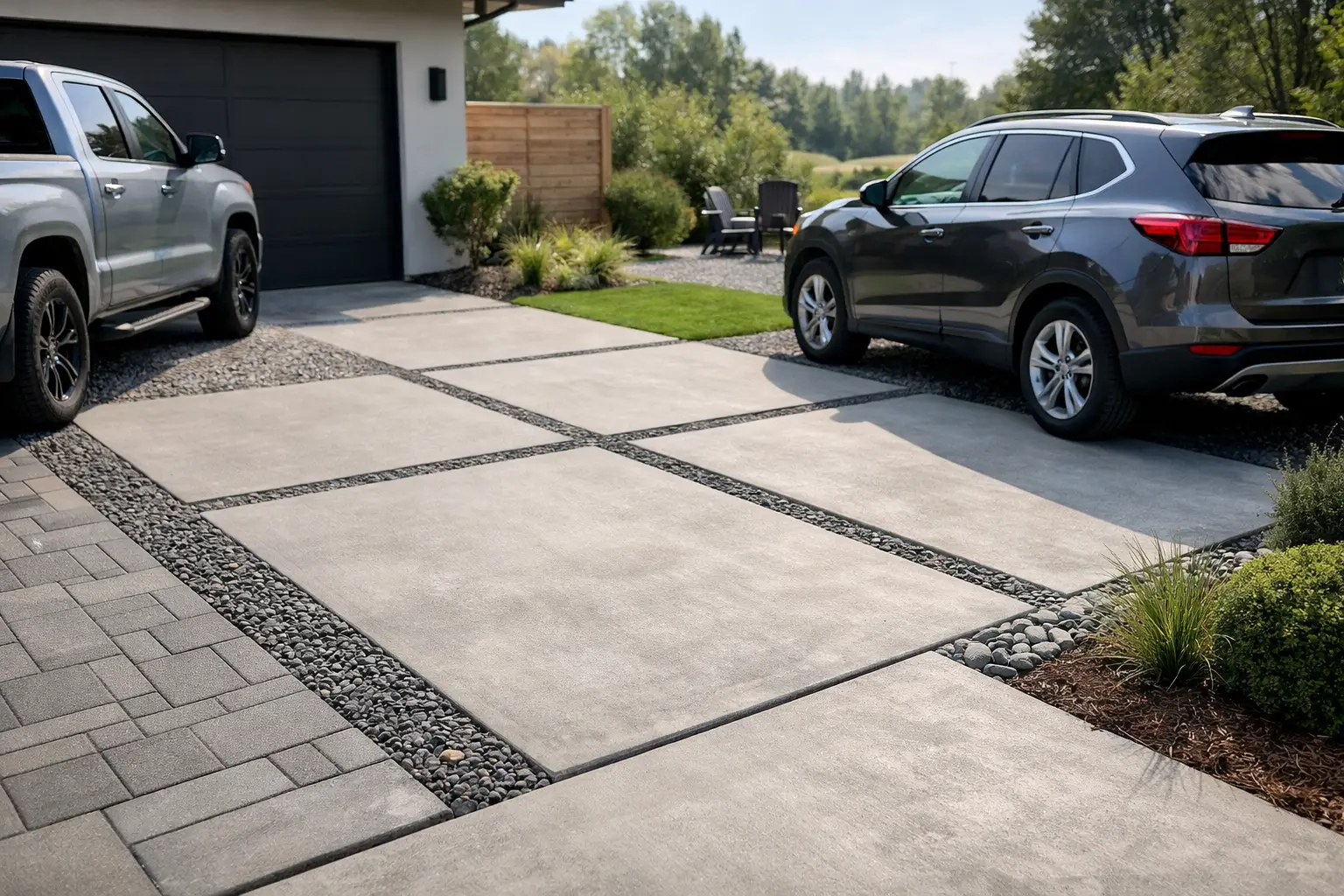
A parking pad should solve a real problem: a vehicle sitting in mud, an overcrowded driveway, rutted grass beside the garage, or tenant parking that has nowhere durable to go. The best parking pad concrete ideas start with how the space will be used, then build in the base, thickness, drainage, and finish needed to handle that use for years.
For homes, rental properties, and commercial sites, a concrete pad can add practical parking without rebuilding an entire driveway. But it is not simply a rectangle of concrete poured over dirt. Vehicle weight, soil movement, water flow, local setbacks, and access all affect whether the finished pad stays level and looks good.
Start With the Vehicle and the Access Route
A pad that is technically large enough can still be frustrating if a driver cannot turn into it easily. Before choosing a shape or finish, consider the vehicle that will use the space most often. A compact car needs less room than a full-size pickup, SUV, work van, boat trailer, or RV.
A single-car parking pad is often planned around a minimum width of about 10 feet, though 12 feet is more comfortable for daily use. Length depends on the vehicle, but 18 to 20 feet works for many passenger vehicles. Larger trucks and trailers need more room, including clear space for doors, hitches, and turning.
The route into the pad matters just as much. A side-yard pad may need a wider entry from the driveway to avoid repeated tire contact along one edge. If the pad connects to an existing driveway, the transition should be flush and properly supported. A sudden lip creates a nuisance for vehicles and can lead to chipping at the joint.
For rental or commercial properties, think beyond one parking stall. A simple row of pads can improve traffic flow and keep vehicles from spreading across landscaped areas. Leave adequate room for backing, fire access, gates, trash collection, and deliveries. The right layout prevents a small parking improvement from creating a larger access problem.
Parking Pad Concrete Ideas for Different Properties
A clean, broom-finished pad is the most practical option for many homes. The light texture improves tire traction, hides minor dust and wear better than a smooth finish, and fits naturally beside a standard concrete driveway. It is a dependable choice when function is the priority.
A widened driveway parking bay is another smart approach. Instead of creating a separate pad in the lawn, the driveway expands at one side near the garage or street. This works well for households with an extra vehicle, frequent guests, or a teenager who will soon need a place to park. It also gives the property a more intentional appearance than cars parked on grass or gravel.
For a side-yard vehicle pad, a long, narrow slab can provide secure parking for a trailer, utility vehicle, or work truck. These installations often need careful grading because side yards may drain toward the home, fence line, or neighboring property. A well-planned pad routes water away from structures while maintaining enough slope for reliable runoff.
An RV or boat pad needs a heavier-duty approach. These vehicles concentrate more weight over a longer footprint, and they may sit in place for extended periods. A thicker slab, properly compacted base, and reinforced edges help prevent settlement and cracking. If the vehicle will be covered, plan the pad and the structure together so posts, drainage, and access do not conflict.
For curb appeal, decorative options can make a parking area feel like part of the landscape rather than an afterthought. A colored border, saw-cut control-joint pattern, exposed aggregate, or a complementary finish can add character without sacrificing durability. Decorative concrete does cost more than a basic broom finish, so it makes the most sense where the pad is highly visible from the street or outdoor living areas.
Thickness Is Not the Place to Cut Corners
Concrete thickness should match the load. A typical passenger-vehicle pad may use a 4-inch slab over a properly prepared base. For heavier pickups, work vehicles, RVs, trailers, dumpsters, or regular commercial traffic, 5 to 6 inches or more may be appropriate. The correct specification depends on the soil, vehicle weight, traffic frequency, and site conditions.
The concrete below the surface matters as much as the concrete you see. Soft soil, organic material, loose fill, and poorly compacted ground can cause a new pad to settle even when the slab itself is thick. The area should be excavated to the required depth, shaped for drainage, and prepared with a stable compacted base where needed.
Reinforcement can help manage cracking and hold the slab together if movement occurs, but it does not replace good site preparation. Concrete naturally develops cracks as it cures and responds to weather changes. Control joints are installed to encourage those cracks to form in planned lines rather than randomly across the surface.
In North Texas, soil movement deserves special attention. Expansive clay can swell when wet and shrink during dry periods, putting stress on flatwork. Proper grading, base preparation, joint placement, and water management help reduce the risk of avoidable movement. No concrete contractor can promise a slab will never crack, but skilled installation gives it the best chance to perform well.
Plan Drainage Before the Pour
Water should never be an afterthought around a parking pad. A flat slab still needs slope, typically directing water away from the house, garage, and other structures. Water trapped along the edge of a pad can soften nearby soil, stain concrete, create slick spots, and contribute to settlement.
Look at where rainwater currently travels during a strong storm. If the new pad covers an area that previously absorbed water, that runoff has to go somewhere else. Depending on the site, the solution may involve grading the surrounding yard, adding a drain, using a swale, or directing water toward an appropriate drainage path.
Do not slope water toward a neighbor's lot just because it is convenient. Drainage changes can create disputes and property damage. On commercial sites, drainage requirements may also be tied to local codes and existing site plans. This is one reason a quick site evaluation is worth more than choosing a design from a photo.
Choose Edges and Finishes That Fit the Job
The edge treatment changes how a parking pad performs. A pad that receives regular tire traffic near its perimeter benefits from strong, well-supported edges. Vehicles turning tightly onto a slab can put significant pressure on corners, especially when the soil beside the concrete is soft or eroded.
Straight square edges work well for many pads, particularly when the slab ties into a driveway. A flared entry can make backing in easier. For a parking area beside landscaping, a defined border can protect turf and make mowing simpler. The best choice depends on how drivers enter, exit, and turn.
Finish selection is partly visual, but traction matters. A broom finish is practical in wet weather. Exposed aggregate offers more texture and a decorative look, although it can be tougher to repair or match later. Stamped concrete can be attractive for a visible residential pad, but deep patterns may not suit every vehicle area and require more maintenance attention than a standard finish.
If the pad will see oil drips, equipment, or work vehicles, consider a finish that is easy to clean and avoid overly light colors that show stains quickly. Sealer can help with appearance and stain resistance, but it must be selected and applied correctly. Some sealers can become slippery when wet, especially on smooth surfaces.
Know When a Separate Pad Is Better Than a Driveway Addition
Extending an existing driveway is often convenient, but a separate pad can be the better answer when the current driveway is cracked, settling, or built at a different elevation. Tying new concrete into failing concrete may make the new work look connected while leaving the underlying problem untouched.
A separate pad also gives more flexibility for phased property improvements. A homeowner may build a trailer pad now and replace the main driveway later. A property manager may add parking near a rear entrance without disrupting front traffic. Expansion joints between old and new slabs allow each section to move independently.
A professional contractor can help determine whether a tie-in, separate slab, or full replacement offers the better long-term value. Fantastico Concrete approaches that decision from the ground up, because a good-looking surface is only useful if it holds up under actual traffic and weather.
A Parking Pad Should Make the Property Easier to Use
The strongest design is usually the one that looks simple after it is finished. It gives the vehicle enough room, drains correctly, handles the expected load, and fits the property instead of fighting it. Before pouring, take time to walk the entry route, picture the largest vehicle using the space, and watch where water moves after rain. Those details turn a basic slab into parking that works every day.

