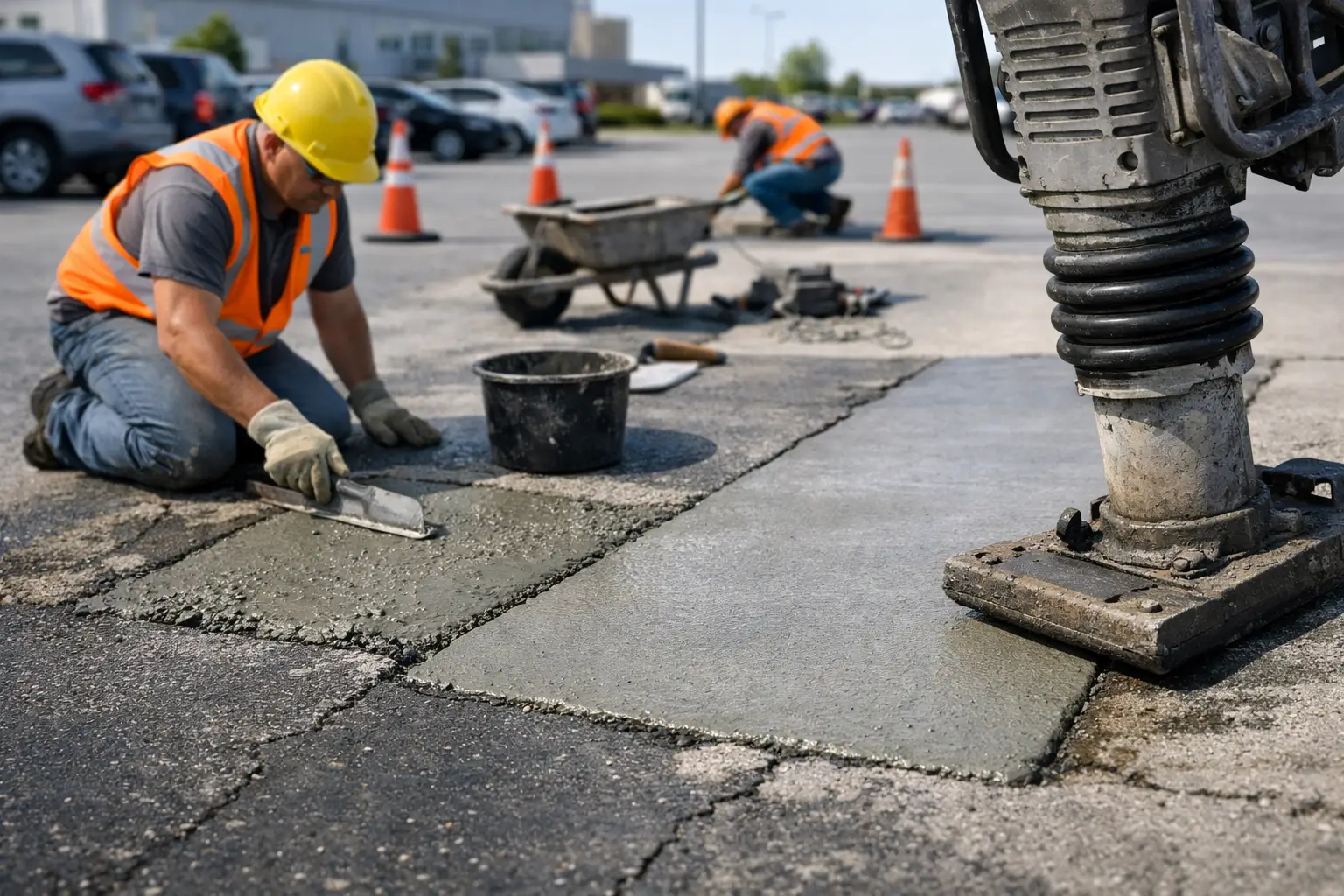
A parking lot usually tells you what is wrong before it fails. The first signs are small - a crack that keeps widening, a low spot that holds water after every rain, a corner that breaks off where cars turn in. Parking lot concrete repair works best when those early warnings are taken seriously. Wait too long, and a simple fix can turn into a larger safety issue, a drainage problem, or a section that needs full replacement.
What parking lot concrete repair actually solves
Concrete parking lots take constant abuse. Passenger vehicles, delivery trucks, heat, rain, oil, and shifting soil all put stress on the surface. Over time, that stress shows up as cracking, spalling, uneven panels, joint failure, and broken edges.
Some damage is mostly cosmetic. A light surface blemish may look rough without changing performance much. Other damage affects how the lot functions day to day. Trip hazards create liability. Standing water speeds up wear and makes the lot harder to use. Failing joints let water move under the slab, which can lead to more movement and more cracking.
That is why good repair work is not just about making concrete look cleaner. It is about stopping damage from spreading and restoring a surface that can handle traffic safely.
The difference between repair and replacement
Not every bad section needs to be torn out. In many cases, parking lot concrete repair can extend the life of the lot without the cost of full replacement. The right choice depends on the type of damage, how deep it goes, and what caused it in the first place.
If the slab is structurally sound and the issue is isolated, targeted repair often makes sense. That might mean sealing cracks, replacing joint material, patching surface damage, or correcting a small section that has settled. If the base under the slab has failed, the concrete is badly broken, or multiple panels are moving, replacement is usually the better long-term decision.
This is where property owners sometimes waste money. A cheap patch on a slab with base failure may look better for a short time, but it will not hold. On the other hand, replacing large areas that could have been repaired is unnecessary cost. The goal is not the biggest scope of work. The goal is the right scope of work.
Common problems that call for parking lot concrete repair
Cracks are the issue most people notice first, but not all cracks mean the same thing. A tight, stable crack may only need sealing if the slab is otherwise in good shape. Wider cracks, moving cracks, or cracks with broken edges usually point to more stress and may need a more involved repair.
Surface spalling is another common problem. This happens when the top layer flakes, chips, or breaks down. It can come from traffic wear, poor finishing, moisture intrusion, or freeze-thaw exposure in colder periods. Once the surface starts coming apart, it tends to trap more water and deteriorate faster.
Settlement is a bigger concern. When one slab drops lower than the next, the lot becomes uneven and unsafe. That can come from soil movement, poor compaction, erosion, or drainage issues. In North Texas and nearby markets, expansive soils can make this worse. Concrete does not move much on its own, but the ground under it certainly can.
Joint failure is easy to overlook, but it matters. Joints are there to allow controlled movement. When they break down or fill with debris and water, the slab edges become vulnerable. Repeated traffic over weakened joints often leads to corner breaks and panel damage.
Why the cause matters more than the symptom
A lot of concrete repair goes wrong because the visible damage gets treated without addressing the reason it happened. If water is draining under the slab, patching the surface alone will not solve much. If heavy vehicles are using pavement that was not designed for that load, the repairs will keep getting tested.
A proper repair plan starts with the cause. That includes looking at drainage patterns, traffic type, joint condition, subgrade support, and whether the damage is isolated or part of a broader failure pattern. This step is where experience matters. Two cracks may look similar on the surface and need completely different solutions.
For commercial properties, this affects budgeting too. If the real issue is drainage, it is usually smarter to fix that now than keep paying for repeat concrete work in the same trouble spots.
Repair methods and when they make sense
Crack sealing is often used when cracks are stable and the slab is still performing well. The goal is to keep water and debris out, reduce further deterioration, and preserve the panel. It is a maintenance move, not a structural fix.
Patching works for localized damage such as chipped corners, surface spalls, and small broken areas. The key is surface preparation and material selection. A patch that is placed over weak or contaminated concrete will fail fast. A properly prepared patch can restore serviceability and improve appearance, but patching is best for limited areas, not widespread slab failure.
Joint repair or joint resealing helps protect slab edges and reduce water intrusion. This is especially useful in parking lots where repeated wheel traffic crosses the same joints every day.
Leveling can help when isolated slabs have settled but remain in otherwise decent condition. This approach can reduce trip hazards and improve drainage without removing the slab. It only makes sense when the surrounding concrete is sound and the cause of settlement is understood.
Panel replacement is often the smartest option when a slab is badly cracked, pumping water, rocking under traffic, or broken beyond a lasting patch. Replacing individual panels can restore performance while avoiding a full parking lot rebuild.
Timing matters more than most owners think
There is a narrow window where repairs are straightforward and cost-effective. Once water gets through cracks and joints and starts affecting the base, damage can accelerate. That is why small defects in a parking lot tend to become larger ones faster than people expect.
The best time to repair concrete is usually before the surface becomes a safety issue or a larger operational problem. For commercial sites, that also means less disruption. Fixing a few targeted sections is easier to schedule than shutting down wider areas after damage spreads.
If you manage a retail center, office property, apartment complex, or industrial site, delaying repair also affects curb appeal. People notice broken concrete. It signals deferred maintenance, even when the rest of the property is in decent shape.
What to expect from a solid repair plan
Good parking lot concrete repair starts with a clear assessment of the damaged areas and the likely cause. From there, the scope should match the condition of the lot. Some properties need a few isolated repairs. Others need phased work over time so the worst sections are handled first.
A solid contractor should also think through access, traffic flow, cure time, and how the repaired area ties into the surrounding concrete. Parking lots are working surfaces. Repairs should be planned around actual site use, not just the damaged slab.
In a market like Dallas-Fort Worth, heat, stormwater, and soil movement can all influence repair performance. That does not mean every lot needs the same approach. It means repair work should fit the local conditions and the actual use of the property.
Fantastico Concrete approaches this the practical way - identify the problem, repair what can be saved, replace what cannot, and avoid selling a bigger job than the site needs.
When repair is no longer enough
There is a point where repeated patching becomes more expensive than replacing the right sections. If multiple panels are failing, drainage problems are widespread, and the lot has recurring movement, ongoing repairs can turn into short-term spending with little long-term value.
That does not always mean full replacement of the entire lot. Often, selective replacement paired with drainage correction and joint work is enough to stabilize the property. But if a lot has reached the stage where repairs are constant and complaints are growing, it is worth rethinking the strategy.
The right answer is not always the cheapest option today. It is the option that holds up under use and reduces repeat problems.
How property owners can stay ahead of damage
Routine inspection makes a difference. Walk the lot after heavy rain. Look for standing water, widening cracks, crumbling joints, and slabs that are no longer level. Pay attention to drive lanes, entrances, loading areas, and anywhere vehicles turn sharply or brake often. Those are common failure points.
It also helps to document changes over time. A crack that has not moved in two years is different from one that suddenly opened up over one season. That kind of information helps determine whether repair is enough or whether a deeper issue is developing.
Concrete problems rarely fix themselves. But they do give warnings. Catching those warnings early is what keeps parking lot concrete repair manageable, affordable, and worth doing.

