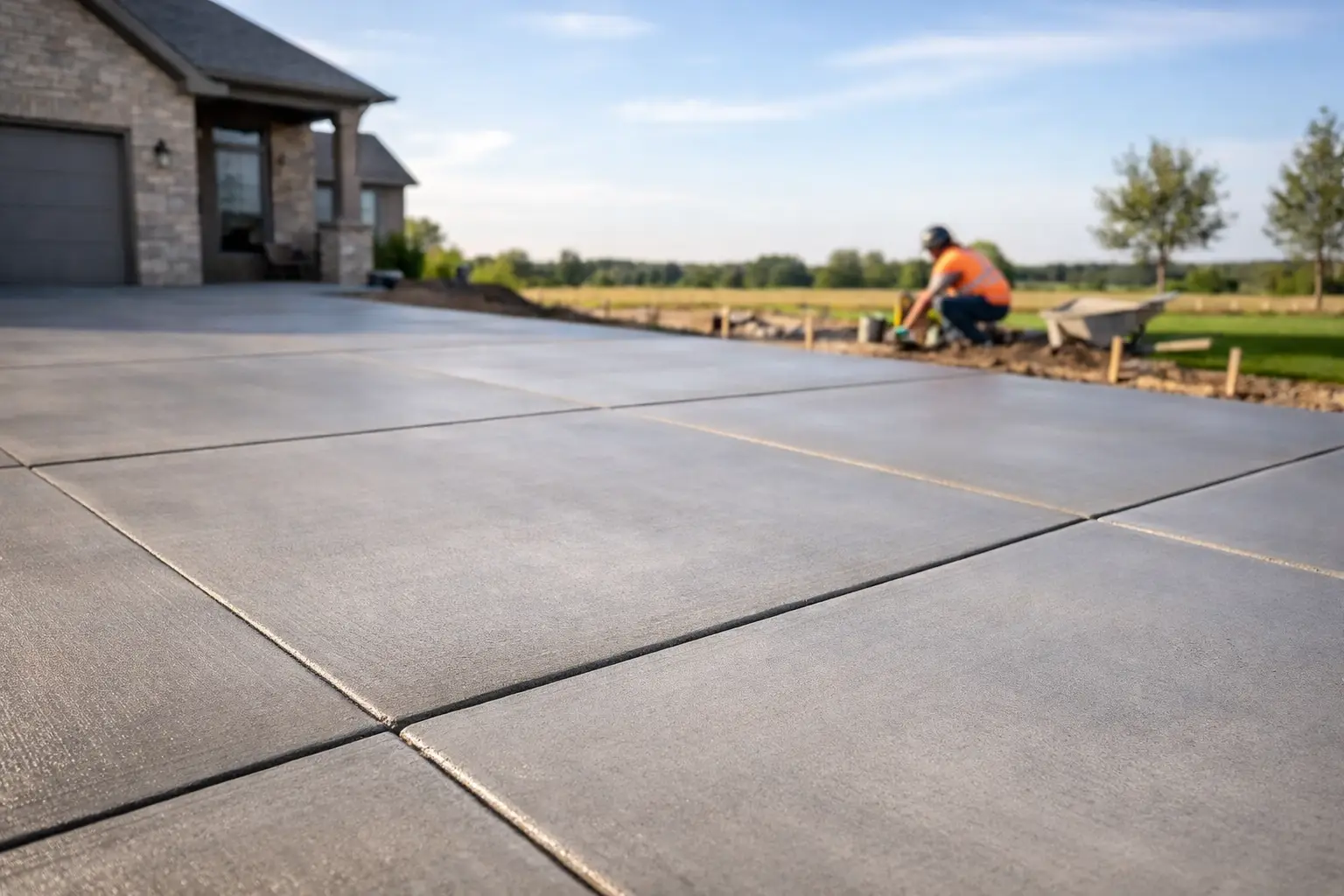
A driveway that holds water after every rain, a patio that starts cracking around the edges, a sidewalk that shifts sooner than it should - most of those problems start before the concrete is ever poured. That is the real story behind north texas concrete flatwork. Good results come from planning, base work, grading, reinforcement, and finishing that fit the site instead of treating every project the same.
Flatwork sounds simple because the surface looks simple. In practice, it covers some of the hardest-working concrete on a property. Driveways carry vehicle weight. Sidewalks need safe, even travel. Patios have to look clean, drain correctly, and stay usable through heat, rain, and daily wear. Slabs often support structures, equipment, or long-term site use. If the work underneath is wrong, the surface will eventually show it.
What north texas concrete flatwork really includes
Concrete flatwork usually refers to horizontal or near-horizontal poured surfaces. On residential properties, that often means driveways, walkways, patios, pool decks, approach extensions, and shed slabs. On commercial sites, it can include dumpster pads, loading areas, entry walks, parking lot sections, light-duty slabs, and access routes around buildings.
The reason this category matters is that each surface has a different job. A backyard patio does not need the same thickness, reinforcement, edge treatment, or finish as a driveway. A commercial walkway may need tighter control on slope, drainage, and trip hazards than a basic slab in a fenced yard. The term flatwork covers a lot, but the work should never be one-size-fits-all.
Why concrete behaves differently in North Texas
North Texas puts pressure on concrete in a few specific ways. Expansive clay soils are one of the biggest reasons flatwork fails early. When soil swells with moisture and contracts during dry stretches, the slab above can move. Add long hot summers, sudden heavy rains, freeze events, tree roots, and vehicle traffic, and weak installation methods get exposed fast.
That does not mean concrete cannot last here. It means the contractor has to respect local conditions. Proper subgrade preparation, compacted base material where needed, correct thickness, deliberate joint placement, and drainage planning all matter more than a surface-level finish. Homeowners often focus on color or texture first. Those details matter, but performance starts below the top layer.
The parts of flatwork that matter most
A lot of people judge concrete by how it looks on pour day. The more useful test is how it performs a year, three years, and five years later.
Subgrade preparation is where many jobs are won or lost. If the ground is not properly evaluated and compacted, the slab may settle unevenly or crack beyond normal control joints. Soft spots, poor fill, buried debris, and moisture issues do not fix themselves once concrete is placed.
Thickness should match use. A residential sidewalk may be fine at a standard thickness, while a driveway or vehicle area needs more support. Going too thin to lower cost can shorten the life of the surface. On the other hand, thicker concrete alone does not solve a bad base or poor drainage. It all works together.
Reinforcement helps control movement, but it is not a magic shield against cracking. Concrete naturally cracks. The goal is to manage where and how that happens. Wire mesh or rebar can add strength when used correctly, but it needs correct placement in the slab, not just inclusion on paper.
Joints are another big factor. Control joints help concrete crack in planned locations instead of randomly across the surface. Expansion joints can reduce pressure where concrete meets structures or other fixed points. Skipping these details can make a clean-looking pour turn messy later.
Drainage is often overlooked until there is a problem. Water should move away from foundations and off usable surfaces without creating erosion or ponding. On patios and walkways, even slight slope changes can affect function. Too flat, and water sits. Too steep, and the surface becomes awkward to use.
Driveways, patios, and sidewalks are not the same job
Driveways take repeated weight and turning pressure from vehicles. That means edge support, thickness, base condition, and approach transitions matter. A driveway may still look decent after a quick install, but weak edges often break down first. If the surface also holds water, the wear speeds up.
Patios are more about comfort, use, and appearance, but they still need real structural thinking. Furniture loads are lighter than vehicle loads, yet patios often fail because of drainage mistakes, tree root pressure, or poor integration with the yard and house. A patio should feel like part of the property, not an afterthought poured into an open space.
Sidewalks and paths have a different standard. They need to be safe and predictable underfoot. Uneven sections, abrupt slopes, or poor finishing can create long-term maintenance issues and liability concerns. On commercial properties, this becomes even more important because public access areas get more use and closer scrutiny.
Repair or replace? It depends on the damage
Not every flatwork problem requires full replacement. Small isolated cracks, minor surface wear, or limited settlement can sometimes be addressed without tearing everything out. But cosmetic patching only goes so far. If the base has failed, drainage is wrong, or large sections are shifting, replacing the slab is often the better long-term decision.
This is where an honest assessment matters. Surface cracks alone are not always alarming. Wide displacement, repeated heaving, major settling, or water running back toward the structure are more serious signs. Trying to save money on short-term repair can cost more if the slab is already past that point.
For property owners, the best question is not just, Can this be repaired? It is, Will the repair solve the actual cause? If the answer is no, replacement usually makes more sense.
Appearance matters, but performance comes first
Concrete is functional, but it also shapes how a property looks. Clean edges, consistent finish, and a layout that fits the building can improve curb appeal in a real way. For homeowners, that may mean a front walk and driveway that make the house feel maintained. For investors and commercial properties, it can support safer access and a stronger first impression.
Still, appearance should not come at the expense of durability. A decorative finish on poorly prepared concrete is still poorly prepared concrete. The best-looking job is the one that still looks good after weather, use, and time have done their part.
A no-nonsense contractor will usually talk through both sides of the project - how it should perform and how it should present. That balance matters more than chasing the cheapest bid or the flashiest finish.
What to ask before starting a flatwork project
If you are comparing contractors, ask how the site will be prepared, how drainage will be handled, what thickness is planned for the intended use, and how joints and reinforcement will be installed. Those answers tell you more than a fast price ever will.
You should also ask what existing conditions could affect the outcome. Tree roots, drainage patterns, adjacent structures, and access limitations all change the work. Good planning is not about making the project sound complicated. It is about avoiding preventable problems.
In the Dallas-Fort Worth area and across North Texas, local experience has real value because soil behavior and weather patterns are not abstract issues here. A contractor who understands that can make smarter calls before the first form is set. That practical approach is what separates concrete that merely gets poured from concrete that holds up.
Fantastico Concrete approaches flatwork the way it should be approached - as a working surface that needs to perform first and look right doing it.
When concrete is done right, it becomes one less thing to worry about. You use it, drive on it, walk across it, and move on with your day. That is the standard worth aiming for with any flatwork project.

