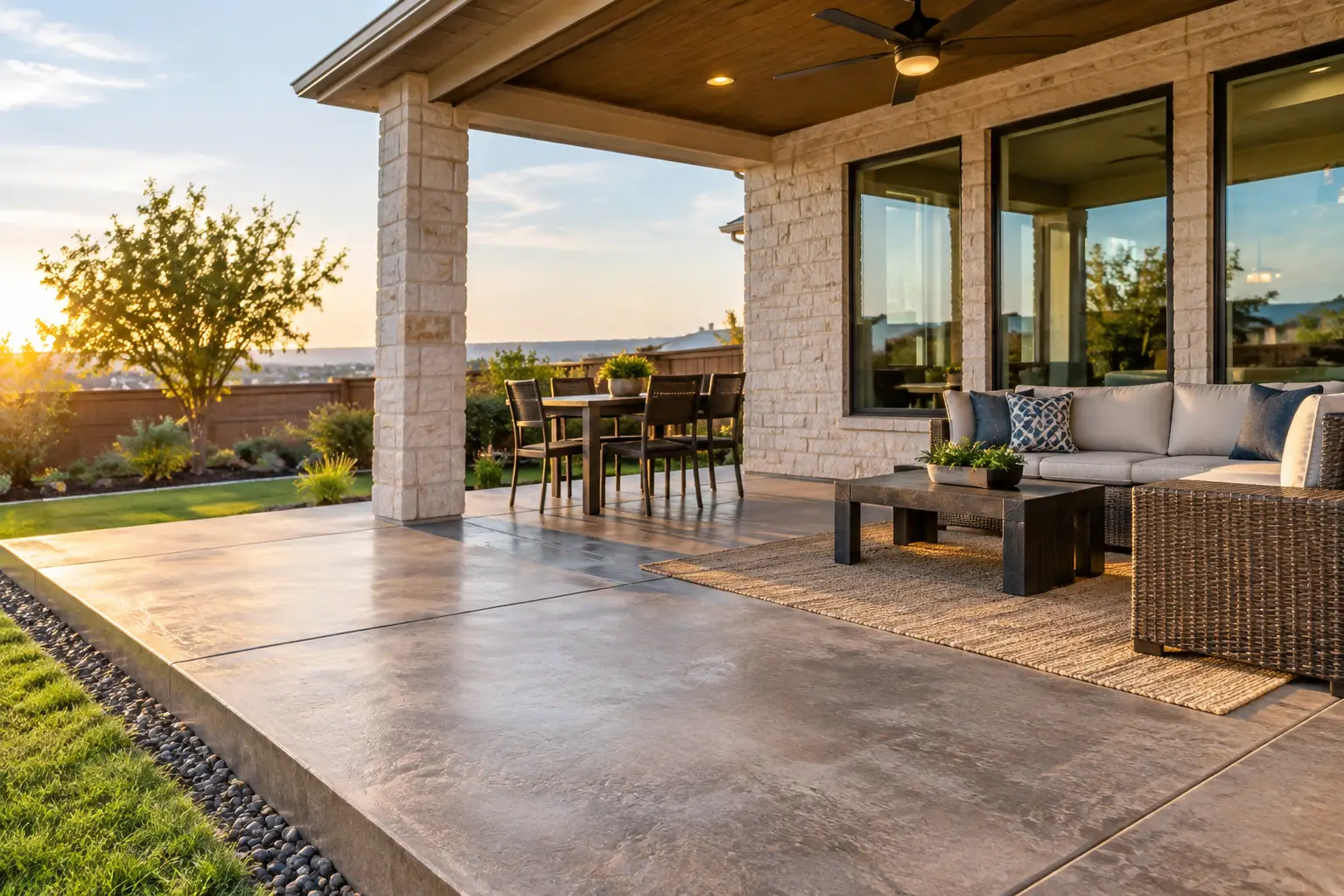
A patio should give you more usable space, not create another maintenance problem. The best new patio slab ideas account for how you actually use the yard, where water moves after a storm, and how North Texas heat affects the surface underfoot. A good-looking slab matters, but proper base preparation, reinforcement, joint placement, and drainage matter more.
For homeowners replacing cracked concrete or building a patio from scratch, the strongest designs are usually simple at their core: a properly sized slab with a clear purpose, thoughtful edges, and a finish that fits the home. The details can make it feel custom without turning the project into something difficult to maintain.
Start With the Patio’s Job
Before choosing a shape or finish, decide what the slab needs to support. A small sitting area has different requirements than a covered outdoor kitchen, a poolside lounge area, or a space for a large dining table. Furniture layout is a practical place to start. If chairs barely fit around a table, the patio will feel cramped no matter how attractive the concrete looks.
For a dining area, allow enough room to pull chairs out without stepping into the grass. For a grill or outdoor kitchen, plan for traffic around the cooking zone and keep heat-producing equipment clear of walls, fences, and walkways. If the patio will support a pergola, roof extension, fireplace, or heavy kitchen equipment, those loads should be addressed in the concrete plan from the beginning.
Shape matters too. A clean rectangle is often the most efficient option and works well with modern, traditional, and ranch-style homes. A wider landing outside a back door can transition into a larger entertaining area. Curved edges can soften a landscape, but they add layout and forming work. The right choice depends on the property, the architecture, and the budget.
New Patio Slab Ideas for Better Outdoor Use
Extend the patio in zones
Instead of one oversized open slab, create zones with purpose. A covered section near the house can hold a dining table, while an uncovered extension can become a fire-pit or lounge area. The slab can remain one connected installation while control joints, changes in finish, or furniture placement visually separate the spaces.
This approach works especially well for properties where the existing patio is too small but still structurally sound. A planned extension can make the outdoor area feel intentional rather than like a patch added years later. The key is making sure the new work is designed around drainage and movement, not simply poured against old concrete without a plan.
Use a border to define the slab
A contrasting border is one of the most effective ways to add visual structure to a concrete patio. It can be created with a different color, a different texture, or a scored band around the outside edge. For example, a light broom-finished field with a darker smooth border gives the patio a finished appearance without relying on delicate materials.
Borders also work around a central feature such as a fire pit, dining area, or outdoor kitchen pad. This is a practical design choice because it adds visual interest while keeping the surface easy to sweep, wash, and maintain.
Choose a finish for real conditions
Finish selection should be about more than appearance. A smooth hard-troweled surface can look clean, but it may become slick when wet and can be uncomfortable in direct summer sun. A broom finish provides dependable traction and is a strong option for general-use patios, walkways, and areas near pools.
Exposed aggregate adds texture and a more decorative look, though it can feel rough on bare feet. Stamped concrete can mimic stone, slate, wood planks, or pavers, but it needs careful installation and periodic maintenance to keep its color and sealer looking right. It is a good option when appearance is a major priority, but homeowners should understand that it is not maintenance-free.
For many Texas homes, a light-to-medium color with a subtle texture is the most sensible balance. Dark slabs can absorb more heat. Highly textured finishes can hold dirt. The best choice depends on sun exposure, whether children use the space barefoot, and how much ongoing care the owner wants to handle.
Add steps, seat walls, or planters with purpose
Grade changes should not be ignored. If the backyard slopes away from the house, a patio may need one or more steps, a retaining solution, or a gradual transition to keep the surface level and usable. Built-in concrete seat walls can define an edge and provide extra seating around a fire-pit area. Low planters can separate the patio from the lawn without blocking views.
These features should be planned as part of the concrete work, not treated as an afterthought. A poorly placed step can become a trip hazard. A planter without proper drainage can hold water against the slab. When the layout is handled correctly, these elements improve both safety and appearance.
Build for Texas Soil, Rain, and Heat
Concrete patios in Dallas-Fort Worth and throughout North Texas deal with conditions that affect long-term performance. Expansive clay soils can move as moisture levels change. Sudden heavy rain can expose poor drainage. Long stretches of heat place stress on materials and make darker surfaces uncomfortable to use.
A patio slab needs a stable, compacted base and proper thickness for its intended use. It also needs reinforcement and control joints placed to manage cracking. Concrete naturally shrinks and moves as it cures. Control joints do not stop all cracking, but they encourage it to occur in planned locations instead of randomly across the surface.
Drainage deserves equal attention. The patio should slope away from the house so water does not collect at the foundation or at the doorway. A slight slope is usually enough to move water without making furniture feel uneven. On properties with difficult grades, drains or other site solutions may be needed. This is one area where a quick visual estimate is not enough.
Do not assume a thicker slab fixes every problem. Thickness, base preparation, reinforcement, drainage, and workmanship all work together. A thick slab installed over unstable soil can still settle or crack. A well-planned patio starts below the visible surface.
Coordinate the Patio With Future Projects
A new patio often leads to other backyard improvements. Planning ahead can prevent unnecessary demolition later. If you expect to add a covered roof, pergola, screen enclosure, outdoor kitchen, hot tub, or lighting, mention it before the slab is poured.
Post locations may need footings. Outdoor kitchens need a level, properly supported base. Electrical conduit, gas lines, and irrigation should be routed before concrete placement whenever possible. Leaving a path for future connections costs far less than cutting into a finished patio later.
This does not mean every future feature has to be installed now. It means the slab should not limit your options. A straightforward patio design with a few planned allowances can make later upgrades much easier.
Know When Replacement Makes More Sense Than Repair
Some patios only need joint sealing, minor crack repair, or an overlay. Others have deeper problems. Large elevation changes, widespread cracking, standing water, or separation from the house can indicate base failure or drainage issues that surface repairs will not solve.
If an old slab is structurally sound but looks worn, a decorative overlay or new finish may be worth considering. If it has settled, heaved, or drains toward the home, removal and replacement is often the more durable answer. The goal is not to replace concrete unnecessarily. It is to avoid spending money on cosmetic work that cannot correct an underlying problem.
Fantastico Concrete approaches patio work with that practical mindset: build the surface around how the property functions, then make sure it looks right for the home.
A patio is most valuable when it fits ordinary life - morning coffee, family dinners, weekend guests, and the walk from the back door to the yard. Choose a layout you will use often, specify a finish you can live with, and make sure the concrete beneath it is prepared to last.

