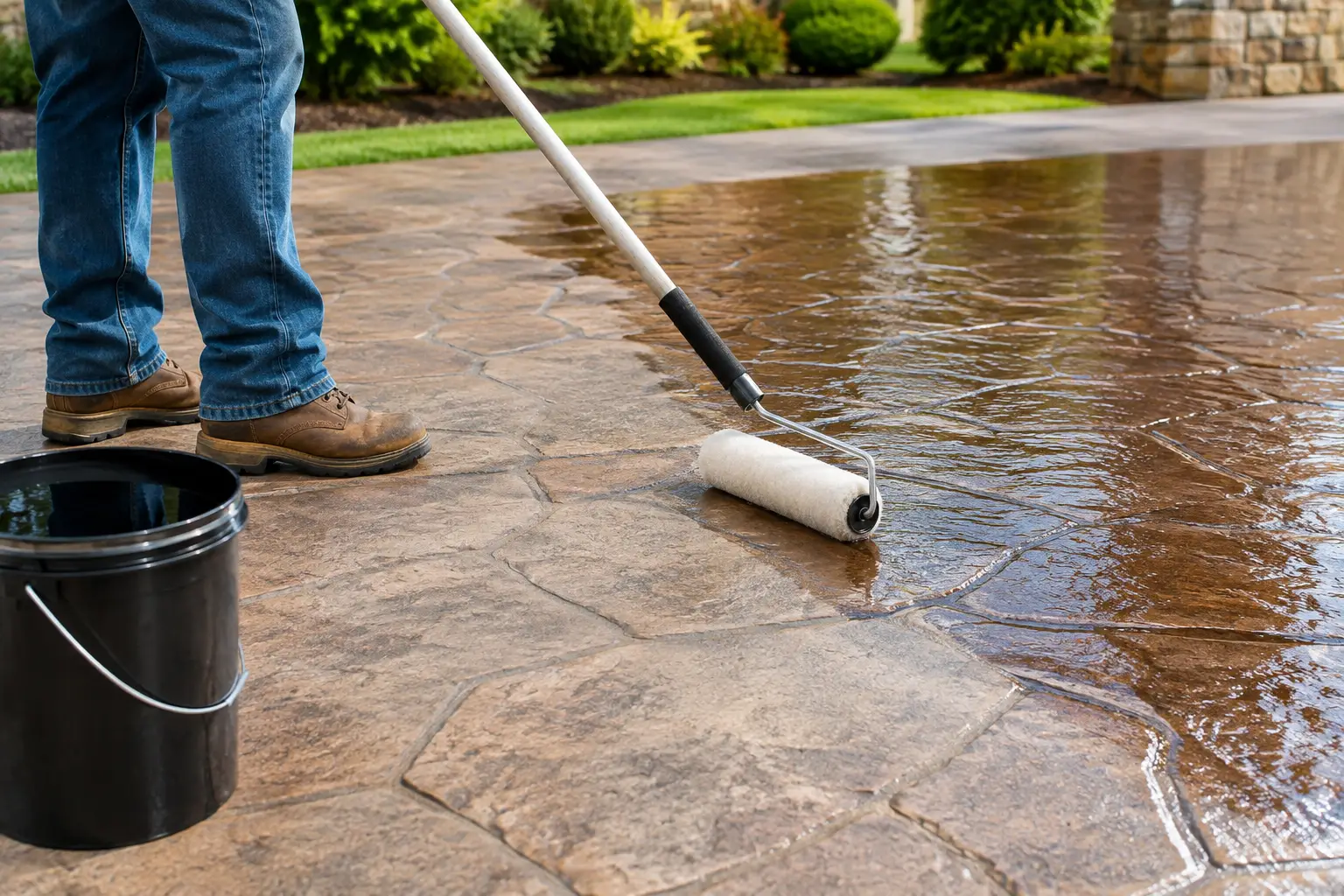
Stamped concrete can look like stone, brick, slate, or wood, but its long-term appearance comes down to one maintenance step: sealing it correctly. Knowing how to seal stamped concrete protects the color hardener, brings back the surface detail, and helps defend against water, stains, foot traffic, and North Texas heat. Rushing the job or applying the wrong product can leave the surface cloudy, slippery, peeling, or unevenly shiny.
Sealing is not simply a matter of rolling on a glossy coating. The concrete has to be clean, dry, sound, and compatible with the sealer you choose. That is where most avoidable problems start.
Why stamped concrete needs sealer
Stamped concrete is decorative concrete, but it is still porous. Moisture, dirt, oil, fertilizer, leaf tannins, and deicing chemicals can work into the surface over time. UV exposure can also fade color, especially on patios, pool decks, walkways, and driveways that receive full afternoon sun.
A quality sealer limits water absorption and makes routine cleaning easier. Many sealers also restore depth to the color and make the stamped texture more noticeable. The trade-off is that a high-gloss finish can show scratches, tire marks, and uneven application more readily than a low-sheen finish.
For Dallas-Fort Worth properties, heat matters. Concrete and coatings expand under intense sun, then cool rapidly during storms or colder weather. A sealer that is applied too heavily or to damp concrete may turn milky, blister, or lose adhesion as moisture tries to escape.
Start by checking the condition of the surface
Before buying sealer, look closely at the concrete. New stamped concrete needs adequate cure time before it is sealed. The specific timing depends on the mix design, weather, and sealer manufacturer, but concrete commonly needs about 28 days to cure before a final protective sealer is applied. Applying sealer early can trap moisture and interfere with proper curing.
Existing stamped concrete needs a different assessment. If water still beads across the surface and the finish looks mostly intact, a thorough cleaning and light maintenance coat may be enough. If the finish is flaking, whitening, peeling, or worn away in traffic paths, do not seal over the problem. Failed sealer needs to be removed or properly prepared first.
Check for cracks, spalling, loose material, and drainage issues as well. Sealer will not repair structural movement, stop active cracking, or correct water that repeatedly pools on a patio or driveway. Handle those issues before coating the surface.
Choose a sealer that fits the job
Acrylic sealers are a common choice for stamped concrete because they enhance color, are available in water-based and solvent-based formulas, and are relatively straightforward to reapply. They can provide a natural matte appearance, a satin sheen, or a wet-look gloss depending on the product.
Water-based acrylic sealers generally have lower odor and can be a practical option around occupied homes and businesses. Solvent-based acrylics can create a richer color enhancement, but they require careful ventilation, suitable weather, and attention to flammability. Neither is automatically better. The right decision depends on the existing surface, desired appearance, site conditions, and manufacturer instructions.
For high-traffic commercial areas or locations exposed to chemicals, a contractor may recommend a more specialized system. These products can offer stronger wear resistance, but they may be less forgiving during application and can be difficult to maintain if the wrong coating is applied later.
Compatibility matters more than brand labels. If an old sealer remains, identify it when possible and use a compatible product. Mixing incompatible water-based and solvent-based coatings can cause delamination, haze, or a finish that never cures correctly.
How to seal stamped concrete correctly
Clean the surface thoroughly
Sweep away dirt, sand, mulch, and loose debris. Then wash the concrete with a cleaner suited to the stains present. A mild concrete cleaner can handle normal grime, while degreasers may be needed around driveways, grills, or parking areas. Treat rust, efflorescence, and organic stains with products designed for those specific issues.
Rinse completely. Cleaner residue can interfere with adhesion and leave dull patches under a clear sealer. Pressure washing can help, but keep the pressure controlled and avoid forcing water into cracks, joints, or weak areas of the surface.
Let it dry longer than you think
This step is not optional. Decorative concrete may look dry on top while moisture remains inside the slab or stamped joints. After cleaning, allow adequate dry time based on humidity, temperature, shade, and recent rainfall. In humid conditions or after a heavy rain, that can take longer than a day.
Avoid sealing when rain is expected, when the surface is hot from direct sun, or when temperatures are outside the sealer manufacturer's application range. Early morning can be too damp from dew, while late afternoon concrete may still hold a great deal of heat. A dry, moderate-weather window is the best time to work.
Test a small, hidden section first
Apply the chosen sealer to a small area that is not highly visible. This confirms color enhancement, sheen, adhesion, and dry time before committing to the entire patio or driveway. A test area is especially valuable when resealing older stamped concrete with an unknown coating history.
Check the area after it dries. Look for whitening, bubbling, dark spots, or a tacky feel. If the test does not dry evenly, stop and determine whether moisture, contamination, or product incompatibility is the cause.
Apply thin, even coats
Use the application method specified for the product, typically a quality roller, pump sprayer, or sprayer followed by back-rolling. Keep a wet edge and work in manageable sections so lap marks do not form.
Thin coats are the rule. Heavy coats do not provide twice the protection. They are more likely to trap solvents or moisture, create a plastic-looking shine, and become slippery when wet. If the product calls for two coats, let the first coat dry for the required time before applying the second.
Pay attention to stamped recesses and edges. Sealer can collect in deeper texture lines, along borders, and near control joints. Back-roll or brush out puddles before they dry. Those pooled areas are often where sticky spots, dark patches, and premature failure appear.
Add traction where it is needed
Sealer can reduce natural surface grip, particularly on smooth stamped patterns or glossy finishes. This is a real safety concern around pools, entryways, sloped walkways, and commercial pedestrian areas.
A compatible non-slip additive can be mixed into the final coat where additional traction is needed. Use it carefully. Too little may not improve grip; too much can make the finish look hazy or feel rough underfoot. A professional can match the additive and sealer while keeping the decorative look intact.
Keep traffic off until it cures
Dry to the touch is not the same as fully cured. Keep foot traffic, furniture, vehicles, sprinklers, pets, and falling debris off the surface for the period stated by the manufacturer. Driveways need the most patience because vehicle tires can mark or lift an uncured coating.
Do not drag furniture across newly sealed patios. Lift it into place after the finish has cured, and use protective pads under metal furniture legs to reduce scratching.
Common sealing mistakes to avoid
The most common mistake is sealing dirty or damp concrete. The finish may initially look acceptable, then turn cloudy or peel as moisture and contamination affect adhesion. Another frequent problem is applying too much product in one pass, especially when a homeowner is trying to create a darker wet look.
Avoid using a sealer simply because it is available at a store. Decorative concrete coatings must match the surface and the existing finish. Also avoid applying sealer in direct, extreme heat. On a hot Texas afternoon, the sealer can flash dry before it levels properly, leaving roller marks and an uneven sheen.
Finally, do not use a glossy sealer without considering slip resistance. A beautiful patio is not a better patio if it becomes hazardous after rain or near a pool.
When to reseal stamped concrete
Most stamped concrete benefits from resealing every two to three years, although the schedule depends on exposure and wear. A covered patio may go longer. A driveway, pool deck, restaurant entry, or sun-facing walkway may need attention sooner.
Watch for fading color, water soaking in instead of beading, dull traffic paths, and a finish that no longer cleans easily. Resealing before the surface is badly worn is usually simpler and less expensive than stripping a failed coating system.
Regular sweeping and prompt cleanup of oil, food, fertilizer, and standing water will extend the life of the sealer. Use gentle cleaning methods and avoid harsh acids or aggressive pressure washing unless the surface condition calls for professional treatment.
For large patios, driveways, pool decks, or concrete with peeling sealer, professional preparation is usually the better value. Fantastico Concrete can evaluate the surface, correct underlying issues where needed, and apply a finish that protects the stamped detail without creating problems down the road. A properly sealed surface should look cared for, feel safe underfoot, and hold up to the way the property is actually used.

