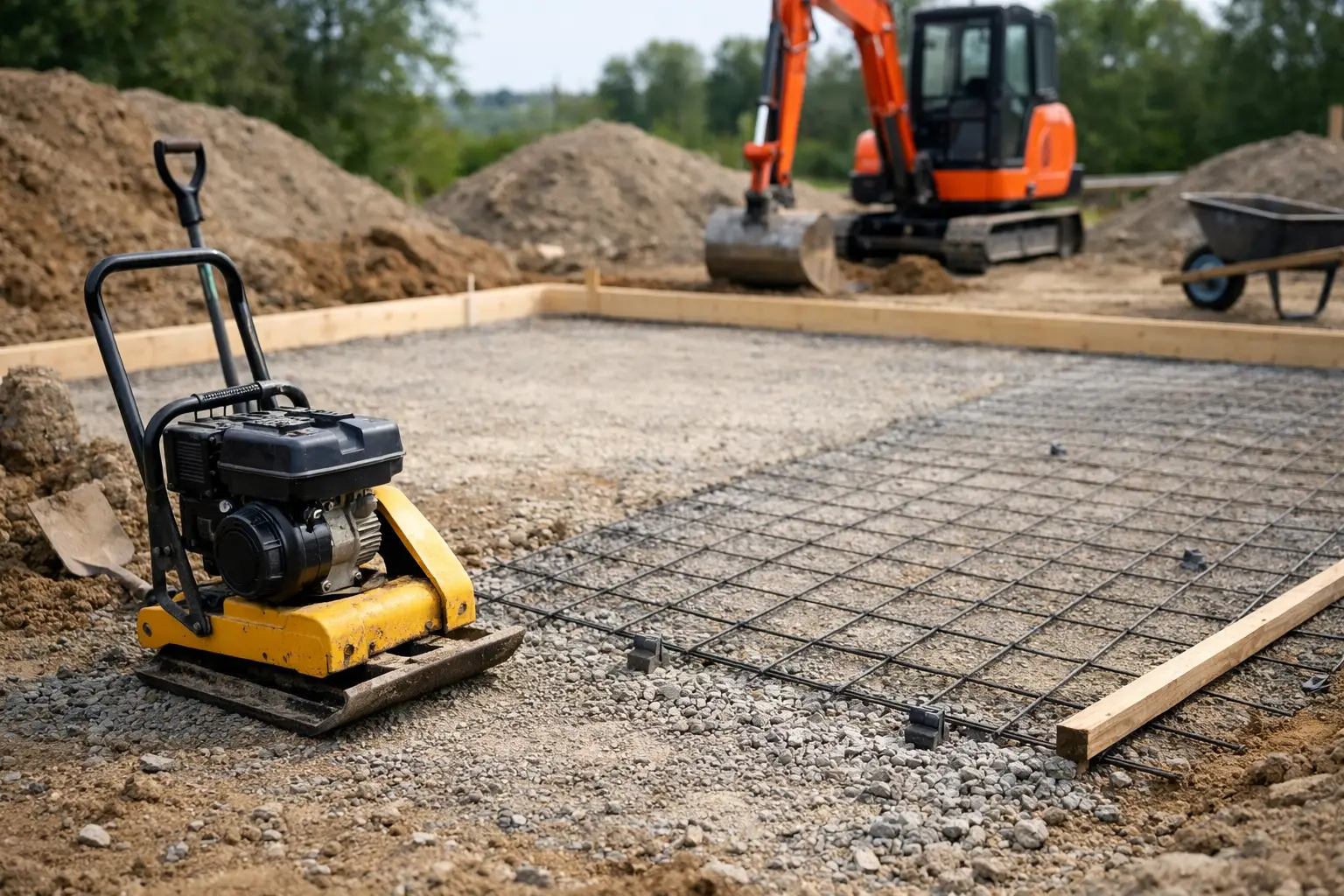
Bad concrete usually starts before the truck ever shows up. If the base is soft, uneven, or holding water, the slab is already at a disadvantage. That is why knowing how to prepare ground for concrete matters just as much as the mix, finish, and reinforcement.
Ground prep is what keeps a patio from settling, a driveway from cracking early, and a sidewalk from trapping water where it should not. The goal is simple - create a stable, well-drained, properly graded base that can support the slab for years. The exact process depends on the project, soil conditions, and expected load, but the fundamentals do not change.
How to prepare ground for concrete step by step
The first job is layout. Mark the footprint clearly so you know the exact edges, elevation, and slope before any digging starts. This sounds basic, but small mistakes here turn into bigger problems later, especially when a slab needs to tie into an existing driveway, garage floor, walkway, or building entrance.
After layout, remove all grass, roots, topsoil, and organic material. Concrete should never sit on loose vegetation or rich topsoil because those materials break down and shift over time. What you want underneath is firm, undisturbed soil or properly compacted structural fill. If the site has old debris, buried roots, or leftover construction material, all of that needs to come out too.
Then excavate to the required depth. That depth is not just the thickness of the concrete. It also includes room for base material. For a basic patio or sidewalk, that may mean several inches of compacted base under the slab. For a driveway or heavier-use slab, the excavation often needs to go deeper because the support layer matters more under vehicle traffic.
Once the area is dug out, grade the subgrade so water moves away from structures and does not collect under or along the slab. In North Texas and nearby areas, expansive clay soils can make this especially important. If moisture conditions under one part of a slab change more than another, movement and cracking become more likely.
Start with the soil, not the concrete
Not all ground is equal. Sandy soil drains well but can shift if it is not compacted enough. Clay can hold moisture, expand, and shrink. Fill dirt may look level on top while hiding weak spots below. That is why the best prep work starts with understanding what the slab is sitting on.
If the native soil is firm and consistent, it may only need grading and compaction. If it is loose, wet, or previously disturbed, more work is usually needed. In some cases, unsuitable soil has to be removed and replaced with compactable fill. Skipping that step saves money upfront but often creates expensive problems later.
This is also where load matters. A backyard slab for light foot traffic does not need the same support system as a commercial approach, dumpster pad, or driveway. Heavier loads demand tighter tolerances, stronger subgrade preparation, and often a thicker or better-compacted aggregate base.
Excavation depth and base thickness
A common mistake is digging only enough for the concrete itself. That leaves no room for the base layer that helps distribute weight and manage ground movement. In most slab work, the base is part of the system, not an optional extra.
For many residential projects, a compacted crushed stone base provides a solid platform and helps with drainage. The required thickness depends on use conditions and soil quality. A patio on stable ground may need less base than a driveway sitting over clay-heavy soil. If the area has poor drainage or signs of previous settlement, it is usually smarter to build the support layer up rather than hope the slab bridges weak ground.
The excavation should also account for the final surface elevation. Concrete that ends up too high can push water toward the house or create awkward step-ups at doorways. Too low, and you may trap runoff or create a low spot that stays wet.
Compaction is where good prep becomes real
If there is one part of ground prep people underestimate, it is compaction. A base that looks flat is not necessarily stable. Loose soil and loose aggregate can settle after the pour, and concrete does not like uneven support.
Compaction should happen in layers, especially when adding fill or aggregate. Dumping all the base in at once and packing only the top does not properly stabilize the full depth. Each lift needs to be spread, leveled, and compacted before the next one goes down.
The equipment matters too. Hand tamping may be enough for very small sections, but larger patios, driveways, and slab areas usually require a plate compactor or heavier equipment. The point is consistent density across the entire footprint, not just making the surface look neat.
Moisture content matters during compaction. Soil that is too dry may not compact well. Soil that is too wet can pump and shift under pressure. This is one of those areas where experience helps because the right condition is not always obvious from appearance alone.
Drainage and slope cannot be an afterthought
Concrete prep is not only about support. It is also about water management. If water sits under the slab, runs back toward a building, or erodes the surrounding ground, the slab will have a shorter life.
Every project needs a planned slope. Patios should direct water away from the home. Driveways should shed water without creating ponding at the garage or edge conditions that wash out support. Sidewalks need to stay functional and safe, which means avoiding low areas where water lingers.
This is where site-specific judgment matters. A flat-looking yard may still have drainage issues once hard surfaces are added. Gutters, downspouts, nearby planting beds, adjoining structures, and neighboring elevations all affect how water behaves. Sometimes a slab can solve a use problem while creating a drainage problem if the prep and grading are not thought through.
Forms, reinforcement, and edge support
After the ground and base are ready, forms establish the slab shape and final height. They should be set securely enough to hold position during the pour and finishing. If forms move, the slab thickness and slope can change fast.
Edge support also matters. Slab edges are vulnerable if the surrounding soil is soft or likely to wash away. A well-prepared perimeter helps hold shape and reduce future undermining. This is especially important along driveways, approach areas, and any location with adjacent runoff.
Reinforcement is not a substitute for base prep, but it works with good prep to improve slab performance. Wire mesh, rebar, or fiber may be used depending on the application. What reinforcement does best is help control cracking behavior. What it does not do is fix poor compaction or soft subgrade.
Common mistakes when preparing ground for concrete
The biggest mistake is pouring over topsoil or unverified fill. The second is failing to compact the subgrade and base properly. Close behind that is ignoring drainage because the area looks level enough.
Another problem is uneven excavation. If one part of the slab has strong support and another sits over soft ground, movement becomes more likely. Thin spots in the concrete also show up when the base is not consistent.
There is also a tendency to rush prep on smaller jobs. People assume a patio or shed slab is simple because it does not carry major structural loads. But small slabs still crack, settle, and hold water when the prep is poor. The size of the project changes the scale, not the importance of the groundwork.
When ground conditions call for a pro
Some sites are straightforward. Others are not. If the ground has drainage issues, visible settlement, expansive soil, tree root intrusion, or previous slab failure, prep needs more than a quick scrape and pour. The same goes for commercial sites or residential driveways that will see regular vehicle traffic.
A professional concrete contractor looks at the whole system - soil, grading, thickness, reinforcement, drainage, and intended use. That is the difference between simply placing concrete and building a slab that lasts. For property owners in places like Dallas-Fort Worth, where heat, rain events, and clay soils can all affect performance, that judgment matters.
Knowing how to prepare ground for concrete gives you a better way to judge the quality of a project before it starts. Good prep is not flashy, and most of it disappears once the slab is poured. But that hidden work is what gives concrete a fair shot at doing its job for the long haul. If the base is done right, everything above it has a better chance of staying level, draining properly, and holding up the way it should.

