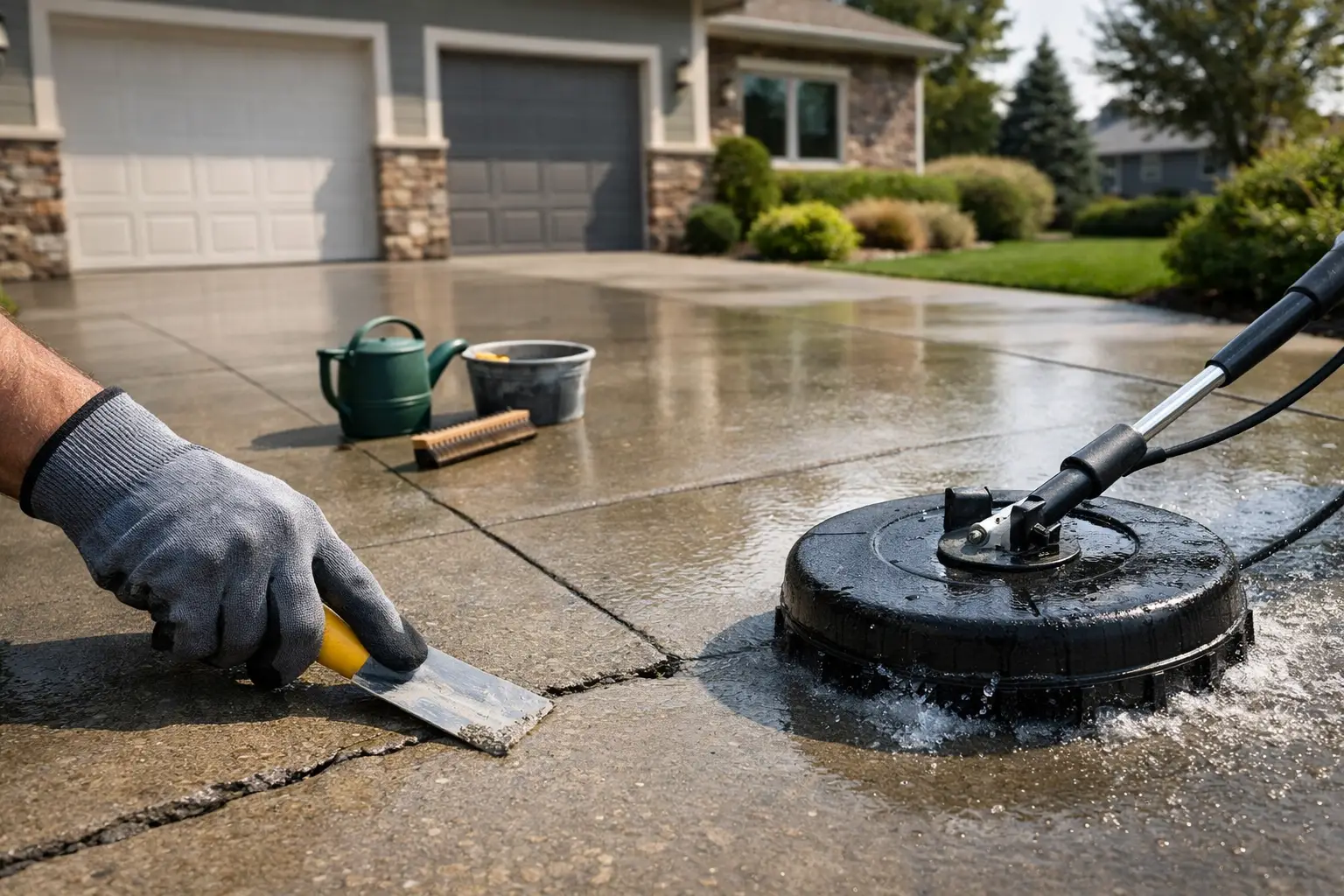
That clean, solid look a concrete driveway has when it is first poured does not stay that way on its own. If you want to know how to maintain concrete driveway surfaces so they last, the answer is not complicated - but it does require consistency. A little upkeep done at the right time is far cheaper than letting small issues turn into scaling, stains, settling, or major cracking.
Concrete is durable, not indestructible. It handles vehicles, weather, foot traffic, and daily use better than many surface options, but it still reacts to moisture, heat, shifting soil, and chemical exposure. In places like North Texas and Oklahoma, where long hot stretches can be followed by heavy rain and movement in the soil, maintenance matters even more.
How to Maintain Concrete Driveway Without Overdoing It
A lot of property owners either ignore their driveway for years or treat it like it needs constant product-heavy care. Neither approach is right. Good maintenance is simple: keep it clean, keep water moving away from it, protect the surface when needed, and deal with small damage before it spreads.
You do not need to seal it every few months or wash it every weekend. But you do need to pay attention to what is happening on the surface and around the edges. Most driveway problems start gradually. A faint oil spot, a little joint erosion, a hairline crack, or water sitting in one area may not seem urgent. Over time, those are the details that shorten the life of the slab.
Start With Routine Cleaning
The easiest maintenance step is basic cleaning. Dirt, leaves, lawn debris, fertilizer, and vehicle fluids all sit on the surface and wear on it over time. Organic debris can trap moisture. Oil and grease can stain. Rust from tools or parked equipment can become difficult to remove if it sits too long.
Sweeping the driveway regularly helps more than most people think. It keeps abrasive grit off the surface and prevents buildup in joints and edges. A rinse with a garden hose every so often also helps remove dust and loose debris.
For a deeper clean, use a mild concrete-safe cleaner and a stiff broom or surface brush. Pressure washing can work well, but it needs to be done carefully. Too much pressure, especially on older or already worn concrete, can roughen the surface and make it more vulnerable to future damage. If the slab has a decorative finish or existing weak spots, aggressive washing can do more harm than good.
Oil stains should be addressed early. Fresh spills are easier to treat than old ones that have soaked into the surface. Absorb what you can first, then clean the area with a degreasing product made for concrete. If a stain does not come out completely, reducing it still helps limit long-term discoloration.
Watch Water Before You Watch Cracks
Most people focus on visible cracks first. The smarter move is to watch water. Standing water and poor drainage are some of the biggest threats to driveway longevity. Water that pools on the slab can wear down the surface. Water that gets under the slab can contribute to soil movement, voids, and settlement.
Take a look at what happens after a heavy rain. If water sits in low spots for more than a short time, that is a warning sign. If downspouts dump water near the driveway edges, that can wash out support under the slab. If the surrounding grade slopes toward the driveway instead of away from it, the problem gets worse.
Sometimes the fix is simple, like extending a downspout or adjusting nearby drainage. Sometimes it points to a larger issue with grading or slab settlement. Either way, controlling water usually does more for long-term performance than surface cleaning alone.
Seal It When It Makes Sense
Sealing can help protect a concrete driveway, but timing and product choice matter. A quality sealer can reduce moisture intrusion, limit staining, and make routine cleaning easier. That said, not every driveway needs immediate resealing on the same schedule.
How often to seal depends on the age of the driveway, the type of finish, the amount of traffic, and the local conditions. A newer driveway may not need resealing right away if it was properly finished and sealed after installation. An older driveway with fading protection may benefit from a fresh coat.
A simple test is to sprinkle a little water on the surface. If it beads up, the sealer may still be doing its job. If the water soaks in quickly, it may be time to reseal. Before applying anything, the slab needs to be clean and dry, and any needed repairs should come first. Sealing over dirt, stains, or active cracking does not solve the actual problem.
It is also worth avoiding the idea that more sealer is always better. Over-application can lead to peeling, discoloration, or a patchy finish. Use the right product for exterior concrete and follow the application instructions closely.
Deal With Cracks Early
Even a well-installed driveway can develop cracks over time. Some are cosmetic. Some point to movement or underlying support issues. The key is not to panic at the first small crack, but not to ignore it either.
Hairline cracks that stay narrow and stable are often manageable. Wider cracks, spreading crack patterns, or sections that are no longer level deserve closer attention. Water entering cracks can make future damage worse, especially if the base support is already compromised.
For small, non-structural cracks, a concrete crack filler or sealant can help keep out moisture and debris. The crack should be cleaned out first so the repair material can bond properly. If the slab is shifting, sinking, or cracking repeatedly in the same area, a surface filler is only a temporary patch.
This is where experience matters. A driveway that has isolated wear may need a simple repair. A driveway with drainage problems, poor subgrade support, or major settlement may need partial replacement or a more involved fix. Spending a little on the right assessment often prevents wasting money on repairs that do not last.
Protect the Edges and Joints
Driveway edges are easy to overlook, but they are often where damage starts. The edges have less support than the center of the slab, so repeated heavy loads near the side can cause cracking or breakage. Parking with tires too close to the edge over and over can stress that area, especially if the soil along the side has eroded away.
Joints also need attention. Control joints are there to help concrete crack where it is supposed to, not randomly across the slab. If joints fill with dirt, weeds, or eroded debris, they stop working as well. Keeping them clean helps the slab move as intended.
If joint sealant is failing or weeds are taking over, that is worth addressing. It is a small maintenance step that can help prevent larger surface deterioration.
Be Careful With What You Put on the Surface
Not all damage comes from weather. Some of it comes from common homeowner habits. Harsh deicers, fertilizer overspray, metal equipment left sitting in wet conditions, and even certain cleaning chemicals can affect concrete over time.
If you are moving dumpsters, trailers, or heavy equipment onto the driveway, pay attention to weight concentration and turning stress. Concrete handles load well, but repeated pressure in the same areas or sharp turns from heavy vehicles can wear it down faster.
In colder conditions, avoid using deicing products that are not recommended for concrete. While freeze-thaw cycles are less severe in many parts of Texas, weather swings still happen, and the wrong chemical can contribute to surface damage.
Know When Maintenance Is No Longer Enough
There is a point where maintenance stops being the answer. If your driveway has widespread scaling, deep spalling, major trip hazards, poor drainage built into the slope, or large settled sections, cleaning and sealing are not going to fix it.
That does not always mean full replacement. Some driveways can be repaired in sections. Others need a more complete solution because the base, grading, or original installation is part of the problem. The right move depends on the condition of the slab, how the damage developed, and what you need the surface to handle going forward.
A good contractor will tell you the difference between maintenance issues and structural issues. That matters because a cosmetic fix on a failing slab usually looks good for a short time and then fails again.
Fantastico Concrete works with property owners who need practical answers, not guesswork. If a driveway can be maintained and repaired cost-effectively, that should be the recommendation. If it is past that stage, it is better to know now than keep patching the same problem.
A Simple Maintenance Rhythm That Works
For most driveways, a workable routine looks like this: keep debris off the surface, clean stains early, check drainage after storms, inspect cracks and joints a few times a year, and reseal when the surface actually needs it. That is enough to catch most problems before they get expensive.
Concrete lasts best when maintenance is steady, not reactive. If you treat your driveway like part of the structure instead of just a place to park, it will usually give you a much longer service life and a better appearance along the way.
The best time to protect a concrete driveway is when the damage still looks small.

