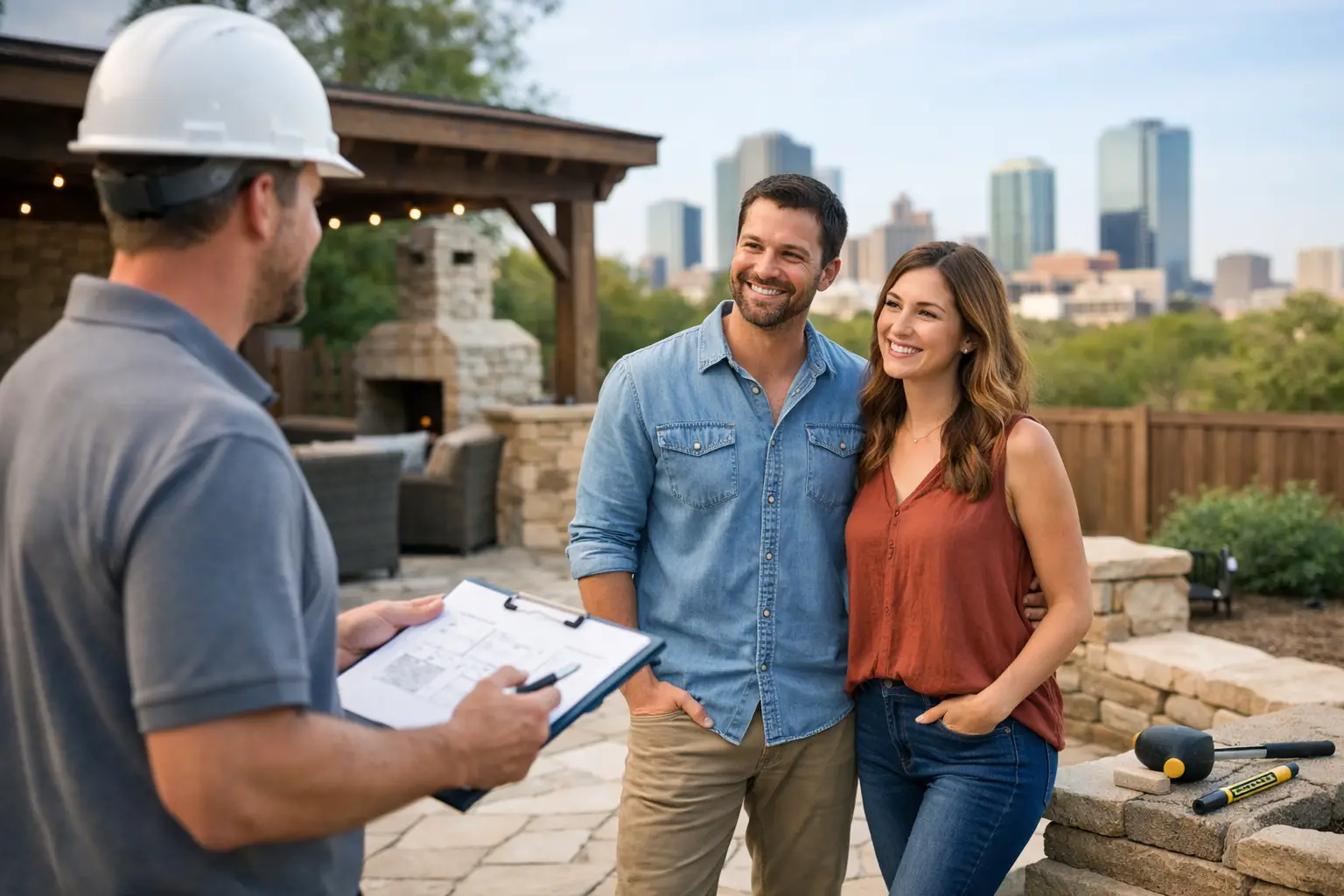
A patio looks simple when it is finished. A clean slab, straight edges, enough room for furniture, maybe a walkway tying it all together. What homeowners usually do not see is how much of the job depends on prep, grading, drainage, and pour quality. That is why hiring the right fort worth patio contractor matters more than picking a shape or finish.
In North Texas, patios take a beating. Heat, heavy rain, shifting soil, and daily use all put pressure on concrete over time. A patio that is installed fast but not installed right can start showing trouble early - standing water, surface cracks, settling corners, or joints that were never planned well in the first place. A good contractor helps you avoid those problems before the first truck ever shows up.
What a Fort Worth patio contractor should actually handle
A patio project is more than forming a rectangle and pouring concrete. A qualified contractor should be looking at the whole site. That includes elevation, drainage path, soil condition, access to the backyard, tie-in points to the house, and how the new slab will be used.
If the patio sits too high, water can move toward the house. If it sits too low, it can collect runoff from the yard. If the subgrade is not compacted correctly, the concrete may settle unevenly. These are not small details. They are the difference between a patio that stays useful for years and one that becomes a repair job.
A solid contractor should also talk through thickness, reinforcement, joint layout, and finish options in plain language. Not every patio needs the exact same build. A basic sitting area has different demands than a large entertainment space with a grill station, hot tub, pergola footings, or heavy traffic.
Concrete patio work is not one-size-fits-all
Some property owners start by asking for price per square foot. That can be a useful starting point, but it does not tell the whole story. Patio pricing changes based on site conditions, design complexity, demolition needs, access, and finish level.
A simple backyard slab with clear access is a different project than a patio behind fencing, near tight grade changes, or attached to older concrete that has already moved. Stamped or decorative finishes add labor and timing sensitivity. Extra excavation, removal of existing concrete, or drainage correction can also shift the cost.
That does not mean higher price always equals better work. It means the best estimates usually explain what is included and why. If one quote is much lower than the rest, there is usually a reason. Sometimes it is less prep. Sometimes it is thinner concrete. Sometimes it is no real plan for runoff.
Questions worth asking before you hire
When you talk to a fort worth patio contractor, the best questions are practical. Ask how they handle grading. Ask what thickness they recommend for your use. Ask whether reinforcement is part of the build and how control joints will be placed. Ask what happens if access to the yard is limited. Ask how the crew protects nearby landscaping, fencing, or existing flatwork.
You should also ask about timeline, curing expectations, and what kind of finish makes sense for your property. A broom finish is often the right call for traction and long-term function. Decorative options can look great, but they also need a contractor who knows how to execute them consistently in Texas weather.
A dependable contractor will answer directly. You should not have to work hard to get clear information about the basics of the job.
Signs of a good patio plan
The strongest patio projects usually share the same traits. The layout fits the way the space will actually be used. Drainage is handled early, not patched later. The slab is properly formed, reinforced where appropriate, and finished for both appearance and traction.
That may sound obvious, but a lot of patio disappointments come from poor planning, not bad intentions. A patio can be technically new and still feel wrong if it is too small for furniture, too close to grade runoff, or awkwardly connected to the back door. Good contractors think through use, not just placement.
This is especially important for homeowners adding patios to improve resale value or long-term livability. Buyers notice usable outdoor space. They also notice uneven concrete, ponding water, and patchwork additions that do not look intentional.
Patio repairs vs new installation
Not every project calls for a full replacement. In some cases, a patio extension or partial removal may solve the problem. In others, trying to save old concrete ends up costing more in the long run.
It depends on the condition of the existing slab. Minor surface wear is one thing. Major cracking, settlement, poor drainage, or failing edges are another. If the base has moved or the original pour was weak, cosmetic fixes may only buy time.
A good contractor should be honest about that trade-off. If the patio is structurally compromised, replacement is often the cleaner and more cost-effective path. If the issue is limited and the main slab is still sound, a targeted repair might make sense. The key is getting a diagnosis based on the slab itself, not a sales pitch.
Choosing the right finish for a Texas patio
A patio has to look good, but it also has to perform. That is why finish selection matters. Many property owners like decorative concrete because it adds character and helps tie the patio into the home. That can be a smart move when the finish is chosen for the setting and budget.
Still, plain concrete remains a strong option for a reason. It is clean, durable, easier to maintain, and often the most cost-effective route. A broom finish gives reliable grip and works well for everyday backyard use. Stamped or textured finishes can raise the visual impact, but they require more labor and should be installed by crews with real experience in timing, weather control, and detail work.
There is no universal best choice. If your priority is low maintenance and function, keep it simple. If the patio is a major feature of the yard and appearance matters just as much as durability, decorative concrete may be worth the added investment.
Red flags when comparing contractors
The biggest red flag is vague communication. If a contractor cannot clearly explain prep, slope, thickness, or timeline, that is a problem. Concrete work is technical, but it should still be explained in terms a property owner can understand.
Another warning sign is an estimate that skips over site conditions. Every yard is different. If someone prices the project without addressing grading, demolition, access, or drainage, the number may not hold up once work begins.
Be cautious with promises that sound too easy. Fast turnaround can be good, but rushing prep and finishing is not. Concrete has steps that cannot be skipped without creating risk later. A contractor who takes the time to talk through those steps is usually the one taking the work seriously.
Why local conditions matter in patio construction
A patio in this region has to be built with local conditions in mind. Expansive soil, high summer temperatures, and sudden rain all affect performance. That is why local experience matters. The crew needs to understand how the ground behaves and how weather changes scheduling, finishing, and curing.
This is where a specialized concrete contractor has an advantage over a general handyman or broad remodeling outfit. Patio concrete is not just another task on a list. It is flatwork that depends on grade control, compaction, mix handling, and finishing discipline. Those details show up later if they are missed early.
For homeowners and property managers, that specialization usually means fewer surprises and better long-term value. Fantastico Concrete works in that lane - direct, trade-focused concrete work built around durability, function, and clean results.
Make the decision based on the slab you want in five years
A new patio should not just look good on pour day. It should still drain well, hold its shape, and stay usable after years of weather and traffic. That is the real test.
When you choose a contractor, think beyond the initial estimate. Look for someone who treats site prep, grading, reinforcement, and finish quality as part of the same job, because they are. A patio is only as good as what is under it and how carefully it was planned.
The best hiring decision is usually the least flashy one - clear scope, sound workmanship, realistic expectations, and a finished surface that does its job every day.

