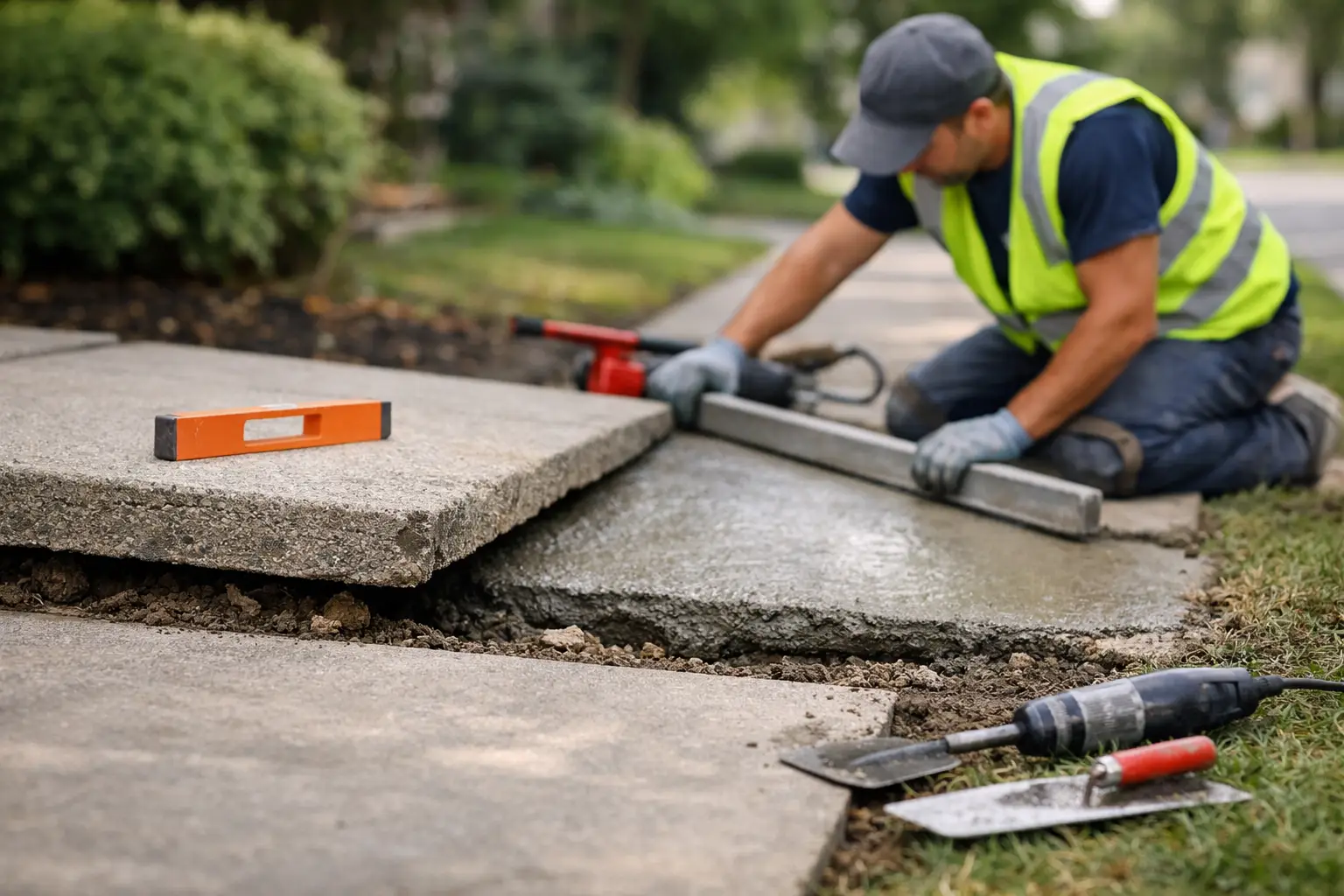
A sidewalk that sits just an inch higher than the next slab does not look like much - until someone catches a toe on it. That is usually when property owners start asking how to fix uneven sidewalk problems without wasting money on the wrong repair. The right answer depends on why the slab moved, how severe the height difference is, and whether the concrete is still structurally sound.
Uneven sidewalks are usually a symptom, not the root problem. One section may lift because of tree roots, expanding soil, erosion under the slab, poor original base prep, or years of water moving through the ground. In North Texas, shifting soil is a common factor. That matters because a quick cosmetic fix will not hold up if the underlying cause is still active.
What causes an uneven sidewalk
Most sidewalk panels do not become uneven overnight. The movement tends to build slowly as the soil under one slab changes while the next slab stays put. If the supporting soil settles, the slab can sink. If roots grow underneath, the slab can heave upward. Both conditions create a trip hazard, but they need different repairs.
Water is a major player here. If downspouts discharge too close to the walk, irrigation is hitting one area too heavily, or drainage runs along the edge of the concrete, the soil can wash out or soften. On the other hand, long dry periods can shrink certain clay-heavy soils and leave gaps below the slab. That cycle of swelling and shrinking is hard on flatwork.
Age and original installation also matter. If the sidewalk was poured over weak subgrade, thin base material, or poorly compacted soil, movement becomes much more likely. In those cases, fixing the height difference alone may not be enough.
How to fix uneven sidewalk based on the actual problem
There is no single repair that fits every sidewalk. A lot of property owners assume replacement is the only real option, but that is not always true. If the concrete is otherwise in decent shape, a targeted repair can restore safety and extend the life of the walk.
Grinding down a raised edge
If one slab is slightly higher than the next and the concrete is still solid, concrete grinding may be the simplest fix. This method removes material from the raised edge to reduce the lip and create a smoother transition.
Grinding works best when the height difference is minor. It is often a practical choice for trip hazards where the slab itself is not badly cracked or unstable. The trade-off is appearance and depth. Ground concrete can look different from the surrounding finish, and if the height difference is too large, grinding too much material can weaken the slab edge.
This is usually not the best answer when the slab is actively moving upward because of roots or severe heaving. In that case, the lip may come back.
Lifting a sunken slab
When a sidewalk panel has settled lower than the surrounding concrete, slab lifting can be a good repair. The process involves raising the panel by filling voids beneath it. Depending on the method used, a contractor may pump material under the slab or use newer lifting systems designed to bring the concrete back to grade.
This approach makes sense when the slab is intact and the main issue is settlement, not widespread cracking. It can be faster and less disruptive than tearing out and repouring the walk. Still, it depends on conditions below the slab. If drainage problems are ongoing or the base has failed across a larger area, lifting may only be part of the solution.
Removing roots and replacing affected sections
If tree roots are the reason a sidewalk lifted, the concrete often has to be removed so the root issue can be addressed. That does not always mean cutting major structural roots without a plan. Root removal should be handled carefully, especially near mature trees, because aggressive cutting can harm the tree or lead to future instability.
In many cases, the best repair is to replace the raised section and correct the conflict as much as possible during the rebuild. Sometimes that means adjusting the sidewalk path, using root barriers where appropriate, or coordinating with an arborist if the tree is significant.
Full replacement
Replacement is the right move when the sidewalk has multiple failed panels, deep cracking, broken edges, major washout, or repeated movement. It is also the better option when you are dealing with a larger drainage or grading issue and need to rebuild the area correctly from the ground up.
A new sidewalk gives you the chance to improve base preparation, slope, joint layout, and water control. It costs more upfront than a spot repair, but it can save money over time if the existing concrete is too far gone for patchwork fixes to last.
Signs a simple fix is not enough
A small offset does not always mean a small repair. If you see standing water near the walk, soil erosion at the slab edge, long cracks running through multiple panels, or movement in several directions, the issue is probably bigger than one raised corner.
You should also look at how the sidewalk connects to nearby features. If the walk is pulling away from a driveway, porch, steps, or curb, that can point to broader settlement or drainage trouble. In commercial settings and multifamily properties, recurring sidewalk movement can also create liability concerns that make temporary fixes a poor bet.
DIY versus hiring a concrete contractor
Some minor trip hazards can be handled with rental equipment, but this is one of those jobs that looks easier than it is. Concrete grinders are heavy, dusty, and unforgiving. It is easy to create low spots, rough transitions, or surface damage that looks worse than the original problem.
Lifting settled slabs and replacing sidewalk sections take more than basic hand tools. You need to know what caused the movement, how stable the surrounding concrete is, and whether the base and drainage are being corrected at the same time. If those parts are missed, the repair may fail early.
For homeowners, the main question is usually cost versus longevity. For property managers and commercial owners, safety and exposure matter just as much. If the sidewalk is in a public-facing area, at an entry point, or along a heavily used path, a professional repair is usually the smart call.
What a good sidewalk repair should include
A proper repair starts with diagnosis, not just a price for concrete work. Before choosing a method, the contractor should identify whether the slab is raised, sunken, undermined, cracked beyond repair, or affected by roots. The next step is deciding whether the existing concrete can be salvaged safely.
The repair itself should address grade and support, not just surface appearance. If water is contributing to movement, drainage needs to be part of the conversation. If the soil is loose or washed out, the base condition matters. If surrounding panels are already failing, piecemeal work may not give you a durable result.
That is especially true in areas with expansive soils, where movement is a long-term reality. A sidewalk repair should be built around real site conditions, not a one-size-fits-all method.
How to prevent sidewalk panels from becoming uneven again
The best prevention is controlling water and reducing avoidable soil movement. Keep downspouts from dumping next to sidewalks. Watch for irrigation overspray and wet spots that stay saturated. If water runs across the sidewalk during storms, grading may need attention.
Tree placement also matters over the long term. Large roots and narrow sidewalk corridors do not always coexist well. If you are replacing a walk near established landscaping, planning for future growth can prevent another repair later.
Routine inspection helps too. A slight height change is easier and cheaper to deal with than a major uplift or settled section. Once the slab becomes a serious trip hazard, your options narrow and urgency goes up.
For property owners trying to decide how to fix uneven sidewalk sections, the best repair is the one that solves the cause, restores a safe walking surface, and holds up in real conditions. Sometimes that means grinding a small edge. Sometimes it means lifting a settled panel. And sometimes the right answer is to remove the failed section and rebuild it correctly. A sidewalk does not need to be perfect, but it does need to be safe, stable, and worth the money you put into it.

