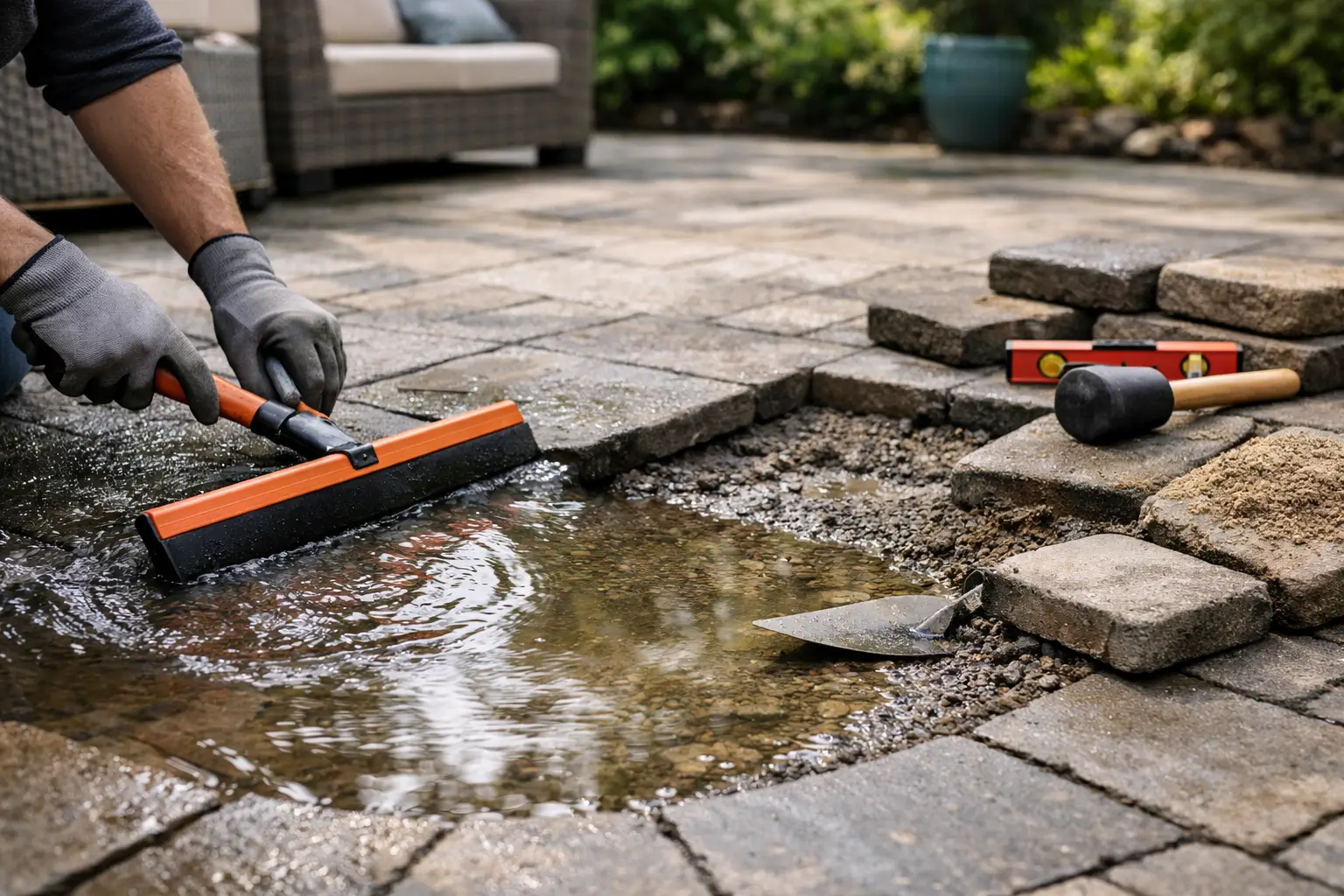
A patio that holds water after every rain is not just annoying. It usually means the surface is not draining the way it should, and that problem tends to get worse over time. If you are looking for how to fix patio puddling, the real answer starts with finding out why the water is staying there in the first place.
Sometimes the issue is minor, like one low spot in an otherwise solid slab. Other times, puddling points to settlement, poor slope, clogged drainage, or a patio that was not pitched correctly when it was poured. The right fix depends on the cause, the size of the affected area, and how long you want the repair to last.
Why patio puddling happens
Concrete patios should move water away from the house and off the slab. When that does not happen, there is usually a problem with slope, elevation, or drainage around the patio.
A common cause is a low area in the concrete itself. This can happen if the slab settled after installation, if the subgrade was not compacted well, or if the finish was not consistent when the concrete was placed. Even a shallow dip can collect enough water to create standing puddles.
Another issue is negative drainage. That means the patio slopes toward the home instead of away from it. This is more serious than a nuisance because water near the foundation can create moisture problems, soil movement, and long-term structural concerns.
Drainage around the patio also matters. A slab can have decent pitch and still hold water if nearby soil, landscaping, or hardscape edges trap runoff. Downspouts that discharge onto the patio can make the problem worse fast.
In North Texas, expanding and shrinking soils can also shift concrete over time. A patio that drained fine a few years ago may not drain properly now if one section has moved.
How to inspect the problem before you fix it
Before you choose a repair, check what the water is actually doing. Wait until after rain, or use a garden hose to run water over the surface. Watch where the water collects, how deep it gets, and whether it eventually drains or just sits.
Measure the affected area. A small birdbath in the middle of a patio is a different problem than several low spots or water collecting along the house. If the puddle is close to the foundation, doors, or patio cover posts, take that more seriously.
It also helps to look for cracks, settled edges, or signs that one panel is lower than the rest. If nearby gutters overflow or downspouts dump directly onto the slab, those need attention too. Fixing the concrete without fixing the water source usually means the problem comes back.
How to fix patio puddling based on the cause
There is no single repair that fits every patio. The best solution depends on whether the issue is surface-level, structural, or drainage-related.
Fill isolated low spots with a resurfacing repair
If the patio is in generally good shape and the puddling comes from one or two shallow depressions, a surface repair may work. This usually involves a cement-based patch or resurfacing material designed to bond to existing concrete and feather out smoothly.
This option can be cost-effective, but only when the low spot is minor and the surrounding slab is stable. It is not a good answer for widespread settlement or patios with active movement. If the slab keeps shifting, the patch will often fail.
Surface repairs also need proper prep. The concrete has to be clean, sound, and profiled correctly for the material to bond. A quick skim over dirty or weak concrete rarely lasts.
Raise settled concrete with slab lifting
If one section of the patio has dropped, lifting the concrete may be the better fix. This process raises settled slabs by injecting material beneath them to bring them back to a better elevation.
This approach can work well when the concrete is still structurally sound and the main issue is settlement rather than severe cracking or erosion. It can restore slope without full replacement, which is a real advantage when the rest of the patio is worth saving.
That said, slab lifting is not always the right move. If the concrete is badly cracked, too thin, or the drainage design was poor from the start, lifting alone may not solve the full problem.
Correct the drainage around the patio
Sometimes the patio is not the main problem. Water may be reaching it from roof runoff, planter beds, adjacent walkways, or surrounding grade that slopes the wrong way.
In those cases, drainage improvements make more sense than patching the slab. That can include extending downspouts, regrading nearby soil, adding a drain system, or changing landscape borders that trap water against the concrete.
This is where many property owners waste money. They fix the puddle they can see but ignore the water source feeding it. If too much water keeps flowing onto the patio, the slab will stay under stress.
Replace the patio when the slope is fundamentally wrong
If the patio was poured with poor pitch, has multiple low areas, or drains back toward the house, replacement may be the most practical long-term fix. That is especially true when drainage and structural issues overlap.
Replacement costs more up front, but it gives you the chance to correct the subgrade, set the proper slope, improve runoff control, and install a patio that performs the way it should. In many cases, repeated patching ends up costing more over time than replacing a failing slab once.
Signs a DIY fix probably will not hold
Some homeowners can handle a small patch if the issue is minor and clearly isolated. But there are cases where a store-bought repair is unlikely to last.
If water collects in multiple places, if the patio has visible settlement, if puddling happens near the house, or if cracks are widening, the problem is bigger than a cosmetic dip. The same goes for patios with recurring puddles after previous repairs.
A repair material can only do so much. If the base has failed or the slope is wrong, surface fixes are temporary at best.
What proper patio drainage should look like
A well-built patio should drain consistently and predictably. Water should move away from structures, not sit in broad shallow areas, and not flow back toward doors or foundations.
That usually means a steady slope across the slab, solid base preparation underneath, and enough drainage planning around the patio to handle normal rain without flooding the surface. On larger patios or commercial areas, drainage may also need collection points or channel drains to move water efficiently.
The goal is not just to get rid of puddles. It is to protect the concrete, keep the surface safer to walk on, reduce staining and mildew, and prevent water from creating bigger property issues.
When professional repair makes the most sense
If you are trying to figure out how to fix patio puddling and the answer is not obvious after a simple inspection, it is time to get an expert opinion. A contractor who works with concrete regularly can tell the difference between a patchable low spot and a drainage failure that needs a more serious fix.
That matters because the wrong repair can lock in the problem. A patio that looks better for a few months but still drains poorly is not really fixed. It is just delayed.
For homeowners, property managers, and investors, the smartest approach is usually the one that addresses both the concrete surface and the water movement around it. That is how you get a repair that lasts, not just one that hides the issue until the next storm.
Fantastico Concrete works with property owners who need practical concrete solutions, not guesswork. If your patio keeps holding water, the best next step is to treat it like a drainage and concrete problem together - because that is usually what it is.
A dry patio is not about perfection. It is about proper slope, sound concrete, and water going where it is supposed to go.

