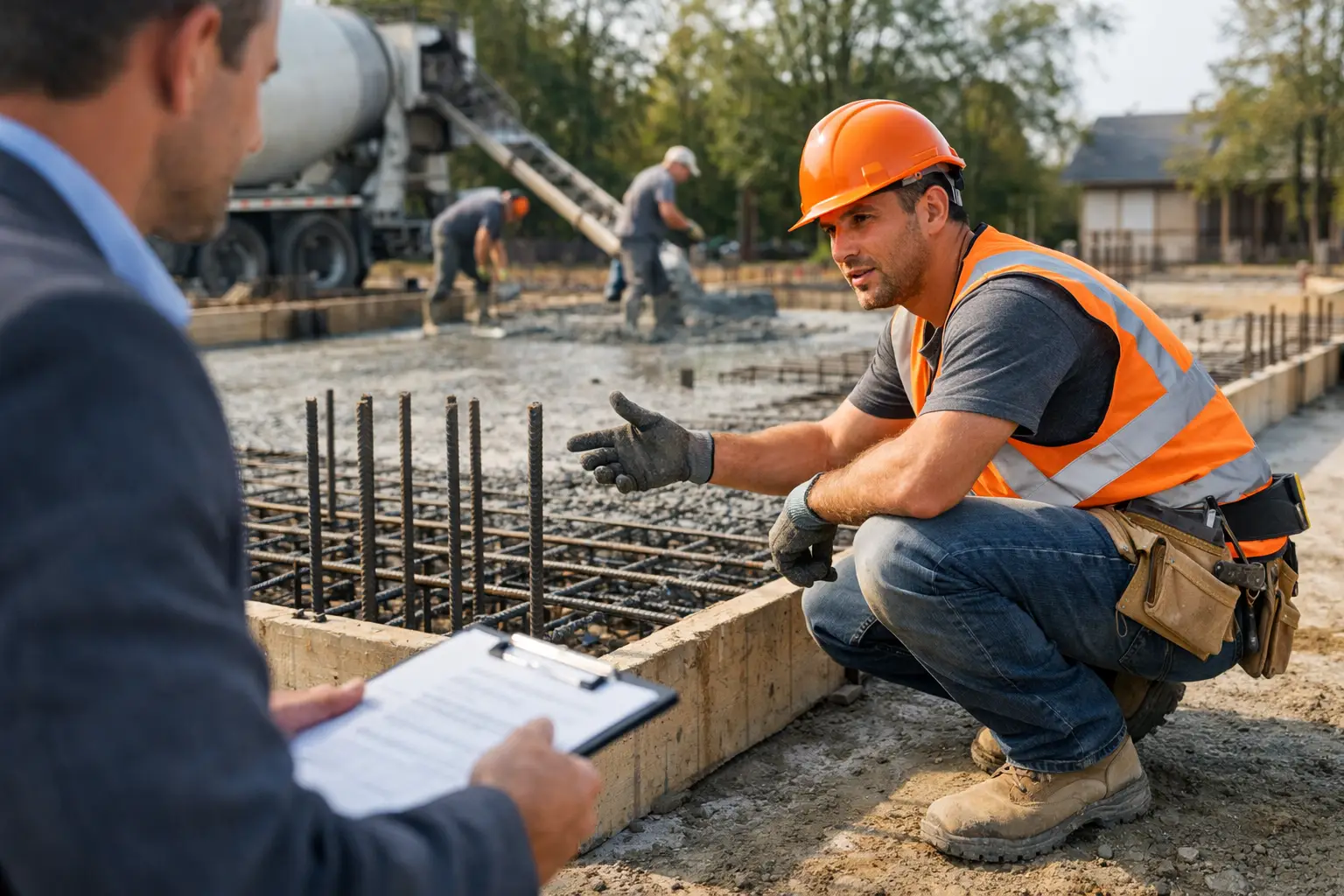
A foundation is not the place to guess, bargain hunt, or hope for the best. If the slab is wrong, the rest of the structure pays for it. That is why choosing the right foundation concrete contractor matters long before concrete is poured.
In Dallas-Fort Worth, foundation work has to account for expansive clay soil, drainage problems, shifting ground, and real heat. Those conditions make foundation jobs less forgiving. A clean finish on top is not enough. What matters is whether the base prep, reinforcement, forming, pour schedule, and curing process were handled correctly from the start.
What a foundation concrete contractor actually does
A foundation concrete contractor handles more than placing concrete in a form. The job starts with site evaluation. That includes looking at grade, soil behavior, drainage patterns, access, and the structural needs of the building or addition.
From there, the work usually includes excavation or subgrade preparation, form setting, reinforcement placement, vapor barriers where needed, concrete placement, finishing, and curing. On many projects, the contractor also coordinates with engineers, inspectors, plumbers, and framers so the foundation matches the full build plan.
That matters because foundation work is tied to everything above it. If elevations are off, if thickness varies, or if reinforcement is installed poorly, those problems do not stay isolated at ground level. They show up later as cracks, sticking doors, uneven floors, water intrusion, and expensive repairs.
Why foundation work in DFW needs local experience
Not every concrete contractor is the right fit for foundation work. Some companies do strong flatwork on patios, sidewalks, and driveways but take on foundations only occasionally. That is a risk. A foundation concrete contractor should understand the local conditions that affect long-term performance.
In North Texas, soil movement is a constant issue. Dry periods shrink the soil. Heavy rain can make it swell. That expansion and contraction puts stress on slabs and footings. Drainage design matters just as much as concrete strength. If water collects around the perimeter, the foundation is already working against bad conditions.
Local experience also helps with practical decisions on the job. That includes when to pour during hot weather, how to protect the slab during curing, and how to prepare a site after rain. These are not small details. They affect cracking, finish quality, and long-term durability.
Signs you are talking to the right foundation concrete contractor
A qualified contractor should be able to explain the job in plain language. You should hear specific answers about subgrade prep, reinforcement, thickness, concrete mix, drainage, control joints where applicable, inspection steps, and cure time. If the explanation stays vague, that is a problem.
You also want a contractor who looks at the site before pricing the work. Foundation estimates built from a rough guess or a few photos can miss real conditions. Slope, access, soil issues, demolition needs, and utility coordination all affect cost and scope.
Good contractors talk about process, not just price. They explain what is included, what can change, and where job conditions may affect the timeline. They also set realistic expectations. Concrete is strong, but it is not magic. Small surface variation, normal shrinkage cracking, and weather-related schedule changes can happen even on well-run jobs.
Questions worth asking before you hire
The best questions are direct. Ask what kind of foundation work they handle most often. Ask how they prepare the subgrade. Ask what reinforcement will be used and why. Ask who is responsible for layout, inspections, and coordination with other trades.
You should also ask how they handle drainage around the foundation. A strong slab can still have performance issues if runoff is directed toward the structure. The answer should connect the foundation to the site as a whole, not treat it like an isolated pour.
It also helps to ask about timeline in practical terms. Not just when they can start, but how long prep takes, when concrete will be poured, and when the area will be ready for the next phase. Contractors who know their work can usually give a clear sequence even if weather affects exact dates.
What affects price on foundation jobs
Foundation pricing depends on more than square footage. The type of foundation matters. A simple slab for a detached structure is very different from a building foundation with deeper footings, plumbing rough-ins, engineering requirements, and tighter tolerances.
Site conditions can raise costs fast. Poor access may require more labor or smaller equipment. Heavy demolition, unstable subgrade, tree roots, drainage correction, and steep grading can all add time and materials. Reinforcement requirements and concrete thickness also change the price.
The cheapest bid is often missing something. Sometimes it is proper base prep. Sometimes it is reinforcement. Sometimes it is labor time for forming and finishing. Low numbers can look good early and become expensive later when change orders show up or the finished work does not perform.
Common mistakes that lead to foundation problems
Bad foundation outcomes are usually tied to process failures, not just bad luck. Poor compaction is one of the biggest ones. If the base is not stable and uniform, the slab is more likely to settle unevenly.
Another problem is rushed reinforcement placement. Rebar or mesh has to be placed correctly, supported properly, and kept where the design intends it to be during the pour. If steel ends up in the wrong position, it does not do its job.
Water management is another major issue. Too much water in the mix can weaken concrete. Poor drainage around the completed foundation can create long-term stress. And weak curing practices can leave the slab more vulnerable to surface issues and premature wear.
Then there is simple inexperience. Foundation work is not the place for a contractor learning as they go. The margin for error is smaller because the consequences last longer.
Residential and commercial jobs are not the same
Homeowners often need foundations for room additions, garages, workshops, patios with structural requirements, or full new-home construction. These projects still require precision, but they may move on a smaller scale with more direct owner involvement.
Commercial foundation work usually adds another layer of complexity. There may be heavier loads, tighter schedules, stricter inspection requirements, and more coordination with site development or other trades. Property managers and commercial owners also tend to prioritize minimal disruption, clear documentation, and predictable scheduling.
A capable foundation concrete contractor understands those differences. The work still comes down to concrete, preparation, and execution, but project management expectations change depending on the client and the use of the structure.
Why communication matters as much as workmanship
Good concrete work should be visible in the finished result, but communication tells you a lot before the job even starts. Contractors who show up on time, answer clearly, and explain scope without dodging questions usually run tighter jobs.
That does not mean every conversation will be polished. This is construction. Conditions change, weather interrupts schedules, and inspections can shift timing. What matters is whether the contractor communicates those issues early and gives you a straight answer about next steps.
For many property owners, that level of clarity is what separates a specialist from a generalist. A serious contractor does not just promise a strong slab. They manage the work in a way that reduces confusion, delays, and preventable mistakes.
Choosing a foundation concrete contractor with confidence
The right hire is usually not the contractor with the flashiest pitch. It is the one who understands the site, explains the work clearly, prices it honestly, and has the experience to handle local conditions. In a market like Dallas-Fort Worth, that practical knowledge matters.
If you are comparing bids, pay attention to how each contractor thinks through the project. Look for detail. Look for realism. Look for someone who treats foundation work like structural work, not just another concrete pour.
That approach is what gives the project a better chance of performing the way it should for years. Fantastico Concrete understands that concrete is only as good as the preparation, planning, and workmanship behind it. When the foundation matters, the right contractor is the one who respects every step before the truck even arrives.
A solid foundation does not call attention to itself after the job is done, and that is the point. If it is built right, it quietly does its job for a long time.

