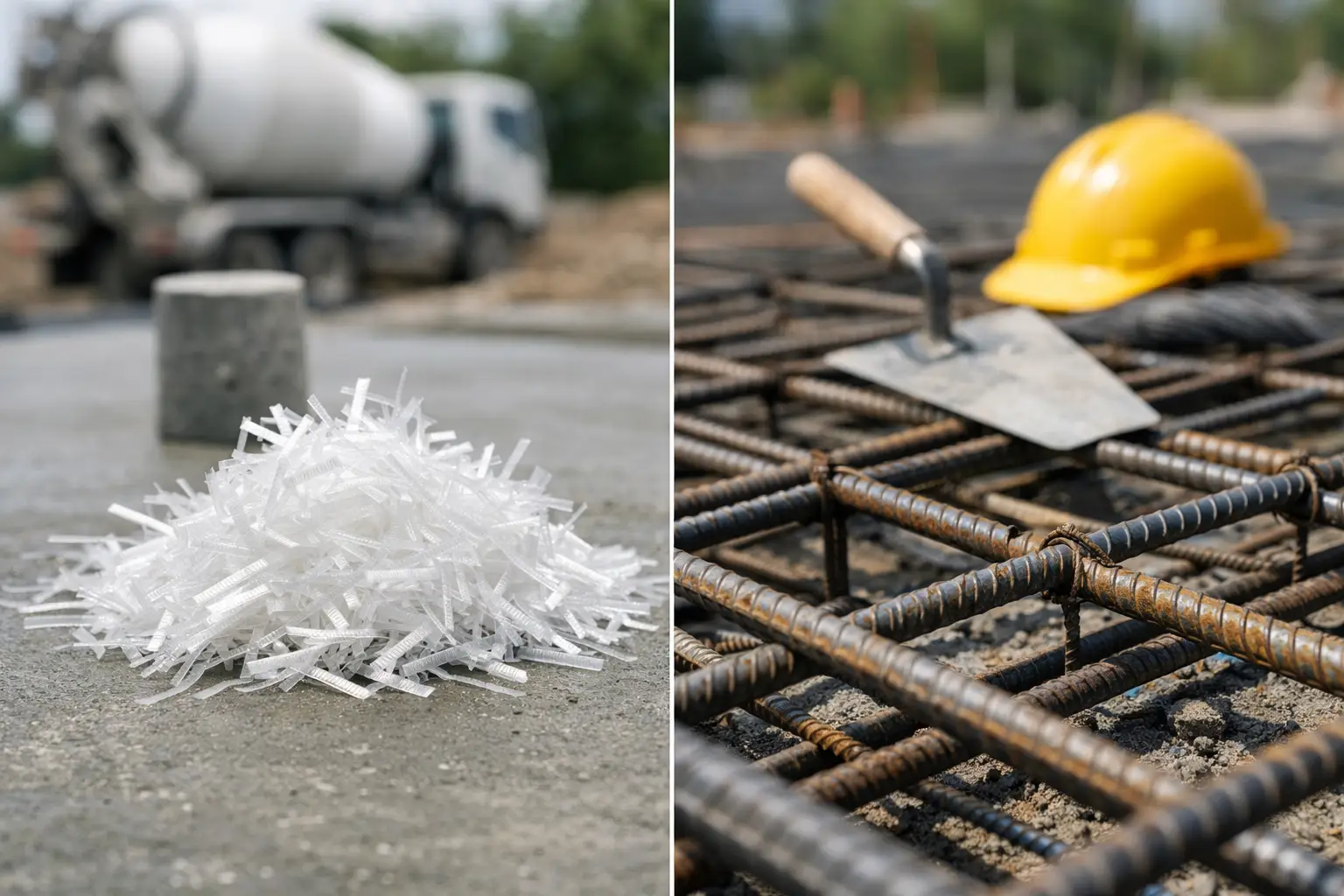
A driveway can look solid on the day it is poured and still develop cracks months later. That is why the fiber versus rebar concrete question matters before work begins, not after a slab starts moving. Both materials can improve concrete performance, but they do different jobs. Choosing the right one depends on the slab's purpose, thickness, soil conditions, loads, and the level of crack control required.
For homeowners and property managers, the goal is usually straightforward: a concrete surface that performs well, drains correctly, and holds up under Texas heat, rain, traffic, and normal ground movement. Reinforcement is part of that equation, but it is not a substitute for proper site preparation, concrete thickness, control joints, and installation quality.
Fiber Versus Rebar Concrete: The Real Difference
Concrete is strong under compression but relatively weak when it is pulled apart or bent. As concrete cures, it shrinks. Soil can move beneath it, temperatures change, and vehicle loads create stress. Cracking is common in concrete, even when the work is done correctly. Reinforcement helps manage those stresses and keeps cracks from opening or spreading as much.
Fiber reinforcement consists of small fibers mixed throughout the concrete before it is poured. Most residential flatwork uses synthetic fibers, often polypropylene. These fibers are distributed through the entire mix, so they help control small cracks from the inside rather than in only one plane of the slab.
Rebar is steel reinforcement placed in a grid before the concrete is poured. It provides tensile strength across the slab and can help keep sections of concrete tied together when larger cracking or movement occurs. Rebar is usually selected when a project has heavier loads, structural demands, or conditions that call for a more deliberate reinforcement design.
The key point is simple: fibers help reduce and control early shrinkage cracking throughout the concrete, while rebar provides more substantial support across larger areas and under greater stress. One is not automatically better than the other.
When Fiber-Reinforced Concrete Makes Sense
Fiber is often a practical option for standard residential flatwork. It can be used in patios, walkways, sidewalks, small equipment pads, and many driveways where the slab design, base, and thickness are appropriate. Because the fibers are mixed at the batch plant, there is no separate steel grid to place on site. That can make the installation process more efficient.
Synthetic fibers are particularly useful for controlling plastic shrinkage cracks. These are fine cracks that can form soon after concrete is placed, especially when hot temperatures, wind, and low humidity pull moisture from the surface too quickly. In North Texas, summer pours require careful attention to timing, finishing, curing, and moisture loss. Fibers can help, but they do not eliminate the need for good concrete practices.
Fiber can also be a sensible choice where rebar would not add enough value to justify the added labor and material cost. For example, a basic backyard walkway with a properly prepared base and light foot traffic may benefit more from correct thickness, joint layout, and drainage than from a heavy steel reinforcement plan.
There are limits. Standard synthetic fibers should not be treated as a direct replacement for rebar in a slab that needs structural steel. They do not create the same continuous reinforcing grid, and they will not correct poor compaction, inadequate thickness, unstable soil, or water problems. If a contractor says fiber means a slab cannot crack, that is not a realistic promise.
Fiber can also affect finishing. Some fibers may be visible at the surface after the concrete cures, particularly in certain lighting conditions or after wear. This is generally a minor concern for broom-finished driveways and utility slabs, but it deserves discussion for decorative concrete, smooth trowel finishes, or surfaces where appearance is the top priority.
When Rebar Is the Better Choice
Rebar is often the stronger option for slabs with vehicle traffic, heavier point loads, challenging ground conditions, or structural requirements. It is commonly used in larger driveways, garage slabs, foundations, commercial pads, loading areas, and concrete that must work with other structural elements.
A rebar grid gives the slab reinforcement that can bridge across cracks and help maintain alignment between adjacent sections. It does not prevent a crack from forming, but it can help limit separation and vertical movement after cracking. That difference matters when concrete supports vehicles, equipment, walls, or frequent traffic.
Proper placement is critical. Rebar should be positioned within the slab, not laid directly on the soil and left there during the pour. If steel ends up at the bottom, it cannot perform as intended. Chairs, supports, and careful placement help keep the reinforcement at the correct elevation as concrete is placed.
Rebar also needs adequate concrete cover. Steel too close to the surface can be exposed to moisture and eventually corrode, which can cause spalling and damage. An experienced concrete contractor considers slab thickness, rebar size, spacing, cover, and the specific use of the finished surface rather than applying one reinforcement plan to every job.
For some projects, welded wire reinforcement may be considered as well. Like rebar, it must be held in the proper position to be effective. A flat sheet of wire mesh sitting at the bottom of a slab offers limited benefit. The same rule applies to every reinforcement method: the material is only as useful as its design and placement.
The Factors That Matter More Than the Material Alone
A fiber or rebar decision should never be made in isolation. The site and the slab design often have a greater impact on long-term performance than the reinforcement choice alone.
First, consider load. A patio under outdoor furniture has very different demands than a driveway carrying pickup trucks, delivery vehicles, or trailers. A thicker slab and rebar may be warranted where loading is heavier or more concentrated.
Second, look at the base and soil. North Texas soils can expand and contract with changing moisture levels. Removing soft material, establishing the right grade, compacting a stable base, and directing water away from the slab are essential. Reinforcement can help a slab handle stress, but it cannot stabilize poor subgrade conditions.
Third, plan control joints. These intentional cuts or formed joints encourage concrete to crack in planned locations. Joints should be installed at appropriate spacing and depth, and they should follow changes in slab shape where possible. A reinforced slab without a sound joint plan can still crack in inconvenient places.
Fourth, do not overlook thickness. A thin driveway slab with rebar is not the same as a properly thick driveway slab with reinforcement suited to the design. More steel does not make up for undersized concrete. The slab depth, base, drainage, and reinforcement need to work together.
Finally, consider the finish and project budget. Fiber may provide useful crack-control benefits with less site labor for a straightforward slab. Rebar adds cost and installation time, but it can be a better investment where the concrete faces heavier service or greater movement risk. The best choice is based on the actual project, not the lowest initial number.
Can Fiber and Rebar Be Used Together?
Yes. Some concrete projects use both fiber and rebar because each addresses a different concern. Fibers can help with early-age shrinkage cracking throughout the mix, while rebar provides the larger-scale reinforcement needed to tie a slab together under load or movement.
Using both is not necessary for every patio or sidewalk. It can be appropriate for higher-demand slabs, commercial flatwork, or projects where engineering requirements call for it. The right specification should reflect the job's conditions instead of adding materials simply because they sound stronger.
Questions to Ask Before Approving a Concrete Estimate
Before moving forward, ask what slab thickness is proposed, what base preparation is included, and how water will drain away from the concrete. Ask whether fiber, rebar, or both are recommended and why. For driveways and commercial work, ask how the reinforcement will be supported during placement and where control joints will be located.
Clear answers are a good sign. A concrete contractor should be able to explain the recommendation in plain terms, including where additional reinforcement is worthwhile and where it would add cost without a meaningful benefit.
The right concrete slab is built from the ground up. If you are weighing fiber versus rebar concrete, start with how the surface will be used, what is happening beneath it, and what the finished slab needs to withstand. A practical design and careful installation will do more for long-term performance than a one-size-fits-all reinforcement choice.

