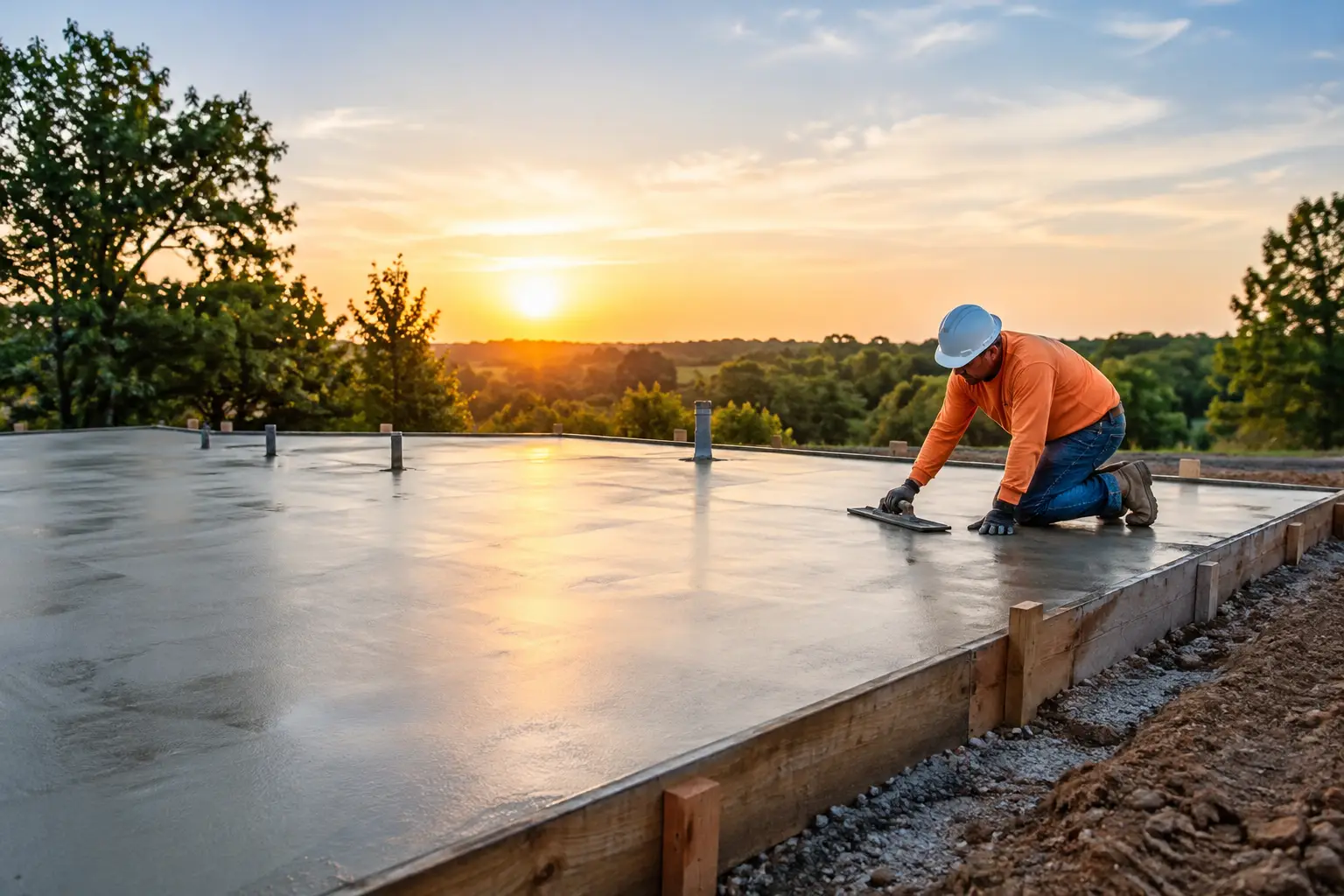
East Texas concrete slabs have to handle more than vehicle weight and foot traffic. They sit on soils that can gain moisture, lose moisture, and move with both. A slab that looks fine on pour day can crack, settle, or hold water later if the site preparation is weak. The concrete matters, but what happens below and around it matters just as much.
For homeowners, investors, and commercial property managers, the goal is not to chase a perfectly crack-free surface. Concrete naturally shrinks as it cures and will develop control joints. The goal is a properly planned slab that drains correctly, has adequate support, and remains useful for the long haul.
Why East Texas Concrete Slabs Need Careful Planning
East Texas is known for clay-heavy soils in many areas, along with changing moisture conditions. Clay can swell when wet and shrink as it dries. That movement puts stress on concrete, particularly on large flat surfaces such as driveways, patios, sidewalks, shop floors, and building pads.
A quality slab starts with an honest look at the site. Is the area low-lying? Does water run toward the proposed slab? Are downspouts dumping water near the edge? Has old concrete already cracked or sunk in a certain pattern? Those details point to drainage or subgrade issues that should be addressed before new concrete is placed.
It also depends on the slab's job. A backyard patio does not need the same design as a driveway that carries trucks, trailers, or frequent deliveries. A detached garage or metal-building pad may need thicker concrete, more reinforcement, and more extensive base preparation than a simple walkway. Using one standard approach for every project is where problems begin.
Start With the Ground, Not the Finish
A smooth finish cannot correct unstable soil. Before concrete work begins, the existing ground should be excavated to the needed depth, shaped to the intended grade, and compacted. Soft spots, organic material, loose fill, roots, and saturated soil can create weak areas beneath the slab.
Subgrade and Base Preparation
The subgrade is the soil directly below the slab system. If it is poorly compacted or holds water, the slab may settle or crack under normal use. In many projects, a compacted aggregate base is installed over prepared soil to provide a more consistent bearing surface and help manage minor irregularities.
The right base depth varies by conditions and use. A patio on stable, well-drained ground may require a different approach than a heavy-use commercial driveway. What should not change is the need for proper compaction. Gravel that is simply spread out without being compacted is not doing the full job of a prepared base.
Drainage Is Part of the Slab Design
Water should move away from structures and off the concrete surface. That means establishing the correct slope before the pour, not trying to solve ponding afterward. Even a slight, consistent pitch can make the difference between a usable patio and one that collects water after every storm.
Drainage around the slab matters too. Downspouts, landscape borders, neighboring grades, and roof runoff can all direct water toward an edge. Over time, repeated saturation can soften soil, contribute to erosion, and increase movement below the concrete. In some cases, grading changes, drains, or extensions for downspouts should be part of the project scope.
Thickness, Reinforcement, and Concrete Mix
Thickness should match the intended load. Residential patios and walkways are commonly lighter-duty surfaces, while driveways, parking areas, equipment pads, and building slabs need more capacity. Adding thickness where vehicles turn, park, or concentrate weight can be worthwhile. Edges and approaches often take more abuse than the center of a slab.
Reinforcement helps manage cracking and keep the slab working as a unit after cracks occur. Depending on the project, that may include welded wire reinforcement, rebar, fiber reinforcement in the mix, or a combination of methods. Reinforcement is not a substitute for poor soil preparation, and it does not guarantee that concrete will never crack. It helps control the effects of cracking when the slab is designed and installed correctly.
The concrete mix should also fit the exposure and use. Strength, workability, air content where appropriate, and the amount of water added on site all affect the final result. Adding excess water to make concrete easier to spread may seem convenient, but it can reduce strength and increase shrinkage. A professional crew plans placement so the concrete can be worked and finished without sacrificing the mix.
Control Joints Are Not Optional Details
Control joints are intentional grooves cut or formed into concrete. They encourage shrinkage cracks to occur in planned locations instead of randomly across the surface. They are one of the most visible signs that a slab was laid out with long-term performance in mind.
Joint spacing, depth, and layout should fit the slab dimensions. Long uninterrupted stretches of concrete are more likely to crack unpredictably. A driveway, patio, or building floor should have joints placed in a pattern that makes sense for both performance and appearance.
Expansion joints serve a different purpose. They separate concrete from walls, columns, existing slabs, or other fixed structures so the surfaces can move independently. Without proper isolation, movement can transfer stress into the new slab or damage an adjacent structure.
Placement and Curing Affect the Finished Surface
Pour day is only one phase of concrete work. Conditions such as heat, wind, rain, and rapid drying can affect the finishing process. In Texas, hot weather can cause concrete to lose moisture too quickly, which may contribute to surface cracking, dusting, or weaker curing if not managed properly.
Finishing should be timed to the concrete's condition, not rushed to meet a clock. Working the surface too early can trap water and weaken the top layer. Waiting too long can make it difficult to achieve the intended finish. For exterior flatwork, a broom finish is often a practical choice because it provides better traction when wet. Decorative finishes can improve appearance, but they should still be selected with drainage, foot traffic, maintenance, and slip resistance in mind.
Curing gives concrete the time and moisture conditions it needs to gain strength. This may involve curing compounds, moisture retention methods, or protection from extreme conditions. The first days after placement are especially important. Avoiding heavy traffic too soon protects edges and helps prevent unnecessary damage while the slab is still gaining strength.
When Replacement Makes More Sense Than Repair
Some cracks can be sealed or repaired, especially when the slab is otherwise stable and level. Small cosmetic cracks are common and do not always mean the concrete has failed. However, replacement may be the better value when there is widespread settling, major displacement, extensive cracking, poor drainage, or structural deterioration along the edges.
If one section has dropped while another has lifted, the problem may be below the concrete rather than in the surface itself. Patching the crack without correcting the moisture or soil issue often leads to another repair later. A contractor should evaluate the cause before recommending a fix.
For property owners planning a replacement, this is the opportunity to correct what the old slab got wrong. That may mean improving the grade, widening a driveway, adding a thicker approach, moving water away from the area, or choosing a layout that better fits how the space is actually used.
Choosing the Right Contractor for the Job
Concrete work is not just forming a rectangle and scheduling a truck. Ask how the contractor plans to prepare the ground, manage drainage, set thickness, place reinforcement, and locate joints. The answers should be specific to the project, not vague promises about using quality materials.
It is also reasonable to discuss access, demolition, haul-off, nearby landscaping, utility locations, and how the finished elevation will meet existing surfaces. Clear planning prevents surprises once work is underway. Fantastico Concrete approaches slabs as working surfaces that need to look clean, drain properly, and hold up under real use.
A well-built slab should make the property easier to use every day. Whether it supports a new patio, a vehicle driveway, a workshop, or a commercial access area, the right preparation gives the finished concrete a fair chance to perform through East Texas weather and years of use.

