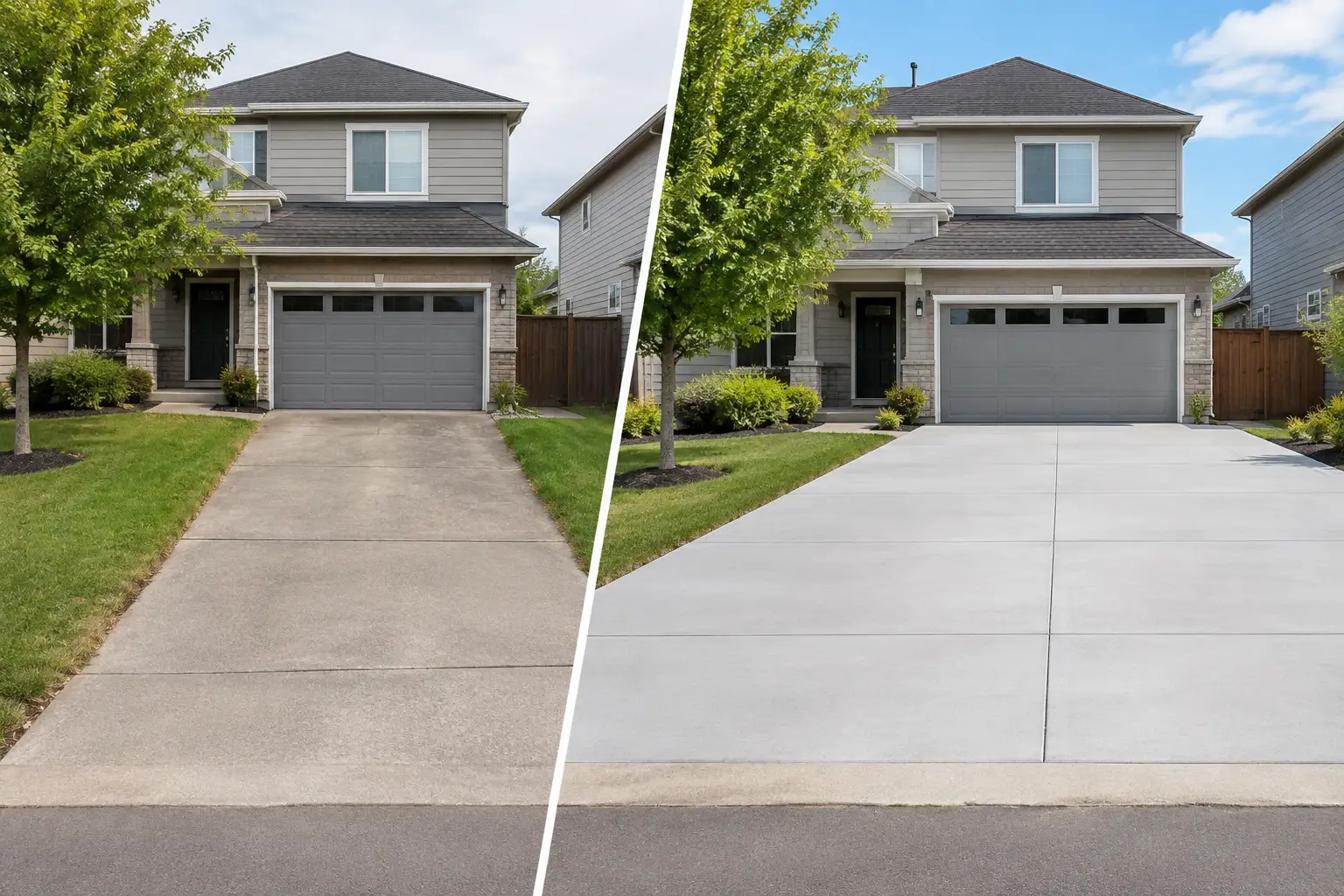
A driveway extension before and after project often looks like a simple change: more concrete beside an existing drive. In practice, the best results solve a daily problem first. Maybe two vehicles do not fit without blocking the garage. Maybe guests park on the lawn, tires sink into soft soil, or a narrow approach makes backing out harder than it should be.
The finished surface should look like it belongs with the property, but looks are only part of the job. A well-planned extension needs proper grading, a stable base, reinforcement where appropriate, clean joints, and a connection that does not create drainage trouble beside the home. Those details are what separate extra pavement from a driveway built to handle real use.
What Changes With a Driveway Extension
Before the work begins, most homeowners are working around a limitation. The original driveway may be wide enough for one car but not two. It may end before the gate, leaving no reliable place for a trailer, work truck, or additional household vehicle. On investment and rental properties, limited parking can also create avoidable wear along the curb, front yard, and entry path.
Afterward, the improvement is immediate because the property functions differently. Vehicles can pull in, turn, park side by side, or access a garage with fewer tight maneuvers. The front of the property looks more orderly because parking has a defined surface instead of spreading onto dirt or grass.
Curb appeal usually improves as well, especially when the new concrete is shaped to match the existing driveway's lines. A balanced extension can make a small driveway feel intentional rather than patched together. Still, new concrete will not be the same shade as older concrete on day one. Fresh concrete is usually lighter, and the color difference becomes less noticeable over time, but an exact match should not be promised.
Driveway Extension Before and After: Start With the Layout
The right size depends on how the space will actually be used. A narrow strip may be enough for easier passenger access or occasional overflow parking. A wider addition may be needed for side-by-side vehicles, a turnaround area, or a path to a detached garage. Extending too little can leave the original problem unsolved. Extending too far can consume landscaping, complicate drainage, or create unnecessary cost.
A site review should consider more than the driveway outline. The slope of the lot, nearby downspouts, sidewalks, utility locations, fences, trees, gates, and street access all affect the final layout. In North Texas, heavy rain can expose a poor slope quickly. Water should move away from the house and should not be redirected toward a neighbor's property, garage, or low area of the yard.
It also matters where the extension meets the existing slab. Concrete sections move slightly with temperature changes and soil movement. A properly planned joint helps manage that movement. Simply pouring new concrete tightly against old concrete without considering the joint and grade can lead to cracking, separation, or water getting into the wrong place.
The Work Behind a Durable Finished Surface
The visible before-and-after photos rarely show the preparation that makes the after last. Installation begins with clearing vegetation, loose material, and unsuitable soil from the planned area. The subgrade is shaped and compacted so the slab has consistent support. If the ground is soft or uneven, skipping this step can lead to settlement and cracks even when the concrete itself is sound.
A compacted base may be added depending on site conditions and the intended use. Passenger vehicles place different demands on a driveway than loaded trucks, commercial traffic, or frequent trailer use. Thickness and reinforcement should fit the application rather than follow a one-size-fits-all approach.
Forms establish the edges and elevation. This is where the final shape becomes clear, including transitions to the old driveway, walkways, and lawn. Reinforcement is then placed correctly within the slab area, not left sitting on the ground where it provides little benefit. Concrete is poured, placed, finished, and given control joints that encourage cracking to occur in planned lines rather than randomly across the surface.
Finishing deserves attention. Most residential driveway extensions use a broom finish because it provides traction when wet without looking overly rough. A slick finish may look appealing at first, but it is not the practical choice for a surface exposed to rain, vehicle tires, and foot traffic.
Common Before Conditions and the Right Fix
A driveway extension is not always the answer to every concrete problem. If the existing driveway has widespread settlement, major cracking, or drainage failure, adding onto it may only highlight the underlying issue. Sometimes replacement of part or all of the original drive is the better long-term decision.
When the current slab is in generally good condition, an extension can be a practical upgrade. Common situations include a driveway that is too narrow near the garage, a missing parking pad beside the house, or an unpaved side access route that turns muddy after rain. The goal is not to pour concrete everywhere. It is to add durable surface where it provides a clear benefit.
For commercial properties and multifamily sites, the planning process may also include traffic flow, accessible routes, loading areas, and drainage requirements. A parking expansion that works for a single-family home may not be suitable for a business entrance or shared property. The expected traffic and local requirements should guide the design.
Permits, Setbacks, and Access Considerations
Before widening a driveway toward the street, check local rules. Cities and neighborhoods may regulate driveway width, curb cuts, setbacks, easements, and drainage. An extension within private property can still create issues if it crosses an easement, blocks access to utilities, or changes runoff near the public right-of-way.
This is particularly relevant in Dallas-Fort Worth and surrounding communities, where requirements can vary by city and subdivision. Homeowners association rules may also affect layout or appearance. Addressing these questions before concrete is ordered is faster and less expensive than changing a completed slab.
If the extension requires removing a portion of curb, modifying a sidewalk, or adding a new street connection, the project becomes more involved. Those areas are often controlled by municipal standards and may require separate approval. A qualified concrete contractor can identify the practical construction issues, while the property owner should confirm applicable approvals for the site.
What to Expect After the Pour
Concrete needs time to gain strength. The surface may be walked on sooner than it can support vehicles, so follow the contractor's guidance on when to drive or park on the new section. Keeping heavy loads off the slab during the early curing period protects the work while it develops strength.
Some hairline cracking can occur in concrete, particularly as it cures and responds to weather. Control joints, sound preparation, and correct placement reduce the risk of uncontrolled cracks, but concrete is not a crack-proof material. The key is building a slab with proper support and a plan for normal movement.
For ongoing care, keep the surface reasonably clean, avoid deicing products that can be harsh on concrete, and prevent water from repeatedly pooling along the edges. If soil settles beside the driveway, restore the grade so runoff does not wash out support near the slab. A clean edge and good drainage help the extension continue to look finished.
A driveway extension should make parking easier without creating a new water, access, or maintenance problem. When the layout fits the property and the concrete is built on proper preparation, the after photo is more than a cosmetic upgrade. It is a surface that works every day.

