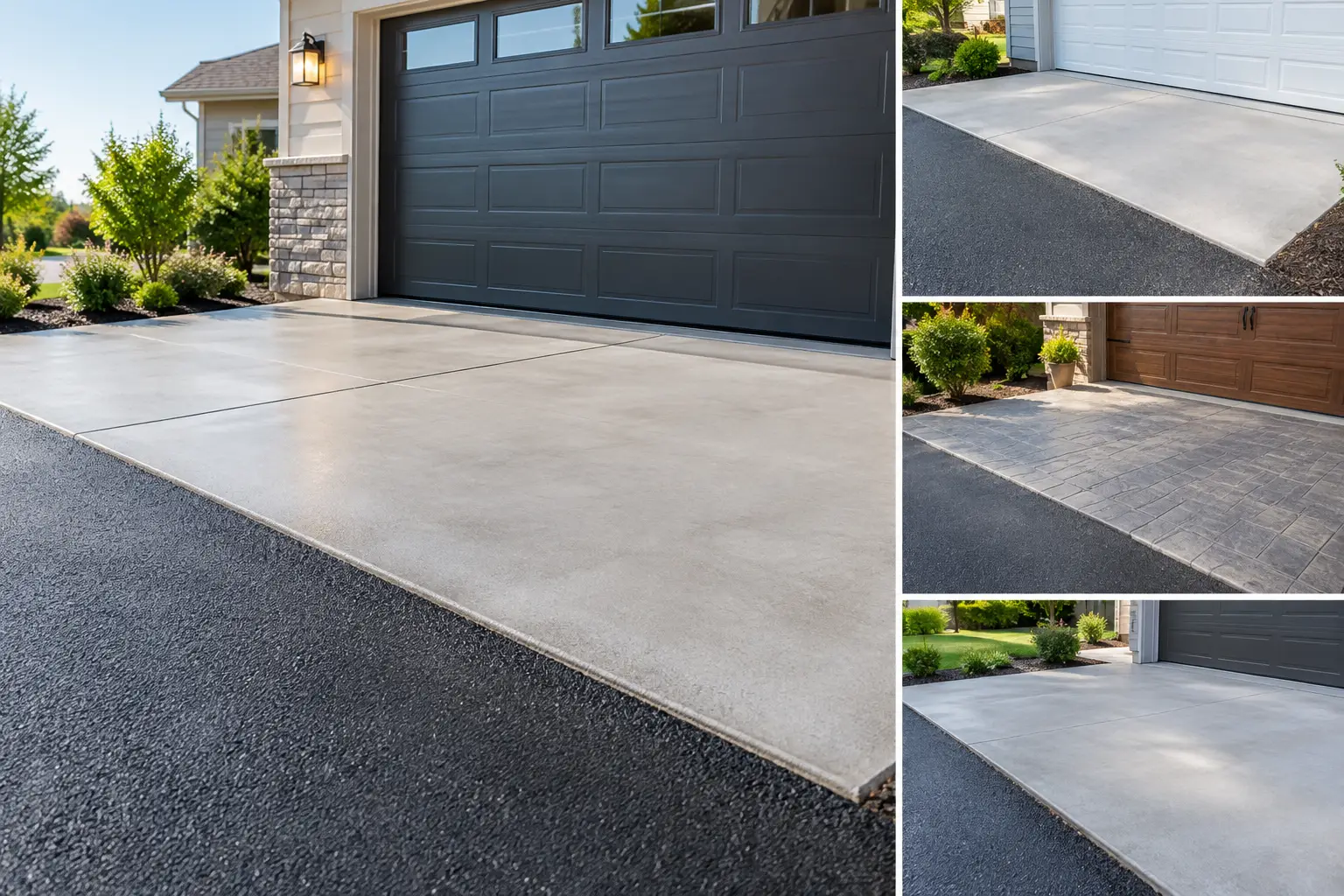
The first few feet of a driveway take more punishment than most owners realize. They carry turning tires, delivery trucks, water runoff, and the transition from street to property. These driveway apron replacement examples show why a good repair is not simply a matter of pouring new concrete. The right scope depends on where the damage starts, what is causing it, and how the apron connects to the curb, street, and existing driveway.
A driveway apron is the portion of concrete between the street and the main driveway, or the section immediately inside the property line where vehicles enter. In some cities, part of that area may fall within the public right-of-way. That makes planning especially important. A replacement that looks good but ignores slope, curb requirements, or local permit rules can create an expensive problem later.
Driveway Apron Replacement Examples for Common Problems
1. Replacing only the broken apron section
This is the right approach when the damage is limited to the apron and the rest of the driveway is sound. A common example is an apron with wide cracks, settled corners, and surface flaking while the driveway panels farther from the street remain level and structurally stable.
The contractor removes the failed section back to a clean joint or a properly saw-cut edge, rebuilds the base where needed, and pours a new apron that matches the existing driveway width and finish. Control joints are placed to help manage normal concrete movement.
This option keeps costs lower because it preserves good concrete. The trade-off is appearance. New concrete will usually be lighter than older driveway concrete at first, even when the finish and texture are carefully matched. Over time, the color difference becomes less noticeable, but it rarely disappears immediately.
2. Replacing the apron and the first driveway panel
Sometimes cracks near the apron continue into the first full driveway panel. Replacing only the apron in that case can leave a weak, uneven joint a few feet behind the new work. A better example is a two-section replacement: remove the apron plus the first panel or two of the driveway, then rebuild both areas as one coordinated repair.
This approach is common when vehicle loads have caused settling at the street entrance. It also works well where the existing joint has deteriorated or where the first panel has heaved, cracked, or separated from the apron.
The added removal increases the project scope, but it creates a cleaner transition and gives the contractor room to correct the underlying base. For homeowners planning to sell, this type of repair often has a stronger visual impact than a narrow patch at the curb line.
3. Correcting a sunken apron with drainage problems
A low spot at the driveway entrance can hold water after every rain. In North Texas, repeated wetting, shifting soil, and vehicle traffic can turn that low spot into cracked concrete, washed-out base material, or a puddle that sits against the garage-side driveway.
In this example, the damaged apron is removed, but the key work happens below the slab. The contractor excavates unstable material, rebuilds and compacts the base, then establishes the proper grade before new concrete is placed. The finished apron should direct water toward the approved drainage path rather than back toward the house or across a sidewalk.
This is not a situation where adding a thin layer of concrete on top is a lasting fix. Overlays can fail quickly if the slab below is moving or if the drainage issue remains. A full-depth replacement costs more upfront, but it addresses the reason the apron failed.
4. Widening a narrow driveway entrance
A driveway can be structurally sound and still be frustrating to use. Many older homes have narrow curb openings that force drivers to make tight turns, run over the edge of the lawn, or repeatedly catch trailer tires on the corner of the apron.
A widened apron replacement may include flared sides that create a broader, easier entry from the street. This is especially useful for larger pickups, work vehicles, trailers, and properties with multiple drivers. The new shape needs to work with the curb line, sidewalk placement, utilities, and any municipal rules that govern driveway access.
The best widened apron is not automatically the widest one possible. It should provide practical turning room without creating drainage issues, blocking pedestrian access, or conflicting with city requirements. The layout should be measured before demolition begins, not improvised after the old concrete is removed.
5. Rebuilding an apron damaged by heavy commercial traffic
Commercial aprons fail differently than residential entrances. A small office, retail property, warehouse, or multifamily site may see delivery vans, dumpsters, service trucks, and frequent turning traffic. Those concentrated loads can crack thin concrete, break edges, and create ruts where tires follow the same path every day.
In this replacement example, the contractor may specify a thicker slab, stronger base preparation, and reinforcement appropriate for the expected traffic. The approach also needs to account for truck turning patterns and drainage at the street connection. A residential-thickness apron may not be enough for a property that regularly receives heavier vehicles.
Property managers should also consider access during construction. A well-planned project may phase work or coordinate timing so tenants, customers, and vendors have a workable route while concrete cures.
6. Replacing an apron after utility or curb work
Utility repairs and curb reconstruction can leave a driveway entrance patched, uneven, or poorly tied into the street. The apron may have been cut in sections, disturbed during excavation, or left with a rough grade that sends water in the wrong direction.
The replacement goal here is to restore a clean, durable connection between the street and driveway. Before work starts, the contractor should inspect the new curb elevation, locate any utility features, and confirm how the new apron will meet both the street and the existing concrete. The final result should look intentional rather than like a series of unrelated patches.
What Determines the Right Replacement Scope?
The visible crack pattern is only part of the decision. A contractor should look at slab movement, base condition, water flow, driveway thickness, and the condition of adjacent panels. If a crack is caused by a shallow or poorly compacted base, simply replacing the cracked area without rebuilding the support beneath it may repeat the same failure.
The connection to the street also matters. Some apron areas are governed by city standards, permits, inspections, or right-of-way requirements. Requirements vary by municipality across Dallas-Fort Worth and surrounding communities. Before concrete is scheduled, confirm who is responsible for the apron and whether approvals are needed for removal, widening, or curb modifications.
Replacement should also consider the use of the property. A standard passenger-car driveway and a driveway used by loaded work trucks do not need the same design. The same is true for a rental property with frequent tenant turnover versus a single-family home with light traffic.
Details That Make a New Apron Last
Concrete quality matters, but the slab is only as reliable as the work below and around it. Proper excavation removes failed material. A stable, compacted base helps reduce settlement. Correct slope keeps water moving. Joints help control where concrete cracks as it naturally shrinks and responds to temperature changes.
Thickness and reinforcement should match the job. More concrete is not always the answer, but an apron that carries frequent heavier loads may need a stronger design than a basic residential section. The edges and transitions deserve attention too. Weak or unsupported edges are often the first areas to crack when tires turn into the driveway.
Curing is another practical detail. Fresh concrete needs time to gain strength. Driving on it too early, especially with heavy vehicles, can damage the surface or stress the slab before it is ready. The contractor should provide clear instructions for foot traffic, vehicle access, and any restrictions after installation.
Repair or Replacement?
Small surface flaws can sometimes be repaired, but replacement is usually the better long-term choice when concrete is deeply cracked, rocking, settling, spalling badly, or holding water. A repair may improve appearance for a while, yet it cannot correct failed base material or a slab that has lost its structural integrity.
For a driveway entrance, the practical question is simple: will the work restore a solid, properly graded path from the street to the property? If the answer requires removing and rebuilding the apron, it is better to do the preparation correctly than to hide a larger problem under a cosmetic patch.
A well-built apron should make daily access feel ordinary again: no hard bumps at the curb, no standing water after rain, and no concern that the next heavy vehicle will widen an old crack. That is the standard worth planning for.

