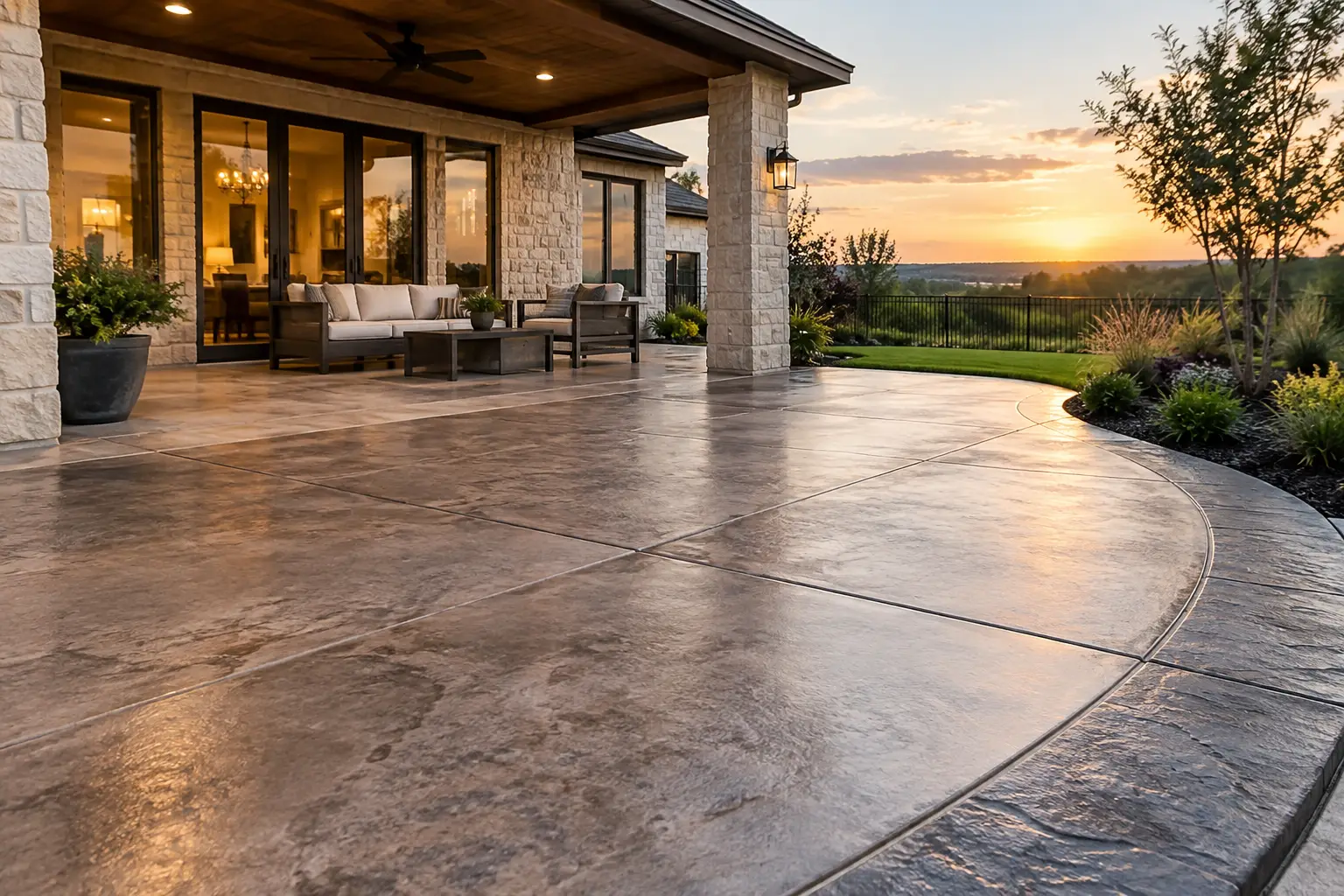
A plain gray slab can do its job, but it does not always add much to a property. The best decorative concrete design trends give homeowners and commercial property owners a surface that handles traffic, heat, and weather while looking intentional from the street or backyard. In North Texas, where patios bake in summer and rain can expose drainage problems quickly, appearance has to work alongside performance.
Decorative concrete is not one finish or one product. It is a group of installation and finishing methods that can change color, texture, pattern, and edge detail. The right choice depends on where the concrete will be used, how much foot or vehicle traffic it will take, and how much maintenance the owner is willing to handle.
Decorative Concrete Design Trends That Last
The strongest trend is not a single color or pattern. It is using concrete as a finished surface instead of treating it as a base that must be covered later. Property owners are choosing clean, durable concrete finishes for patios, driveways, walkways, pool decks, storefront entries, and outdoor gathering areas.
That does not mean every project needs a complicated stamp pattern. In many cases, a simpler finish with good layout, proper control joints, and a well-chosen color delivers the better result. Decorative work should still start with the basics: proper base preparation, reinforcement where needed, slope for drainage, and concrete placed for the site conditions.
Warm neutrals replace cold gray
Natural gray concrete is still common, but warmer colors are showing up more often. Sand, taupe, light brown, charcoal, and muted terracotta tones work well with brick, stone, wood fencing, and modern exterior paint colors. These shades also tend to hide ordinary dust and minor staining better than a very light or very dark surface.
Integral color, where pigment is mixed into the concrete, is often a practical choice for new pours. It puts color throughout the slab rather than only on the surface. That matters if the concrete takes a small chip or scrape over time. Color hardeners and stains can create more variation, but they require the right preparation and sealing process.
For a driveway, avoid choosing color based only on a small sample. A full slab looks different in direct Texas sun than it does in a showroom or on a phone screen. Nearby brick, roof color, landscaping, and shade all affect the final look.
Large-format patterns and cleaner joint layouts
Busy stamped patterns had a long run. They are still a good fit for some traditional homes, especially when the goal is a stone or slate appearance. But many current projects are moving toward larger pattern areas, simpler textures, and cleaner lines.
This can mean a lightly textured patio with broad rectangular sections, saw-cut joints arranged to complement the home, or a large-format ashlar pattern instead of small, repetitive stone shapes. The surface feels more current without looking overly styled.
Control joints are part of this conversation. Concrete will crack as it cures and moves, so joints help guide where that movement occurs. A contractor can plan joints to be less visually disruptive, but they cannot be ignored for the sake of appearance. A patio with no sensible joint plan may look clean on day one and develop random cracking later.
Texture with traction for pool decks and walkways
Smooth concrete can look sharp, but it is not the best answer everywhere. Pool decks, front walkways, sloped approaches, and commercial entrances need traction when wet. Decorative texture is increasingly being used to solve that problem without making the surface look rough or unfinished.
Light broom finishes, exposed aggregate, knockdown textures, and certain stamped finishes can provide better footing. The right option depends on the area. Exposed aggregate has a durable, natural look and strong traction, but bare feet may find it less comfortable around a pool. Knockdown finishes are often more comfortable underfoot, although the finish must be installed correctly and maintained when needed.
For commercial properties, traction is not just a design preference. It affects safety, tenant experience, and maintenance exposure. The finish should match the use of the space before it matches a trend photo.
Better Outdoor Living Starts With Concrete Layout
More homeowners are treating patios as real living areas, not leftover slabs behind the house. Decorative concrete supports that shift because it can define zones without adding several different materials to the yard.
A single patio can include a dining section, a grill area, a fire pit pad, and a walkway connection to a pool or garden. Changes in score lines, color, or texture can separate those areas while keeping the installation durable and easy to clean. This approach is especially useful on smaller lots, where too many materials can make an outdoor space feel crowded.
Borders and bands add detail without overdoing it
Contrasting borders remain one of the most useful decorative choices. A darker band around a lighter patio, a brick-toned edge around a driveway, or a smooth border surrounding a textured center adds definition without covering the entire surface in a complicated pattern.
Borders also work well with practical features. They can frame a patio edge, guide foot traffic toward a gate, or create a clean transition beside landscaping. The key is restraint. One complementary border color usually looks better than several competing colors and stamp patterns.
Driveways are becoming part of curb appeal
Driveways take more abuse than patios, so decorative choices need to be practical. Lightly colored integral concrete, subtle exposed aggregate, clean saw-cut lines, and simple borders can improve curb appeal while still handling vehicle traffic.
Stamped driveway finishes can work, but they demand careful installation and ongoing attention to sealer condition. A glossy sealer may look good at first, yet it can show tire marks, become slick when wet, or require more frequent maintenance. For many homes, a lower-sheen finish with modest texture is the better long-term choice.
Drainage should be addressed before decorative details are selected. Water that runs toward a garage, collects near the foundation, or crosses a sidewalk can create a bigger problem than any surface finish can solve.
Polished and Refined Looks for Commercial Concrete
Commercial decorative concrete is leaning toward finishes that look clean, durable, and easy to maintain. This includes smooth troweled surfaces in appropriate interior settings, exposed aggregate entries, colored walkways, and concrete bands that distinguish pedestrian areas from vehicle areas.
For retail, office, multifamily, and hospitality properties, the goal is usually not to make concrete the loudest feature. It is to create a surface that looks deliberate, supports safe circulation, and stands up to regular use. Neutral colors and simple patterns generally age better than highly specific trends.
Existing concrete can sometimes be improved with overlays, stains, resurfacing systems, or repairs. But not every slab is a candidate. If the concrete has major settlement, widespread cracking, drainage failure, or a weak base, a decorative coating may only hide the issue temporarily. Replacement is often the more honest and cost-effective repair.
What to Consider Before Choosing a Decorative Finish
A good finish starts with an honest assessment of the project. Think about sunlight, drainage, traffic, adjacent surfaces, and expected maintenance. A beautiful pool deck that is too slick, a dark patio that becomes uncomfortably hot, or a heavily stamped driveway that is difficult to repair is not a successful design.
Ask to see finish samples in natural light and discuss how the material will wear. Concrete colors can vary because of weather, batch conditions, finishing methods, and curing. That variation is normal, particularly with stains and decorative overlays. Clear expectations before work begins prevent disappointment after the pour.
Also plan for the real cost of decorative work. The price reflects more than color or texture. It can include excavation, base preparation, forms, reinforcement, drainage, placement, finishing, cutting joints, sealing, and site access. Decorative concrete is worth doing right because correcting a failed slab is far more expensive than selecting the right system at the start.
Fantastico Concrete helps property owners choose concrete solutions that make sense for the site, the budget, and the way the surface will actually be used. The best decorative concrete does not chase every new look. It gives your property a finished surface that still performs years after the first impression.

