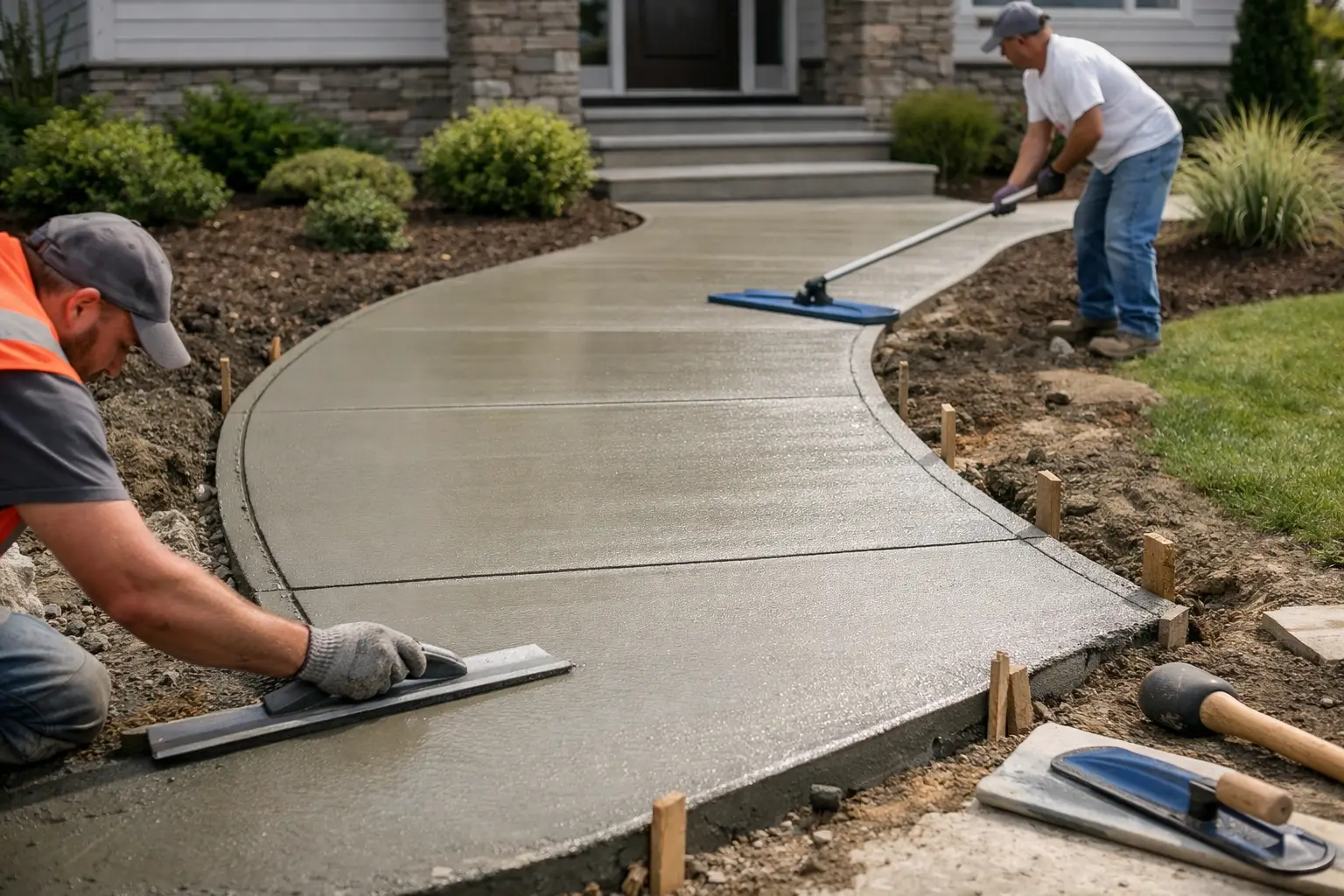
A walkway usually looks simple until it starts failing. One section holds water, another lifts at the edge, and suddenly the path to your front door becomes a maintenance problem instead of a clean, safe surface. That is why concrete walkway installation needs more than a quick pour. The layout, base prep, thickness, drainage, and finish all affect how that walkway performs year after year.
In Dallas-Fort Worth, that matters even more. Expansive soils, heat, heavy rain, and shifting ground can put stress on flatwork fast. A walkway has to do more than connect one point to another. It has to stay level, drain properly, and hold up under regular foot traffic without turning into a cracked patchwork a few seasons later.
What good concrete walkway installation actually involves
A durable walkway starts long before concrete arrives on site. First comes the route. The path should feel natural to walk, fit the property layout, and avoid creating water problems near the house, garage, or landscape beds. A straight walkway may be best for access and efficiency, but a curved design can soften the look of a yard and guide traffic around existing features.
Then comes excavation and base preparation. This is where many problems begin when the work is rushed. The ground needs to be excavated to the proper depth, graded correctly, and compacted. A stable base helps reduce settlement and supports the slab evenly. If the soil underneath is weak or inconsistent, the walkway may crack or sink regardless of how good the concrete looks on day one.
Formwork, reinforcement where needed, joint placement, and finishing all come next. Each step has a job. Forms establish clean lines. Reinforcement can help control cracking in certain conditions. Control joints give the concrete a planned place to crack as it cures and moves. The finish affects both appearance and slip resistance.
Design decisions that affect performance
A walkway is not just a strip of concrete. Width, thickness, slope, and finish all change how usable and durable it is.
Width should match how the path will be used. A narrow walkway may work for a side yard, but the front approach to a home or commercial entrance often benefits from more space. If people will pass each other regularly, carry items, or move equipment across it, a little extra width makes a real difference.
Thickness also matters. Standard residential walkways may not need the same build as a driveway, but they still need enough depth for the site conditions and expected use. If the walkway crosses an area that may occasionally see rolling bins, service equipment, or heavier point loads, that should be considered before the pour.
Slope is one of the most important details. The walkway should shed water without becoming awkward to walk on. Too little slope can leave standing water. Too much can feel unsafe and direct runoff where you do not want it. Good concrete walkway installation balances drainage with comfort and code requirements where applicable.
Finish is partly visual and partly practical. A broom finish is a common choice because it provides traction and a clean appearance. Decorative options can elevate the look of the property, but appearance should never come at the expense of safety. Around entries, pool areas, or commercial access points, slip resistance deserves real attention.
Why base prep and drainage matter so much
Most walkway failures are blamed on the concrete, but the issue often starts below it. If the subgrade is not compacted properly or the base is uneven, the slab can settle in sections. That creates trip hazards, standing water, and stress cracks.
Drainage is tied directly to that risk. Water moving under or alongside the slab can erode support over time. Water draining toward a structure can also create larger site issues. During planning, the walkway should be part of the bigger picture, not treated like an isolated strip of pavement.
That is especially important in North Texas. Soil movement can be hard on concrete surfaces, and drainage issues tend to show up quickly after storms. A walkway that looks level at installation can start revealing weak prep if water repeatedly collects along the edges or beneath low areas.
New walkway or replacement?
Sometimes a damaged walkway can be repaired. Sometimes replacement is the smarter move. The right call depends on the extent of the damage and what caused it.
If the concrete has isolated cosmetic cracks but remains level and structurally sound, repairs may help extend its life. If multiple sections have settled, heaved, or cracked through, patching can become a short-term fix that never really solves the problem. Replacing the walkway allows the base, grading, and joint layout to be corrected from the start.
Older walkways also may not match the current needs of the property. A path that is too narrow, poorly located, or draining the wrong way may be worth redesigning rather than simply replacing in the same footprint. For homeowners and property managers, that can be the difference between repeating an old problem and actually improving the site.
Cost factors in concrete walkway installation
Walkway pricing depends on more than square footage. Size matters, but so do access, demolition needs, site conditions, thickness, reinforcement, finish, and layout complexity.
A straight walkway in an open area is generally simpler than a curved path through tight landscaping or around utilities. If old concrete has to be removed and hauled off, that adds labor and disposal cost. If grading corrections are needed, that changes the scope too. Decorative finishes, borders, or color can raise the price, but they may make sense when appearance is a priority.
The cheapest bid is not always the best value. If a lower number comes from cutting excavation depth, reducing base prep, or skipping key details, those savings can disappear fast once the surface starts moving or cracking. Good pricing should reflect the actual work required to install a walkway that lasts.
Residential and commercial needs are different
For homeowners, walkway goals often center on curb appeal, safe access, and tying outdoor spaces together. A front walkway should complement the home and create a solid approach from the driveway or sidewalk to the entry. Backyard and side-yard walkways often focus more on function, connecting patios, gates, HVAC areas, or accessory structures.
Commercial properties usually have a different set of priorities. Safety, code compliance, traffic flow, and long-term maintenance tend to lead the conversation. Property managers and investors need walkways that present well but also reduce liability and stand up to frequent use. Clean lines, predictable drainage, and a professional finish matter because they affect both operations and appearance.
What to expect during the project
A professional installation process should be straightforward. The site is evaluated, measurements are taken, and the layout is planned based on access, grade, drainage, and use. If an existing walkway is being replaced, demolition and haul-off are handled before the new base is built.
Once forms are set and the base is compacted, the concrete is placed and finished. Control joints are cut or tooled in the right locations, and the surface is left to cure properly. Curing time matters. Walking on the surface too soon or putting stress on it before it has gained strength can compromise the result.
Weather can affect scheduling, and that is normal. In concrete work, timing is part of quality control. Pouring in poor conditions just to stay on a calendar usually creates bigger problems later.
Choosing the right contractor for concrete walkway installation
This is specialized work, even when the finished product looks simple. The contractor should understand flatwork, drainage, site prep, and how local soil conditions affect long-term performance. A good walkway should look clean on the surface and make sense underneath.
Clear communication matters too. You should know what is being installed, how the base will be prepared, what finish is planned, and how the walkway will handle water. If those answers are vague, the work may be too.
For Dallas-Fort Worth property owners, working with a contractor who understands local conditions is a practical advantage. Fantastico Concrete approaches walkway work the same way it approaches any flatwork job - with attention to grade, durability, and the details that keep concrete performing after the project is finished.
A concrete walkway should make a property easier to use, safer to walk, and better to look at. When the installation is handled correctly, it does all three without asking for much in return except time to cure and room to do its job.

