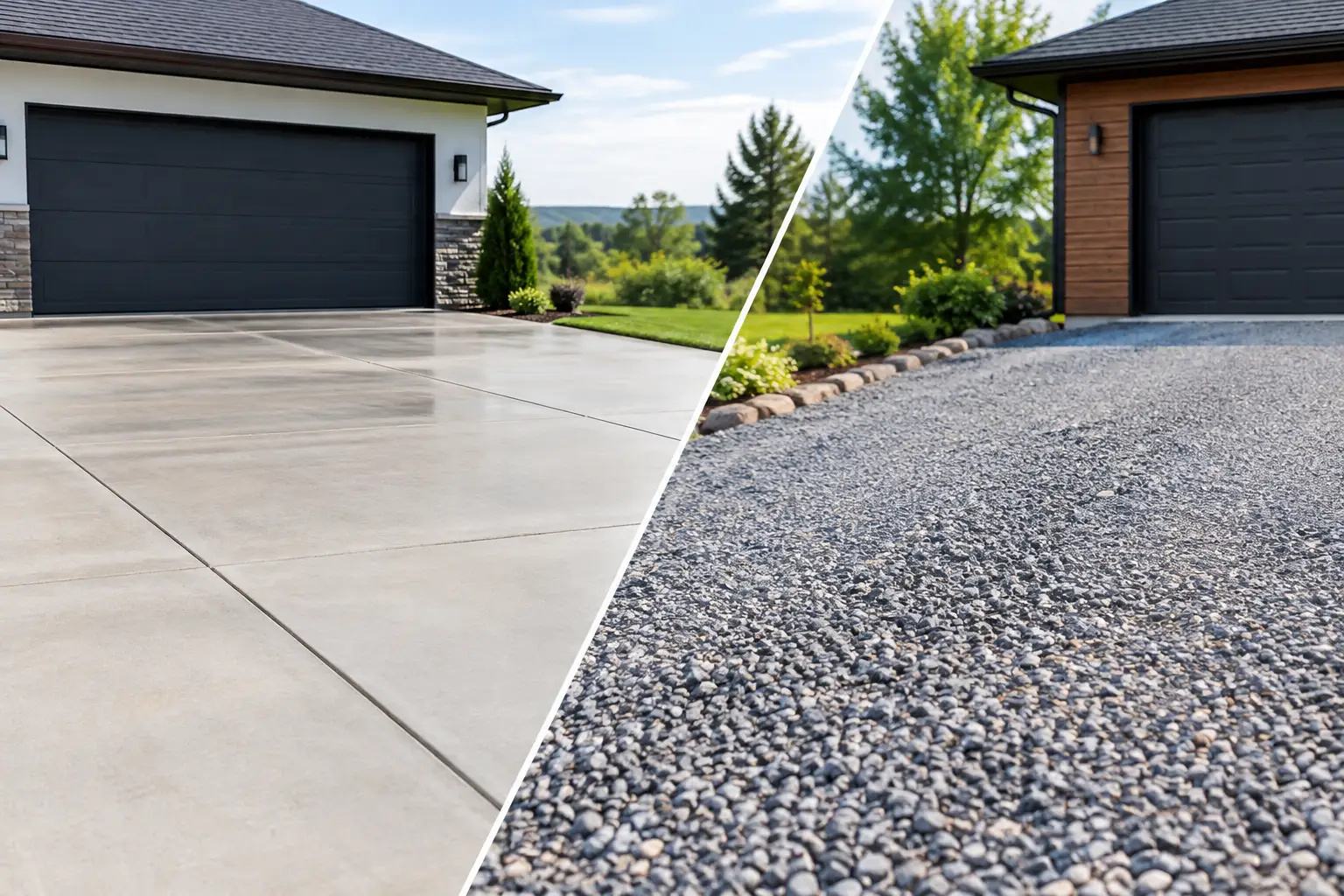
A parking pad has to handle more than the weight of a vehicle. It must resist tire ruts, manage rainwater, provide dependable access, and look appropriate beside the property. When comparing a concrete versus gravel parking pad, the better choice depends on how often the area is used, what parks there, site drainage, and how much maintenance the owner is willing to accept.
For many North Texas properties, concrete is the long-term surface. Gravel can be a practical, lower-cost option for temporary parking, overflow spaces, and low-traffic areas. The difference comes down to what the pad needs to do five or ten years from now, not just what it costs on installation day.
Concrete Versus Gravel Parking Pad: The Main Difference
Concrete creates a stable, finished surface that does not shift under normal vehicle traffic. When installed over a properly prepared base with correct thickness, reinforcement where appropriate, joints, and drainage slope, it provides a clean place to park passenger vehicles, trucks, trailers, and equipment. It also gives homeowners and commercial properties a more permanent appearance.
Gravel is flexible in a different sense. It can be installed faster, adjusted more easily, and expanded without tying into a large poured surface. But loose aggregate moves. Tires push it outward, rain can wash fine material away, and weak soil below the gravel can still develop ruts. Gravel works best when the base is built correctly, not when stone is simply spread over dirt.
Neither material fixes a poor site plan. Soft subgrade, standing water, or drainage directed toward a building can cause problems with either choice. The pad should be evaluated as part of the property, including vehicle access, slope, nearby structures, utilities, and the path water takes during a heavy rain.
Upfront Cost Is Only Part of the Decision
A gravel pad usually costs less upfront because it does not require forming, pouring, finishing, curing, and saw-cutting concrete. That makes it attractive for a secondary vehicle space, a construction entrance, or an area that may change later. The exact cost still depends on excavation, base depth, fabric, edging, access for equipment, and hauling material to the site.
Concrete costs more at the beginning, but it is designed as a lasting improvement. A quality concrete parking pad requires excavation, compacted base material, proper grading, forms, concrete placement, finishing, control joints, and adequate cure time. If the project connects to an existing driveway or approaches a street, layout and drainage details become even more important.
The lower initial price of gravel can narrow over time. Periodic grading, replacement stone, weed control, and repair of tire depressions all add up. That does not mean gravel is a bad value. It means it should be selected with realistic expectations about ongoing upkeep.
Durability Under Daily Traffic
For a daily-use parking area, concrete generally has the advantage. A properly built pad stays level, supports tires evenly, and gives people a solid surface for getting in and out of vehicles. It is especially useful for work trucks, trailers, RVs, and properties where vehicles regularly turn, back in, or sit for extended periods.
Thickness matters. A passenger-car pad may not need the same design as a parking area used by loaded trucks or commercial vehicles. Heavier traffic can require greater slab thickness, a stronger base, and different reinforcement or joint planning. Trying to save money by underbuilding the slab often leads to cracking or settlement that costs more to address later.
Gravel handles occasional use well when it has a compacted base beneath it. It is less dependable where tires repeatedly follow the same path, especially during wet weather. Turning tires can scatter stone and form low spots. On a sloped drive or pad, loose gravel may migrate downhill unless the site is designed to contain it.
Drainage: A Critical Factor in North Texas
Drainage is where a parking pad becomes a property improvement instead of a future repair issue. North Texas clay soils can expand when wet and shrink during dry periods. That movement places stress on any hard surface. Water management and subgrade preparation are not optional details.
Concrete must be installed with a deliberate slope so water drains away from the home, garage, and other structures. A flat-looking pad should not actually be flat. Even a small amount of standing water can create staining, slippery areas, and stress at low points. Downspouts, existing yard grades, and neighboring pavement all affect the drainage plan.
Gravel allows water to pass through the surface, which can be helpful, but the water still has to go somewhere. If the soil below drains poorly, the base can soften and the gravel can sink into the subgrade. A separation fabric and correctly sized crushed stone often help keep the base stable, but they do not replace proper grading.
Concrete is often the better choice near an entry, garage, or regularly traveled walkway because it creates a cleaner and more predictable surface. Gravel may be a good fit for a rear parking area or overflow section where permeability and lower upfront cost matter more than a finished appearance.
Maintenance and Day-to-Day Use
Concrete needs relatively little routine work. Keep it clean, avoid harsh chemicals when possible, and address drainage issues before they create settlement around the slab. Small cracks can occur over time due to soil movement, weather, and normal concrete behavior. Proper control joints help guide where shrinkage cracks are most likely to occur, but no contractor can honestly promise concrete will never crack.
Gravel needs attention more often. Stones get carried away on tires, kicked into grass, and pushed beyond the edges. The surface may need fresh material and regrading, particularly after heavy rain or periods of regular traffic. Weeds can also become an issue if the pad is not properly prepared and maintained.
There is a practical comfort difference as well. Concrete is easier for walking in work boots, pushing a trash bin, rolling tools, or loading a vehicle. Gravel can be uneven underfoot and is less friendly for wheeled equipment. For rental homes, commercial properties, and customer-facing areas, that cleaner access can matter as much as appearance.
Appearance and Property Value
A concrete parking pad typically looks intentional. It can match an existing driveway, be shaped to fit a side yard, or be finished with clean edges that improve curb appeal. It also reduces dust and mud around the parking area. For homeowners planning to stay in the property or investors improving a rental, that permanent look can support the overall presentation of the site.
Gravel has a more casual, utilitarian appearance. It may suit a rural property, a workshop, equipment storage area, or a large secondary parking space where paving the entire area is not justified. Defined borders, compacted aggregate, and a tidy transition from driveway to pad make a major difference. Gravel that spills into the lawn or street quickly looks neglected.
Local rules can also affect the decision. Some cities, homeowners associations, and commercial sites have requirements for drainage, access, setbacks, or impervious coverage. Check those requirements before installing a new parking area, especially if it connects to a public street or changes how runoff leaves the property.
When Gravel Makes Sense
Gravel is often the sensible choice for a budget-conscious project that does not need a finished hard surface every day. It can work well for occasional guest parking, temporary access during construction, storage for trailers or equipment, and large low-traffic areas. It is also easier to modify if a future addition, fence, or site redesign is planned.
The key is to build it as a parking pad rather than a pile of rock. Remove unstable organic material, establish drainage, compact the base, use the right aggregate, and contain the edges. Skipping those steps is why many gravel parking areas turn into mud and ruts.
When Concrete Is Worth the Investment
Concrete is usually worth the investment when the parking pad will see daily use, needs to stay clean and level, or serves as a visible extension of the driveway. It is the stronger choice for accessible routes, garage approaches, work vehicles, and parking that needs to function in wet weather without tracking loose rock and mud across the property.
It is also a better long-term fit when the surface must support heavier loads. A contractor should evaluate vehicle weight, soil conditions, drainage, and slab layout before recommending thickness and base preparation. Those details determine whether a pad performs well or starts showing settlement early.
Fantastico Concrete approaches parking pads as site improvements, not just square footage. The right slab starts with a clear plan for grading, base preparation, vehicle use, and drainage before concrete arrives.
Choose gravel when flexibility and lower upfront cost are the priority. Choose concrete when you need a stable, durable surface that looks finished and performs through years of regular use. A well-planned parking pad should make arriving home, managing a property, or operating a business easier every single day.

