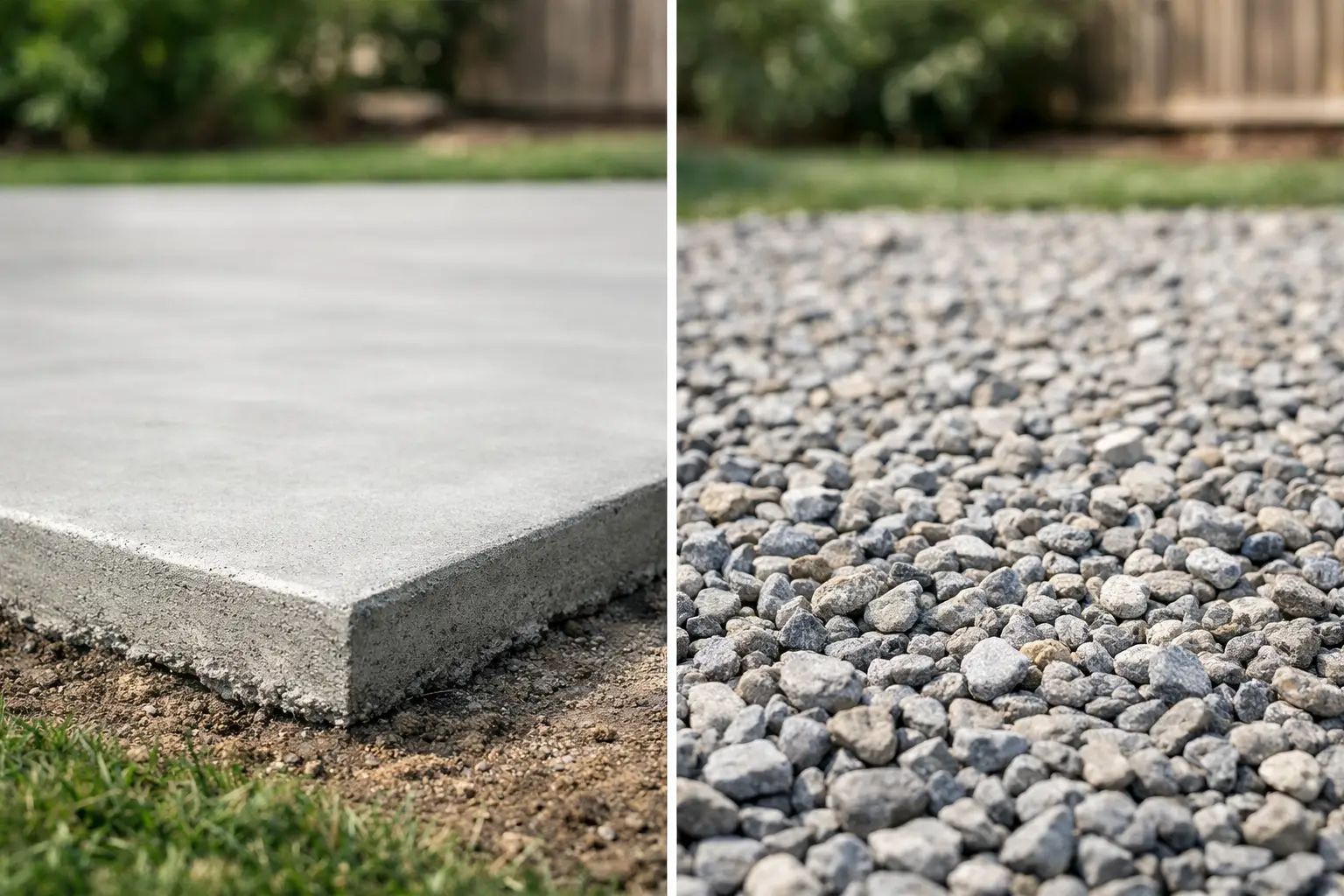
If you are deciding between a concrete slab vs gravel, the right answer usually shows up when you stop thinking about surface cost alone and start thinking about how the area will actually be used. A parking pad, patio, shed base, dumpster area, or equipment pad all put different demands on the ground below them. What looks cheaper on day one can turn into more maintenance, more mess, and more rework later.
For most property owners, this is not really a material debate. It is a performance decision. You want a surface that holds up, drains properly, fits the use, and does not create problems a year from now.
Concrete slab vs gravel: the real difference
A concrete slab is a fixed, hard surface designed to carry weight consistently across a prepared base. When installed correctly, it gives you a stable, clean, low-maintenance area that works well for walking, parking, storing equipment, and supporting structures.
Gravel is a loose aggregate surface. It can be a practical choice in the right setting, especially where low upfront cost and drainage matter more than finish and stability. But gravel moves. It shifts under tires, scatters at edges, and usually needs periodic grading or replenishment.
That difference matters more than most people expect. A surface that looks fine from the street can become frustrating fast if it ruts, puddles, washes out, or tracks into the house or building.
When a concrete slab makes more sense
Concrete is usually the stronger choice when you need consistency. If the area needs to stay level, support repeated vehicle traffic, provide a clean finished look, or work as part of a long-term property improvement, a slab is hard to beat.
Patios are a good example. Most homeowners do not want patio furniture sinking unevenly into loose rock or weeds popping through a gravel surface. A concrete slab gives you a usable outdoor area with a defined edge and a finished appearance. It is easier to furnish, easier to clean, and better for daily use.
The same goes for driveways and parking pads. Gravel can work for light-use rural access roads or temporary parking, but it tends to migrate and rut under repeated traffic. In a busy residential or commercial setting, that becomes an ongoing maintenance issue. Concrete handles regular use better and creates a more predictable surface for vehicles and foot traffic.
A slab is also the better option for structures. If you are placing a shed, workshop, trash enclosure, or mechanical equipment on the site, stable support matters. Gravel can compact well, but it does not perform the same way as a properly poured slab when exact levelness and long-term bearing are important.
When gravel can be the right call
Gravel is not a bad option. It is just a different one.
If you need a basic surface for a low-budget project, a temporary use area, or a large space where finish is less important than function, gravel can make sense. Rural drive lanes, overflow parking, utility access areas, and some storage zones are common examples.
Gravel also has an advantage in initial drainage. Water can pass through it more easily than it can across a solid slab surface. That said, drainage is not just about permeability. Grade, soil conditions, runoff patterns, and base prep still control whether the area stays dry and usable. A gravel surface can still develop washouts, soft spots, and standing water if the site work is poor.
There is also the budget factor. If the project needs to happen now and the available budget is tight, gravel may be the workable short-term answer. Just be honest about what comes with that lower entry cost: more upkeep, less polish, and often a shorter service life as a finished solution.
Cost is not just the install price
This is where many decisions go sideways.
Gravel is almost always cheaper upfront than a concrete slab. That is the main reason people consider it. But upfront price is only part of the cost picture. Over time, gravel often needs topping off, regrading, edge repair, weed control, and cleanup from migration into surrounding areas.
Concrete costs more to install, especially when proper base preparation, forms, reinforcement, and finishing are done correctly. But once it is in place, maintenance is typically lighter. You may seal it depending on the application, and you may eventually deal with cracking or surface wear, but you are not regularly redistributing the material back into place.
For a property owner planning to stay put, or for an investor trying to reduce recurring maintenance calls, that matters. A lower-cost surface that keeps demanding attention is not always the cheaper choice over five or ten years.
Appearance and property value
A concrete slab generally gives a cleaner, more finished look. That matters for front-facing driveways, patios, walkways, commercial entries, and any area customers, tenants, or guests will see regularly.
Gravel has a more informal appearance. In the right setting, that can be fine. On large rural lots or utility-heavy areas, it may even be the better visual fit. But on many residential and commercial properties, gravel can read as unfinished, especially if the rest of the site is more polished.
This is one of those cases where context matters. A gravel equipment yard behind a building is one thing. A gravel front approach to a business or a main-use backyard living area is another.
Concrete slab vs gravel for drainage and soil conditions
North Texas soil can be hard on flatwork. Expansive clay, heat, heavy rain events, and shifting moisture levels all affect performance. That does not automatically mean gravel is better. It means site preparation matters.
A properly installed concrete slab should be built over a suitable base with the right thickness, grading, and control joints for the intended use. If drainage is ignored, concrete can settle, crack, or direct water where you do not want it. But the same is true for gravel. Poor base prep under gravel leads to rutting, washout, and uneven surfaces.
In some cases, gravel helps where runoff needs to move through the surface. In others, a concrete slab with smart grading gives a cleaner and more controlled result. There is no one-size-fits-all answer. The use of the area and the behavior of water on the site have to be looked at together.
Maintenance and daily use
This is where the practical difference becomes obvious.
Concrete is easier to sweep, hose down, and keep usable. If you are rolling trash bins, pushing a dolly, setting patio furniture, parking regularly, or walking across the area in work shoes or dress shoes, a slab is usually more convenient.
Gravel is rougher to maintain day to day. Loose stone gets displaced. Weeds can become an issue. Snow and ice are less of a concern in this region than in northern states, but mud after storms definitely is. Gravel can also make simple tasks more annoying than people expect, like moving carts, keeping kids' play areas clean, or maintaining a neat edge line.
If the space is meant to be used often, not just occupied, concrete usually wins on function.
Which option is better for specific projects?
For patios, sidewalks, dumpster pads, equipment pads, and most driveways, concrete is usually the better long-term surface. It performs better, looks better, and requires less day-to-day upkeep.
For rural lanes, overflow parking, lower-priority storage areas, and some temporary or budget-driven projects, gravel can be a reasonable choice.
The key is matching the material to the job instead of forcing the cheapest option into a use case it does not handle well. That is where frustration starts.
What property owners should ask before choosing
Before you decide, think about how the area will be used three years from now, not just next month. Will vehicles use it daily? Does it need to look finished? Does it need to support a structure? Do you want low maintenance, or are you fine with periodic grading and added material?
Also think about runoff. Where does water go now, and where will it go after the new surface is installed? A surface that solves one problem but creates drainage trouble near the home, garage, or building is not a good solution.
This is where an experienced contractor brings real value. The material choice is only part of the job. Base prep, grading, thickness, reinforcement, and layout are what determine whether the surface performs the way you expect.
Fantastico Concrete sees this often on replacement work. The issue is not always that the original owner picked concrete or gravel. It is that the site was not prepared with the real use of the area in mind.
If you want a surface that feels finished, stays stable, and supports long-term use, a concrete slab is usually the better investment. If your priority is lower upfront cost for a simpler, less formal area, gravel may do the job. The best choice is the one that fits how the property actually works, not just what costs less on paper.

