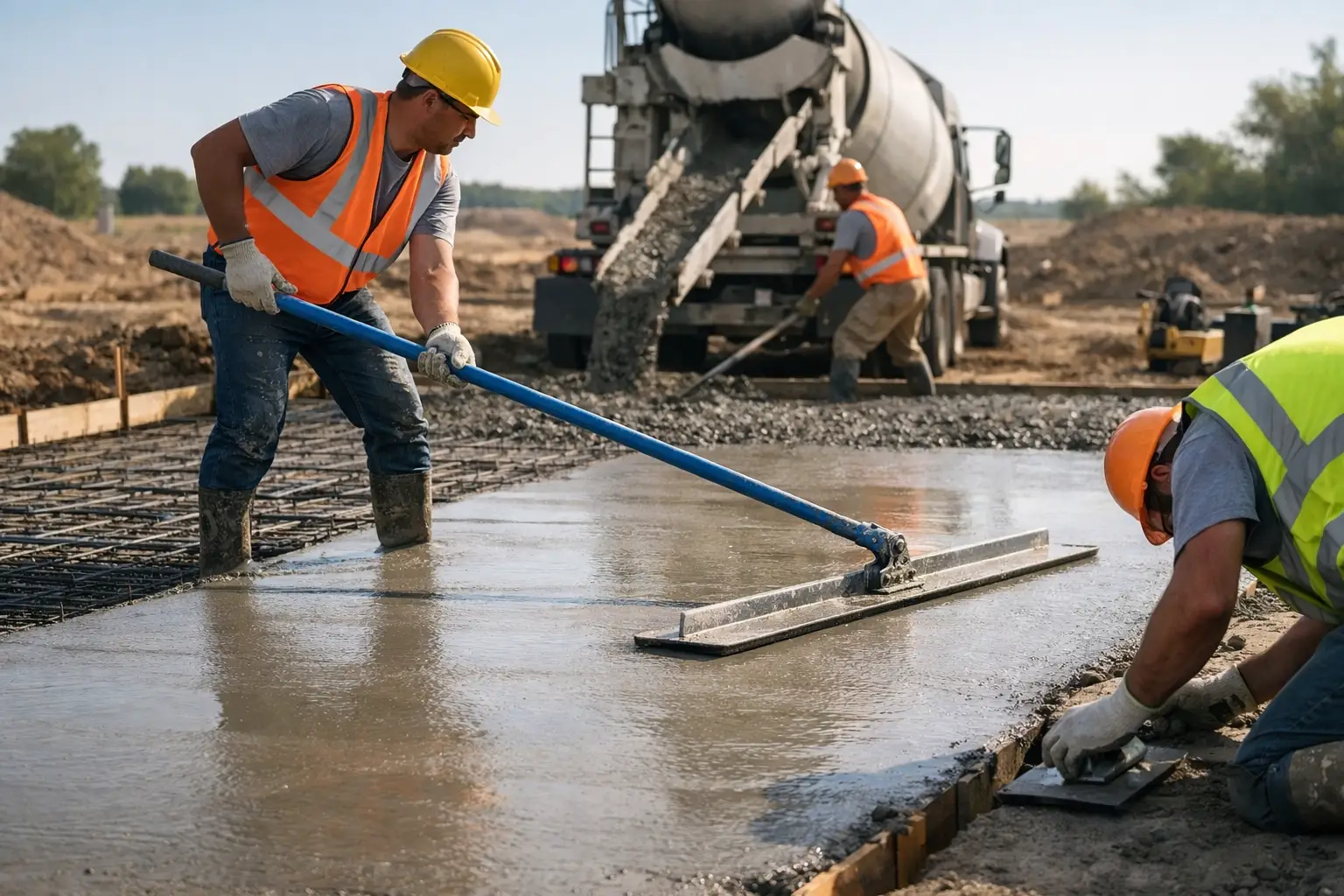
A concrete slab can look simple from the surface. It is not. Good concrete slab installation depends on what happens before the truck arrives, while the concrete is being placed, and during the days after the pour. If any of those stages are rushed, the slab may still harden, but that does not mean it will perform the way it should.
For homeowners and property managers in Dallas-Fort Worth, that matters. North Texas soil movement, heat, drainage issues, and heavy use all put pressure on flatwork. A slab that is well planned and well installed gives you a stable surface for a patio, shed, walkway connection, equipment pad, or other structure. A slab that is not built correctly can crack early, settle unevenly, or hold water where it should not.
What concrete slab installation really involves
Concrete slab installation is more than pouring concrete into a framed area. The slab has to match the use of the space, the soil conditions, the load it will carry, and the drainage around it. That means thickness, reinforcement, base preparation, and finishing all have to work together.
A basic residential patio slab is not built exactly the same way as a driveway approach or a commercial equipment pad. Even when two slabs look similar after the job is complete, the right installation method may be different underneath. That is where experience matters. The finish is what people notice first, but the hidden work is what decides whether the slab lasts.
The ground underneath decides a lot
Most slab problems start below the concrete. If the subgrade is weak, soft, or uneven, the slab is being asked to bridge bad ground from day one. Over time, that can show up as cracking, settling, or corners breaking under pressure.
Site preparation starts with clearing organic material, soft spots, and anything that does not belong under concrete. The area then needs to be graded correctly and compacted. In many cases, a compacted aggregate base is added to improve support and help create a more stable platform.
This is one of the biggest areas where quality can vary from contractor to contractor. Skipping proper compaction saves time in the moment, but it often creates expensive problems later. In North Texas, expansive soils make that gamble even riskier.
Drainage is not optional
A slab should not fight water. It should direct water away from structures and away from the surface where possible. That is true for patios, sidewalks, and utility slabs, and it is even more important when the slab ties into a home, garage, or commercial building.
Slope is part of the installation, not an afterthought. If the grade is wrong, water can pool on top of the slab or run back toward the foundation. Neither is a small issue. Standing water can shorten the life of the surface, create slip hazards, and expose nearby structures to moisture problems.
The right slope depends on the slab location and what it connects to. Too little slope can leave drainage problems. Too much can make the slab awkward to use or visually off. Good installation finds the balance.
Thickness and reinforcement depend on the job
Not every slab needs the same thickness, and not every slab should be reinforced the same way. This is where a practical, use-based approach matters.
A light-use patio may need a different build than a slab meant to support a hot tub, storage structure, trash enclosure, or frequent vehicle traffic. Reinforcement can include rebar, wire mesh, or fiber additives, depending on the application and design. The goal is not to make concrete crack-proof, because all concrete can crack. The goal is to help control cracking and improve performance under load and movement.
This is also where cheap pricing can hide shortcuts. A lower bid may mean less base material, thinner pours, lighter reinforcement, or corners cut on prep. On paper, it can look like the same project. In the field, it is not the same slab.
Forming and placement set the shape of the job
Once the site is prepared, forms establish the slab dimensions, edges, and elevation. If the forms are out of square or not set securely, the finished slab can end up looking uneven or causing drainage issues. Small layout mistakes at this stage can stay visible for the life of the concrete.
Placement day also matters more than many property owners realize. Concrete has to be delivered, placed, spread, and finished within a workable window. Weather plays a role. So does crew coordination. In hot Texas conditions, timing becomes even more important because the concrete can begin setting quickly.
A crew that understands placement knows how to move efficiently without sacrificing finish quality. That includes maintaining proper depth, keeping reinforcement positioned correctly, and avoiding excess water in the mix. Adding too much water may make concrete easier to work with in the moment, but it can reduce strength and increase surface problems later.
Finishing is about function, not just appearance
The finish on a slab affects how it looks, but also how it performs. A broom finish is common for outdoor surfaces because it adds traction. A smoother finish may be appropriate in some protected areas, but it can become slick when wet if used in the wrong place.
Control joints are another important part of finishing. These joints help guide where cracking is more likely to occur as the concrete cures and shrinks. They do not prevent cracking entirely, but they help make it more controlled and less random. Joint spacing and placement should make sense for the slab size and shape.
Edge quality matters too. Clean edges improve appearance, reduce weak points, and give the slab a more professional finished look. It is a detail, but it is one that often separates careful work from rushed work.
Curing is where long-term strength develops
One of the most misunderstood parts of concrete slab installation is what happens after the pour. Just because the slab looks finished does not mean the job is done. Concrete needs time and proper curing conditions to gain strength.
If curing is ignored, the surface can dry too fast, especially in hot, windy weather. That can lead to shrinkage issues, surface dusting, and weaker overall performance. Depending on the project, curing methods can include water curing, curing compounds, or other protective steps that help moisture stay in the slab long enough for proper strength development.
Traffic timing matters as well. Walking on a new slab too early, placing heavy items on it before it is ready, or driving on it before it has reached sufficient strength can damage the surface or shorten its life.
Common slab problems and what causes them
When a slab fails early, the concrete itself is not always the only reason. More often, the issue goes back to planning or installation.
Cracking can result from shrinkage, poor joint placement, weak base preparation, or movement in the soil below. Surface flaking can come from finishing errors, poor curing, or weather exposure at the wrong time. Settlement usually points to base or subgrade issues. Drainage problems often trace back to incorrect slope or poor site layout.
That is why the cheapest answer is not always the most affordable one. A slab that has to be replaced or repaired early is usually more expensive than doing the work correctly from the start.
What property owners should ask before hiring a contractor
If you are comparing bids, ask how the site will be prepared, what thickness is planned, what reinforcement will be used, and how drainage will be handled. Ask how the crew plans to cure the slab and when it will be ready for use. These are basic questions, but they tell you a lot about whether the contractor is thinking beyond the pour itself.
It also helps to ask whether the slab design matches your actual use. A contractor should want to know what the slab is for, not just how many square feet it covers. That is the difference between quoting a surface and building one that fits the job.
In a market like Dallas-Fort Worth, local experience matters. Soil behavior, drainage patterns, and weather conditions all affect how concrete should be installed. A contractor who understands those local conditions is better positioned to build a slab that holds up.
Why a good slab pays off
A properly installed slab gives you more than a flat surface. It gives you usability, cleaner drainage, lower maintenance, and better long-term value from the space. Whether it supports a patio, storage area, commercial access point, or future improvement, the slab becomes part of how the property functions every day.
Fantastico Concrete approaches slab work the way it should be approached - with attention to grade, support, finish, and long-term performance. That is what concrete work demands, and it is what property owners should expect.
If you are planning a slab, think past the pour date. The right installation should still be doing its job years after the forms are gone.

