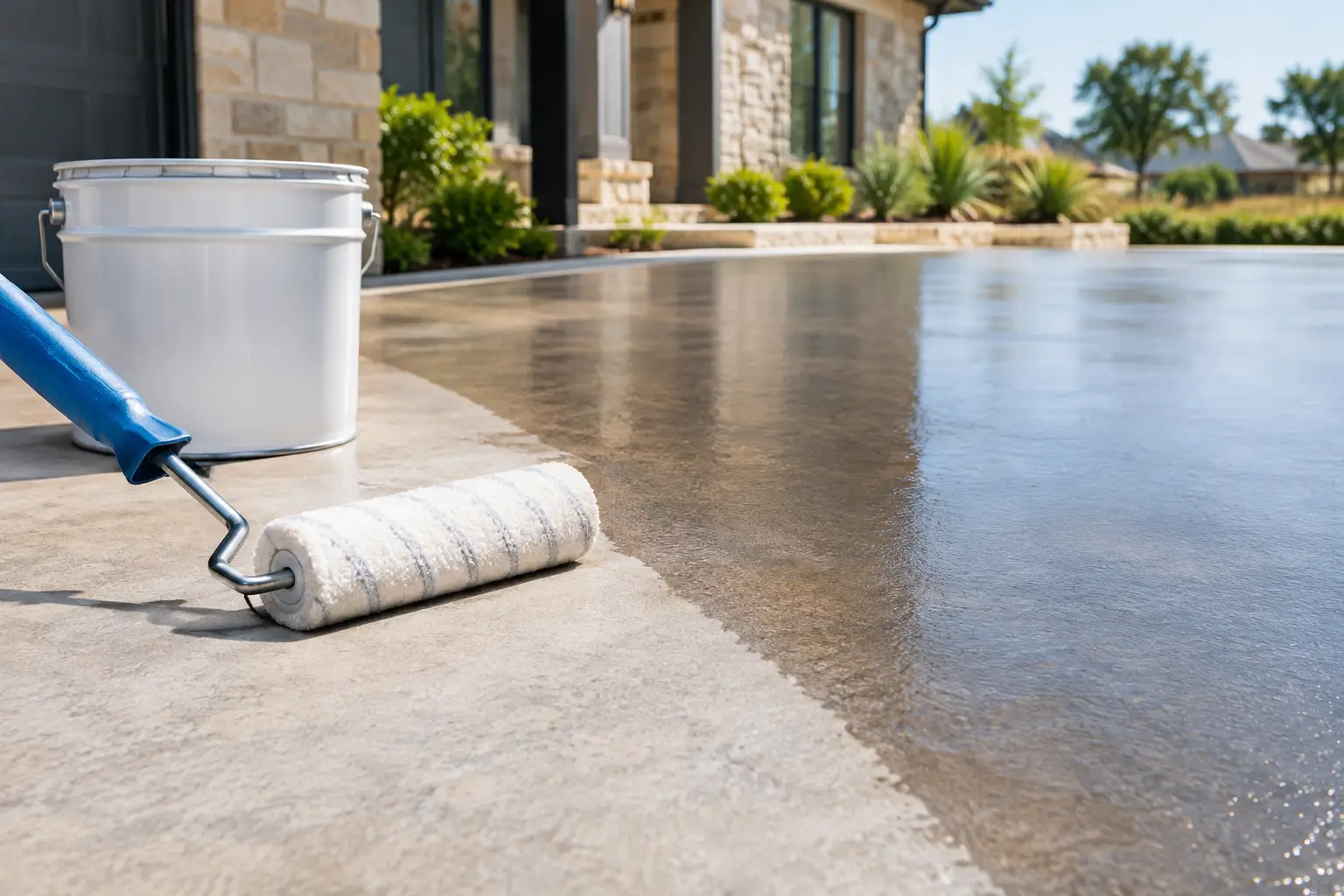
A concrete sealer can protect a good slab, but it cannot turn a failing slab into a sound one. That is the starting point for this concrete sealer review guide. Before comparing products by shine, price, or label claims, look at the concrete itself: cracking, scaling, soft spots, standing water, and old coatings all affect the right answer.
For homeowners and property managers in North Texas, the job is rarely just about making concrete look darker or glossier. A driveway needs to handle vehicle traffic, summer heat, rain, lawn chemicals, and occasional freeze-thaw cycles. A patio may need stain resistance without becoming slick around a pool. Commercial walkways need safe traction and a finish that can be maintained without shutting down access every few months.
Concrete Sealer Review Guide: Start With the Surface
The best sealer depends on what the slab is doing, not what the container promises. New concrete, older broom-finished concrete, stamped concrete, stained concrete, and previously sealed concrete each require a different approach.
Start by identifying whether the surface is bare and absorbent. Sprinkle a small amount of water in several spots. If it darkens the concrete and soaks in within a few minutes, a penetrating sealer may be a good fit. If the water beads up, there may already be a sealer or coating present. Applying a new, incompatible product over it can cause peeling, cloudiness, or uneven sheen.
Also check for moisture issues. A sealer does not correct poor drainage, low spots, or water moving up through a slab. If moisture is trapped beneath a film-forming coating, the result can be whitening, blistering, or delamination. Fix drainage and concrete repairs before treating surface protection as the solution.
The Main Types of Concrete Sealer
There is no single best concrete sealer. The right product comes down to exposure, appearance, surface condition, and maintenance expectations.
Penetrating sealers
Penetrating sealers, commonly silane, siloxane, or silicate-based, soak into the concrete instead of leaving a noticeable film on top. They are usually the practical choice for driveways, sidewalks, garage floors, and commercial exterior flatwork where natural appearance and traction matter.
These sealers repel water and reduce absorption of salts, oils, and contaminants while allowing the slab to breathe. They do not usually make concrete glossy or dramatically darker. That is a benefit for owners who want protection without changing the look of broom-finished concrete.
The trade-off is visual. If the goal is a wet-look patio or a richer color on decorative concrete, a penetrating sealer will not deliver that finish. Coverage also depends heavily on porosity, so very old or rough concrete may require more material than expected.
Acrylic sealers
Acrylic sealers form a thin protective film and are popular for patios, decorative concrete, stamped concrete, and surfaces where color enhancement matters. They are available in water-based and solvent-based versions, with finishes ranging from matte to high gloss.
Acrylic can give a plain patio a cleaner, darker, more finished appearance. It is generally easier to apply and recoat than heavier coatings. But it is not automatically the best option for heavy vehicle traffic, hot tire exposure, or areas that stay wet. A glossy acrylic can also become slippery if the wrong finish is used around pools, entries, or sloped walkways.
In Texas heat, film-forming products need careful preparation and application. Applying too heavily or in direct, intense sun can lead to roller marks, trapped solvent, bubbles, or an uneven finish. A lighter first coat is often safer than trying to create a deep shine in one pass.
Epoxy and polyurethane coatings
Epoxy and polyurethane systems are more commonly used for garage floors, interior commercial floors, workshops, and certain protected concrete areas. They create a thicker coating than acrylic and can provide strong chemical and abrasion resistance.
For a garage that sees vehicle fluids, tools, and frequent use, a properly installed epoxy system can make sense. For an exposed driveway or open patio, it often does not. Direct sun, moisture vapor, and exterior movement can shorten the life of the coating unless the system is specifically designed for those conditions. Polyurethane topcoats handle UV exposure better than many epoxies, but they still demand good surface preparation and professional application.
A coating system is not a quick weekend upgrade when the slab has moisture, contamination, or failing old paint. Mechanical surface preparation, crack repair, and moisture testing may be necessary before installation.
What to Compare Beyond the Label
A useful review does not stop at “waterproof” or “high gloss.” Concrete is not fully waterproof, and a good sealer should be judged by how it performs under the conditions that surface actually sees.
For exterior concrete, look at water repellency, UV resistance, traction, and compatibility with the existing finish. For driveways, ask whether the product holds up to vehicle traffic and hot tires. For patios, consider whether it changes the color and whether a non-slip additive is appropriate. For commercial areas, maintenance and slip resistance may matter more than appearance.
Coverage rates deserve skepticism. A label may state that a gallon covers several hundred square feet, but that number usually assumes a smooth, moderately porous surface. Broom-finished, weathered, or highly absorbent concrete can consume much more product. Buying only the minimum amount often leads to thin coverage or mismatched batches during a second purchase.
Dry time is another point that gets misunderstood. A surface can feel dry within hours yet still need a full day or longer before vehicle traffic, furniture, rain exposure, or a second coat. Follow the manufacturer’s temperature and humidity requirements. The forecast matters as much as the application method.
When Sealer Will Not Solve the Problem
Sealing is preventive maintenance, not structural repair. If a slab has settlement, wide or active cracks, loose aggregate, spalling, or major scaling, address those issues first. Covering damage with a glossy product may make it look better briefly, but it does not stop the underlying movement.
The same applies to stains. A sealer can reduce future staining, but it will not reliably hide deep oil, rust, tire marks, or leaf stains already embedded in the concrete. Cleaning and stain treatment must happen before sealing. Any residue left on the slab can interfere with adhesion or show through a clear finish.
New concrete needs time to cure. Applying a sealer too early can interfere with moisture release or lead to uneven absorption. The right waiting period depends on the mix, weather, and sealer type, so the installation instructions should control the schedule.
Application Details That Separate a Good Job From a Short-Lived One
Most sealer failures begin with preparation. The concrete must be clean, dry enough for the chosen product, and free of incompatible coatings. Pressure washing can help, but it is not always enough for oil contamination or failing acrylic. Those conditions may require degreasing, stripping, grinding, or other surface preparation.
Apply the product evenly and avoid puddling. Penetrating sealers should be worked into the surface and back-rolled or spread out before they dry unevenly. Film-forming sealers need thin, consistent coats. Heavy application is a common cause of whitening, peeling, and sticky areas.
Plan around weather. Avoid sealing before rain, during extreme heat, or when temperatures fall outside the product range. On a large driveway or commercial slab, break the work into manageable sections and maintain a wet edge so the finish does not show lap marks.
A Practical Choice for Common Concrete Areas
For a standard broom-finished driveway or sidewalk, a penetrating water repellent is usually the most sensible choice. It protects without making the surface slick or changing its appearance. For stamped concrete or a decorative patio, an acrylic sealer may be the better fit when color enhancement is the priority, provided traction and maintenance are addressed.
For garages and protected work areas, evaluate epoxy or polyurethane systems based on traffic, chemical exposure, and slab moisture. For commercial entryways and walkways, prioritize slip resistance and serviceability over high gloss. The best-looking finish is not the best finish if it creates a safety concern or requires constant rework.
A concrete sealer should fit the slab, the weather, and how the space is used. When the concrete needs repair, drainage correction, resurfacing, or replacement first, handle that work before sealing. A sound surface with the right protection will always outperform a cosmetic shortcut.

