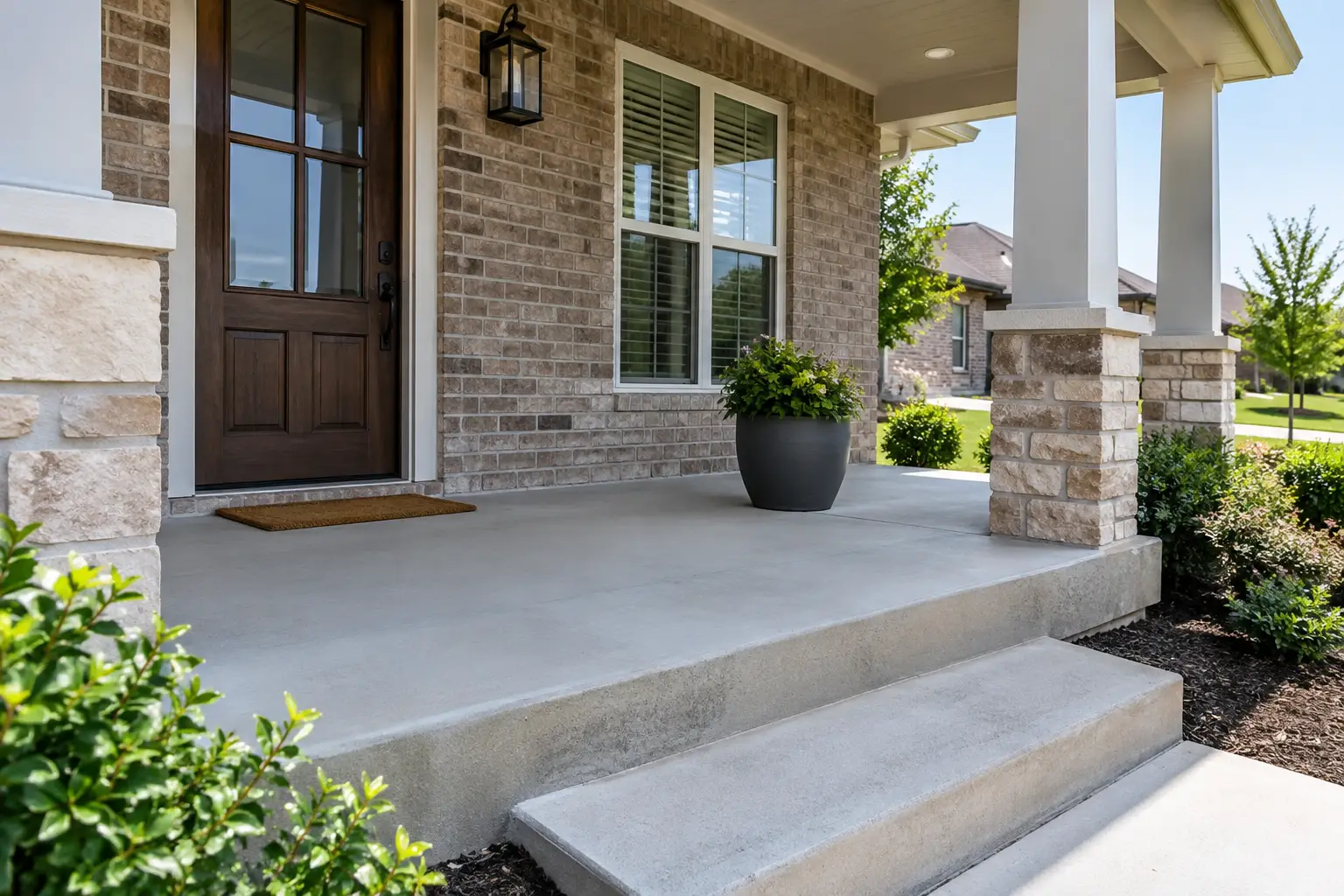
A porch slab that has dropped away from the house, split through the middle, or turned into a trip hazard is more than a curb-appeal problem. It can hold water against the foundation, make front-door access unsafe, and complicate the sale or rental of a property. This concrete porch replacement guide explains how to tell when replacement is the right call, what a proper installation involves, and what to discuss with a contractor before work starts.
When a Concrete Porch Needs Replacement
Not every crack means the porch has reached the end of its life. Concrete shrinks as it cures, and thin hairline cracks can be cosmetic if the slab remains level, stable, and well drained. The concern starts when cracks widen, separate vertically, or allow one section of the porch to move independently from another.
Replacement is usually the better option when the porch has major settlement, widespread spalling, a failing edge, or a slope that directs water toward the home. A slab that rocks underfoot, has exposed reinforcement, or has broken sections near stairs should also be evaluated promptly. Patching can improve the appearance of isolated surface damage, but it cannot correct poor base material, ongoing soil movement, or a slab that was poured too thin.
In North Texas, expansive clay soils make movement a common issue. Long dry stretches can cause soil to contract, while heavy rain can swell it again. That movement does not automatically mean a porch replacement is required, but it does mean the base, drainage plan, and connection to the house deserve careful attention.
Start With the Cause, Not the Crack
A new porch poured over the same underlying problem can fail just as quickly as the old one. Before demolition, the contractor should look at why the slab moved or deteriorated. Water management is often part of the answer.
Check where roof runoff goes. Downspouts that discharge beside the porch can saturate the soil and wash out support below the slab. Examine adjacent landscape beds, sprinkler heads, and walkways as well. A porch should shed water away from the structure, not trap it along the foundation wall.
Tree roots can also lift or crack a porch. Removing roots without a plan can create a new void or affect the tree, so this is not a situation for guesswork. If the porch supports columns, masonry, railings, or a roof overhang, the project may require temporary support and additional structural review. The slab is one part of the entry system, not always a standalone surface.
What a Proper Porch Replacement Includes
A quality replacement begins with full removal of failed concrete. Leaving loose material, unstable sections, or buried debris beneath a new pour creates weak points from day one. The demolition phase should protect nearby siding, brick, landscaping, and the existing foundation.
Once the old slab is removed, the exposed subgrade can be evaluated. Soft soil, voids, organic material, and poorly compacted fill need to be addressed before concrete arrives. The crew then establishes the finished elevation and slope, making sure the new porch meets the entry correctly while directing water outward.
Base Preparation and Compaction
Concrete is only as dependable as the support beneath it. A properly prepared base uses suitable material that is spread, graded, and compacted. The exact base depth depends on site conditions, slab design, and the planned use of the porch. A small uncovered stoop and a larger covered entry with steps do not have identical requirements.
Compaction matters because loose material settles after installation. That settlement can create cracks, low spots, and separation near the home. On properties with known drainage issues or unstable soil, the contractor may recommend additional excavation, improved runoff control, or a revised porch design before pouring.
Reinforcement, Thickness, and Joints
Residential porch slabs are commonly reinforced, but reinforcement is not a substitute for solid preparation. Steel reinforcement or fiber reinforcement can help manage cracking and improve slab performance when specified for the job. The right approach depends on slab size, thickness, site conditions, and whether the porch carries added loads.
Control joints are equally important. Concrete will crack as it cures and responds to temperature changes. Properly placed joints encourage cracking to occur in planned locations instead of randomly across the finished surface. Expansion material may also be used where the porch meets an existing structure or another concrete section, allowing each element to move without forcing the other to crack.
Do not judge the work solely by whether rebar is visible before the pour. Ask how the reinforcement will be positioned and supported within the slab. Reinforcement resting on the ground does far less than reinforcement placed at the intended elevation.
Slope, Finish, and Safe Access
The porch needs enough slope to move rainwater away from the house without making the entry uncomfortable or awkward. This detail deserves attention in Dallas-Fort Worth and throughout Texas and Oklahoma, where fast, heavy rain can expose drainage mistakes quickly.
For the surface, a broom finish is often the practical choice. It provides traction when wet and holds up well at an entry. Decorative finishes can work too, but they should match the property's use and maintenance expectations. A highly textured finish may collect dirt, while a slick finish can become hazardous in rain.
If replacement includes steps, railings, or a landing, confirm the layout before demolition. Door swings, threshold height, walking clearance, and handrail needs can all affect the final design. This is the time to correct an undersized landing or an inconvenient step arrangement.
Repair, Resurface, Raise, or Replace?
The right fix depends on the slab's condition and the cause of damage. Resurfacing may help when the concrete is sound but the surface has minor scaling or discoloration. It will not solve an actively moving slab or a porch with significant cracks.
Mudjacking or foam lifting can be useful when a generally intact porch has settled but remains structurally sound. These methods can restore elevation in some cases, but they do not repair severely broken concrete or eliminate the need to solve drainage problems. They are also less suitable when the porch has deteriorated edges, unsupported steps, or extensive cracking.
Full replacement makes sense when the slab has failed across several areas, has become unsafe, or needs a design change. It costs more upfront than a patch, but it creates the opportunity to rebuild the base, improve drainage, revise the layout, and start with a sound surface.
Questions to Ask Before Hiring a Concrete Contractor
A clear estimate should explain the work, not just provide a total price. Ask whether removal and disposal are included, how the base will be prepared, what reinforcement is planned, and how the porch will be sloped. You should also know whether steps, railings, landscaping repairs, or downspout adjustments are part of the scope.
Before approving a concrete porch replacement, get answers to these practical questions:
- What caused the existing slab to crack, settle, or hold water?
- How deep will excavation go, and what base material will be installed?
- What concrete thickness, reinforcement, and joint layout are planned?
- How will the porch drain away from the house and nearby walkways?
- How long must the porch cure before normal foot traffic and heavier use?
Also ask about permitting when the project changes stairs, railings, structural supports, or the footprint of the entry. Local requirements vary, especially for commercial properties and rental properties with accessibility or safety obligations.
Preparing Your Property for the Work
Porch replacement is a short but disruptive project. Move furniture, planters, decorations, and deliveries away from the work area. Keep vehicles clear of the access route and arrange for pets and children to stay out of the demolition and curing area.
You may temporarily lose normal front-door access. Discuss an alternate entrance before work begins, particularly if the property is occupied or serves customers. If sprinkler lines, landscape lighting, buried utilities, or drainage pipes run near the porch, identify them in advance. A good crew plans around site conditions, but visible markings and a direct conversation prevent avoidable damage.
Fresh concrete needs time to gain strength. The surface may look finished quickly, but curing is part of the installation. Follow the contractor's directions on foot traffic, moving furniture back, applying sealers, and placing heavy items on the porch. Rushing that period can leave marks or damage a new surface before it has had a fair chance to perform.
A well-built porch should feel simple once the job is complete: solid underfoot, properly sloped, easy to enter, and suited to the home. Fantastico Concrete approaches replacement work with that practical standard in mind, because the details below the finished surface are what keep an entry looking and functioning right for years.

