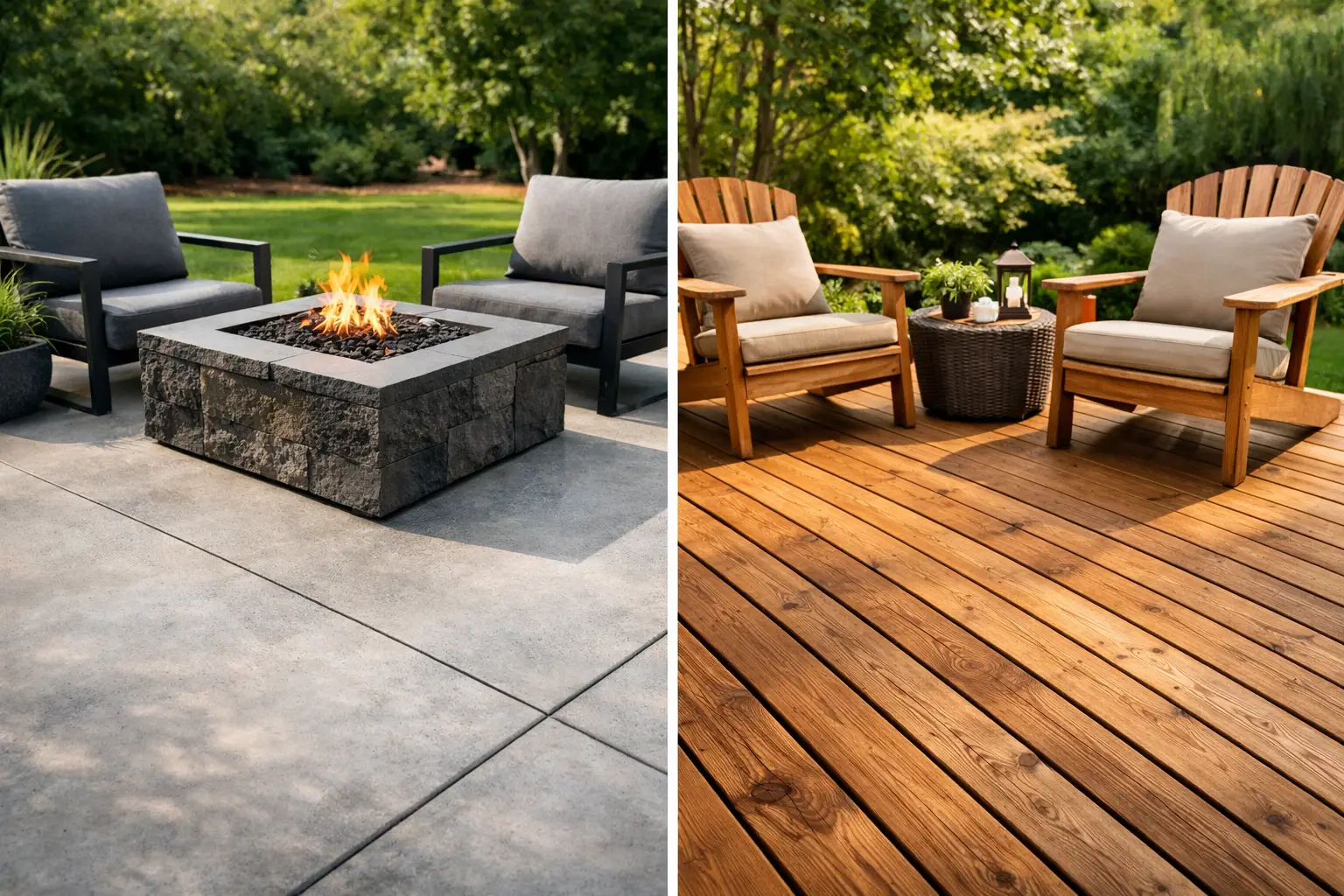
A lot of outdoor projects start with the same question: concrete patio vs wood deck - which one actually gives you the better return, better durability, and fewer headaches over time? The right answer depends on your yard, your budget, and how you plan to use the space. But if you want a surface that holds up, stays functional, and does not turn into a maintenance project every year, the differences matter fast.
For some properties, a wood deck makes sense. It can create elevation where the yard drops off, and it has a familiar look many homeowners like. But for many homes, especially in places with strong sun, heavy storms, shifting soil, and long outdoor seasons, concrete tends to solve more problems than it creates.
Concrete patio vs wood deck: the biggest differences
The clearest difference is structural. A concrete patio is a solid hardscape installed at grade. A wood deck is a framed platform built above the ground. That one distinction affects cost, lifespan, upkeep, repairs, drainage, and how the finished space feels under daily use.
Concrete is built for contact with the ground. When installed correctly with proper base prep, grading, and joint placement, it creates a stable outdoor surface for seating, grilling, walkways, and general traffic. Wood decks depend on posts, framing, fasteners, and boards, which means more individual parts and more points of wear.
That does not make wood bad. It just means wood usually needs more attention. If you are comparing long-term ownership, not just the first invoice, that matters.
Cost is not just the install price
A wood deck can sometimes look appealing on day one because people focus on square-foot pricing alone. But straightforward pricing rarely tells the full story. Material choice, elevation, railing requirements, stairs, demolition, site access, and finish level can move the number quickly.
A basic concrete patio is often one of the more cost-effective ways to add usable outdoor living space. Decorative finishes like stamping, staining, exposed aggregate, or custom scoring will raise the price, but even then, the long-term value can still be strong because the maintenance burden is lower.
Wood decks vary even more. Pressure-treated lumber costs less than premium hardwoods or composite-adjacent systems, but lower upfront cost often comes with more maintenance and shorter service life. Add railing, steps, structural reinforcement, or replacement of worn boards over time, and the deck may cost more than it first appeared.
If your main goal is maximum usable surface with predictable upkeep, concrete usually has the edge.
Maintenance is where the gap gets wider
This is where many property owners change their mind.
A concrete patio generally needs occasional cleaning and periodic sealing depending on the finish and exposure. Small cracks can happen over time because concrete is rigid, but good installation practices reduce major issues. In most cases, maintenance is simple and manageable.
Wood decks ask for more. Boards can warp, crack, splinter, fade, or rot. Fasteners can loosen. Stain and seal coatings wear down under sun and rain. If the deck is shaded, mold and mildew can become part of the routine. If it gets a lot of direct sun, the finish can break down faster.
That does not mean every deck becomes a problem. It means maintenance is built into deck ownership. If you are realistic about your time and budget, concrete is usually the lower-effort option.
Lifespan and durability
When homeowners compare concrete patio vs wood deck, durability is often the deciding factor.
A well-installed concrete patio can last for decades. It handles foot traffic, patio furniture, grills, and everyday use without much fuss. It does not attract termites. It does not rot. It does not have individual boards that need replacing one by one.
Wood is more vulnerable by nature. Moisture, insects, heat, and age all work against it. Even treated lumber has limits. Structural components may outlast surface boards, but eventually many decks require partial rebuilds, resurfacing, or larger repairs.
In North Texas and surrounding areas, weather adds pressure. Hot summers, sudden heavy rain, and soil movement are real conditions, not theory. A patio with proper grading and a solid base often handles those conditions better than a wood structure that depends on many connected parts staying sound over time.
Comfort, appearance, and everyday use
Wood has one clear advantage: it feels warmer and softer underfoot. Some homeowners simply prefer the look of real wood grain, especially for elevated back entries or traditional backyard designs.
Concrete brings a different kind of value. It looks clean, solid, and permanent. It works with modern, classic, and commercial-style properties. And it is more customizable than a lot of people expect. Broom finish is practical and simple. Stamped concrete can mimic stone or pavers. Colored concrete can warm up the space visually. A good finish can turn a plain slab into a finished outdoor feature.
There is one trade-off worth saying plainly. In direct summer sun, concrete can get hot. So can wood, especially darker stained boards, but bare concrete can hold and reflect heat. Shade structures, layout planning, and finish choice help. If heat is a major concern, that should be part of the design discussion, not an afterthought.
Drainage and ground conditions matter more than most people think
Outdoor surfaces fail early when drainage gets ignored.
Concrete patios need proper slope so water moves away from the house and does not pond on the surface. Subgrade prep matters. Expansion joints matter. In areas with active soil movement, the installation process matters even more.
Wood decks can avoid some grade-related issues because they sit above the ground, which can help on uneven sites or where you need elevation. But the space underneath still needs to manage moisture correctly. Standing water, poor airflow, and unstable footings will shorten the life of the deck.
This is one reason a flat or gently sloped yard often favors concrete, while a steep grade may lean toward a deck or a mixed design. The property should decide the structure, not the other way around.
Resale and buyer appeal
Both options can add appeal when they are done well. The real question is what kind of appeal and how much future upkeep a buyer sees.
A concrete patio tends to read as practical, permanent, and low maintenance. For homeowners, landlords, and investors, that is a strong selling point. It expands usable outdoor space without signaling future refinishing work or structural concerns.
A wood deck can photograph well and create a strong first impression, especially if it is elevated and integrated with the back of the house. But buyers who know homes also know decks age. If the deck already shows wear, they may mentally subtract repair costs right away.
For rental and investment properties, concrete often makes more sense because it is harder to damage through normal use and easier to maintain between occupants.
When a wood deck is the better choice
There are situations where a deck is the right call.
If your back door sits well above grade, a deck may provide the most natural transition from inside to outside. If your lot has a steep drop, building a patio at grade may require major site work that pushes cost too high. If you want a raised platform around views, trees, or uneven terrain, wood framing can solve a layout problem concrete cannot solve as efficiently.
So this is not about pretending concrete fits every property. It does not. A good recommendation depends on elevation, drainage, access, intended use, and budget.
When concrete usually comes out ahead
Concrete usually wins when the yard supports a ground-level installation and the priority is durability, low maintenance, and long-term value. It is especially practical for large entertaining areas, grilling zones, poolside hardscapes, walkways tied into the patio, and properties where heavy use is expected.
It also makes sense for owners who do not want seasonal upkeep. If you would rather wash the surface and move on than worry about staining, replacing boards, or checking for rot, concrete is the simpler ownership experience.
For many homes in the Dallas-Fort Worth area, that practical side matters. Outdoor spaces get used hard. Heat, storms, and shifting conditions expose weak installations fast. A well-built concrete patio gives you a surface that is ready to work.
The better question is not which is nicer
It is which one fits the property and the way you actually live.
If you want elevation, softer feel, and a traditional deck look, wood may be worth the maintenance. If you want a strong, clean, low-hassle outdoor surface that can last for years with less ongoing work, concrete is often the better investment.
The best outdoor projects are not chosen by trend. They are chosen by what holds up, what gets used, and what still makes sense five or ten years from now. If your goal is a surface that stays practical long after the project is finished, concrete deserves a serious look.

