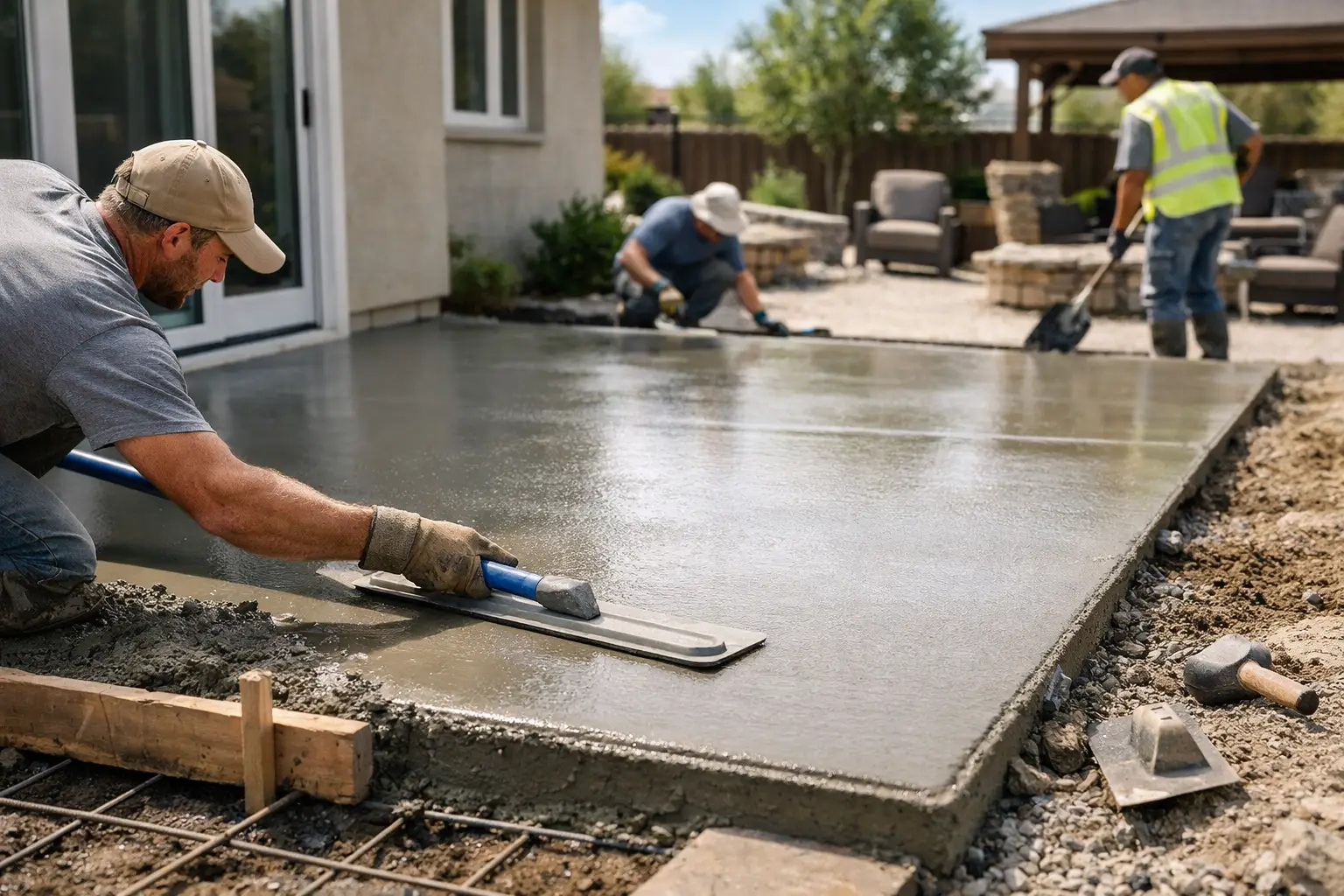
A patio can look simple from the street, but concrete patio installation is one of those jobs where the details decide whether it holds up for years or starts showing problems after the first hard summer and winter cycle. In Dallas-Fort Worth, heat, soil movement, drainage, and day-to-day use all put pressure on exterior concrete. If the slab is planned and poured correctly, you get a clean, durable surface that adds usable space and improves the property. If not, you get cracking, low spots, standing water, and an expensive redo.
What good concrete patio installation really involves
A quality patio starts long before the concrete truck arrives. Layout, grading, subgrade preparation, form setting, reinforcement, joint placement, and finishing all matter. Homeowners often focus on color or shape first, but performance starts underneath the slab.
The patio has to fit how the space will actually be used. A small seating area for two chairs has different requirements than a large backyard patio holding a grill, dining set, planters, and regular foot traffic. For commercial properties or rental homes, durability and maintenance usually take priority. For owner-occupied homes, appearance and outdoor living value often share equal weight with strength.
That is why there is no one-size-fits-all patio. Thickness, finish, reinforcement, and drainage design should match the site and the intended use.
Site conditions matter more than most people expect
In North Texas, expansive clay soils are a real factor. Soil movement can stress any slab, especially if the base work is rushed or moisture conditions change too much over time. That does not mean concrete is a bad choice. It means the installation has to account for local conditions.
Drainage is another major issue. A patio should shed water away from the home and avoid creating puddling areas near doors, foundations, or walkways. Even a strong slab can become a problem if the slope is wrong. Standing water affects appearance, increases slip risk, and can speed up surface wear.
Tree roots, existing structures, irrigation lines, and access for equipment also influence the job. On some properties, a straightforward backyard pour is possible. On others, limited access or uneven grades change the plan. A contractor should identify those issues before work starts, not after forms are in place.
Planning the patio layout
A good layout balances size, shape, traffic flow, and the surrounding property. The patio should feel like it belongs to the house and lot rather than looking dropped in as an afterthought. Rectangular slabs are common because they are efficient and practical, but curved edges, step-down sections, and integrated walkways can work well if they serve the space.
It also helps to think ahead. If a homeowner plans to add an outdoor kitchen, pergola, hot tub, or cover later, the slab design may need to change now. That can affect thickness, reinforcement, and embedded connections. It is much easier to build for future use at the installation stage than to cut and patch later.
For property managers and investors, layout decisions often come down to function and turnover resistance. Clean lines, proper drainage, and durable finishes usually offer the best long-term value.
The base is where strength begins
One of the biggest differences between a patio that lasts and one that fails early is subgrade preparation. Concrete is only as reliable as the surface beneath it. If the ground is soft, uneven, or poorly compacted, the slab is more likely to settle, crack excessively, or hold water.
A proper base typically involves excavation to the correct depth, removal of unstable material if needed, and compaction of the subgrade or imported base material. The goal is uniform support. Not every yard needs the exact same build-up, but every patio needs a stable foundation.
This is also where shortcuts tend to stay hidden until the job is finished. From the top, fresh concrete can look great on day one. Months later, weak base prep starts to show. That is why experienced contractors take the unseen steps seriously.
Reinforcement, thickness, and joints
Patios are not structural foundations, but they still need to be built for service life. Standard residential patio thickness often works well for typical outdoor use, but some applications need more support. Heavy features, poor subsoil conditions, or larger spans may call for adjustments.
Reinforcement helps control cracking and improve slab performance. The exact method depends on the project, but the goal is to manage stress rather than pretend concrete will never crack. That is an important point for any property owner. Concrete naturally develops cracks over time. The job of good installation is to reduce uncontrolled cracking and guide movement with planned joints.
Control joints should be placed correctly and at the right spacing. When joints are ignored or cut poorly, random cracking becomes more likely. That does not just affect appearance. It can also reduce the professional finish people expect from a new patio.
Choosing the right finish for the property
Finish affects both appearance and day-to-day use. A basic broom finish is popular because it provides traction, holds up well, and fits many homes and commercial spaces. It is practical, clean, and easy to maintain.
A smoother finish may look more refined in some settings, but exterior surfaces need enough texture for safety, especially around pools or areas exposed to frequent rain. Decorative options such as stamped or colored concrete can create a more customized look, but they also require careful installation and maintenance expectations.
That is where trade-offs come in. Decorative concrete can improve visual appeal and help define an outdoor living area, but it usually costs more and may require more attention to preserve appearance over time. A simple finish often gives the best balance of value, durability, and low upkeep.
Timing, weather, and curing
Concrete work is heavily affected by weather, and Texas conditions can move fast. High heat, direct sun, wind, and sudden rain all change how concrete behaves during placement and finishing. Timing matters because concrete has to be worked within a specific window.
A rushed crew can leave behind surface issues, inconsistent texture, or weak finishing. On the other hand, waiting too long can make proper finishing difficult. Good scheduling and jobsite control are part of professional installation.
Curing is just as important as the pour itself. Fresh concrete needs time and moisture control to gain strength properly. Too many people assume the job is finished once the slab looks dry. In reality, early curing conditions have a direct effect on durability and surface quality. Traffic should stay off the slab until it is ready, and heavy use should wait even longer.
Common mistakes that lead to patio problems
Most patio failures come from a few predictable issues. Poor drainage is near the top of the list. If water has nowhere to go, the patio becomes less usable and the surrounding property may suffer.
Weak base preparation is another common problem, especially on jobs priced to move fast. Thin concrete, inadequate reinforcement, and missing or poorly placed joints can also shorten the life of the slab. Sometimes the finish is the issue. A patio may look attractive at first but become slick when wet or wear unevenly with regular use.
There is also the issue of unrealistic expectations. Even a properly installed patio is not immune to hairline cracks, color variation, or normal weathering. Concrete is durable, not perfect. The right contractor explains that upfront and builds the slab to perform well in real conditions.
What property owners should ask before starting
Before any concrete patio installation begins, it helps to ask practical questions. How will water drain away from the slab? What base prep is included? How thick will the patio be? What finish makes sense for the intended use? Where will the joints go? How long before the patio can be used?
Clear answers usually indicate a contractor who understands the work. Vague answers often lead to vague results. A reliable bid should reflect the actual conditions of the site, not just a rough square-foot number without context.
For Dallas-Fort Worth property owners, local experience matters. Soil behavior, summer heat, and drainage patterns are not small details here. They are part of the job. Fantastico Concrete approaches patio work with that in mind, because long-term performance comes from doing the basics right every time.
The value of a well-built patio
A concrete patio adds more than a flat surface. It creates usable outdoor space, improves access, and gives the property a more finished look. For homeowners, that may mean room for cooking, relaxing, or hosting guests. For commercial properties, it can mean safer pedestrian areas and lower maintenance than other surface options.
The real value, though, is in getting a patio that works without constant attention. Good concrete should be dependable. It should drain properly, handle regular use, and still look solid years later. That kind of result does not come from guesswork or shortcuts. It comes from careful planning, proper installation, and a clear understanding of the site.
If you are thinking about adding a patio, focus less on the quickest pour date and more on how the slab will perform after the crew leaves. That is what turns a basic concrete surface into a lasting part of the property.

