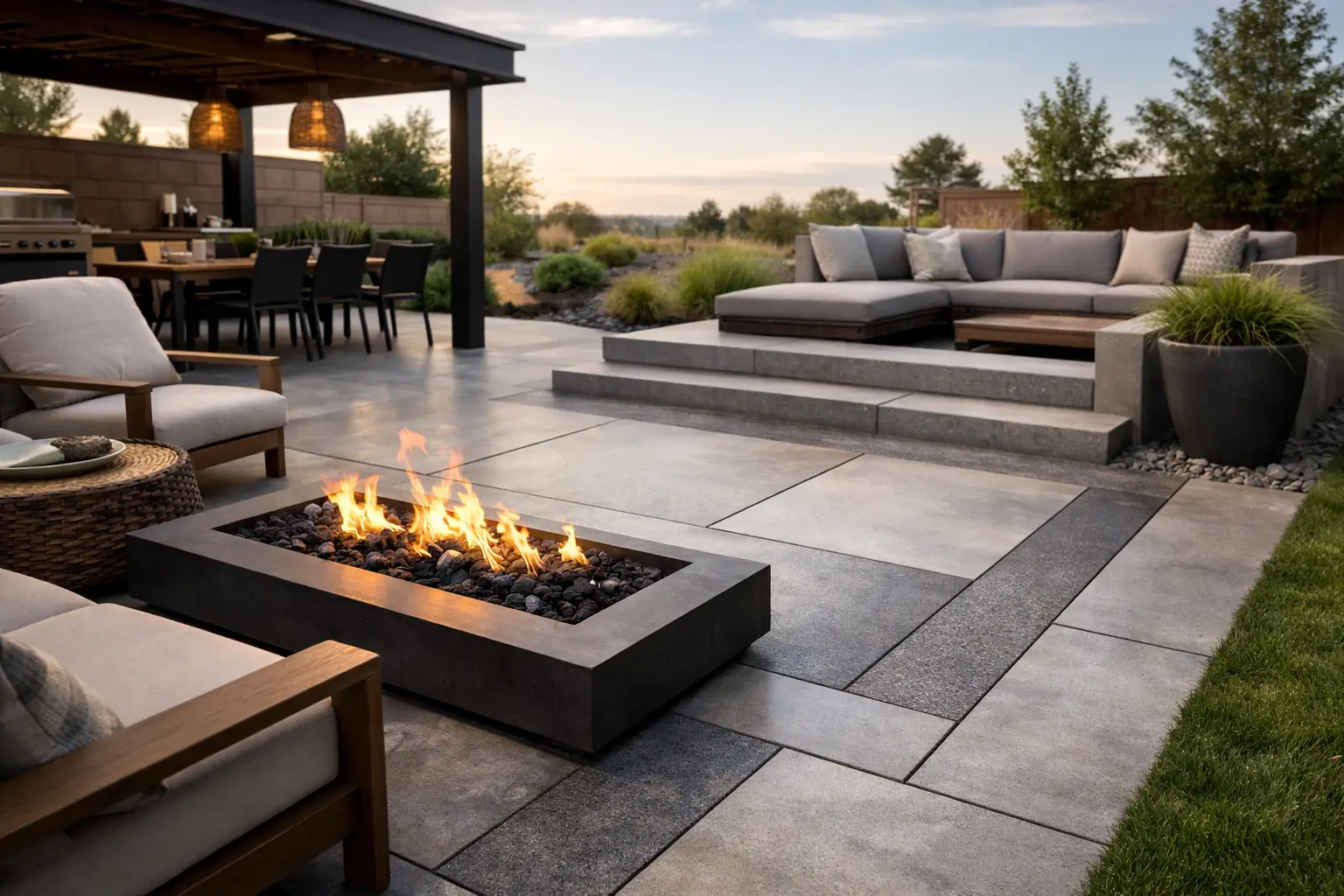
A patio has to do more than look good on the day it is poured. In North Texas, it needs to handle strong sun, sudden rain, shifting soil, foot traffic, grills, furniture, and regular use. The best concrete patio design trends are not about chasing a short-lived look. They pair a clean appearance with a layout, finish, and drainage plan that will keep working for years.
Outdoor Rooms With a Clear Purpose
Homeowners are moving away from undersized square slabs placed outside the back door. New patios are being planned as real outdoor rooms - places to cook, eat, relax, host family, or keep an eye on kids in the yard. That shift affects the concrete work before any furniture is selected.
A patio designed for dining needs enough room to pull chairs back without blocking a walkway. A grilling area needs separation from seating and enough clearance around the grill. A lounge area may need space for deep chairs, a fire feature, or a mounted television under a covered structure. These details determine the right slab size and shape.
For many properties, one large rectangular patio is still the most practical solution. It is efficient to build, easy to furnish, and fits the clean-lined look many homeowners want. On larger lots, a patio can also use connected sections: one for a covered seating area and another for an open-air grill or fire pit. The key is to avoid adding curves, edges, or separate pads that do not serve a purpose. Every change in shape should make the space easier to use.
Concrete Patio Design Trends: Warm, Natural Finishes
Gray concrete remains common, but plain light-gray slabs are no longer the only option. Current patio designs often use warmer tones that work with brick, stone, wood fencing, black metal accents, and modern exterior paint colors. Soft tan, sandstone, taupe, and muted earth tones can make a large patio feel less stark without requiring high-maintenance materials.
Integral color is mixed into the concrete, while surface color is applied during finishing. Each can produce a different result, and the better choice depends on the desired appearance, budget, and long-term maintenance expectations. Surface-applied color can offer more variation, but it must be installed correctly and may require resealing over time. A natural concrete tone with a well-chosen finish is often the lowest-maintenance option.
Stamped concrete also remains a strong choice when a homeowner wants the look of stone, slate, tile, or wood plank without installing individual pavers. The most current stamped looks are generally subtle. Heavy contrast, overly dark release colors, and busy patterns can make a patio look dated quickly. A restrained slate or stone texture in one or two complementary colors tends to age better.
Texture That Looks Good and Works Better
Patio texture is not just a style decision. It affects traction, cleaning, comfort, and how the slab handles visible wear. Smooth concrete can look sharp, especially in covered spaces, but it can become slick when wet. For open patios around pools, outdoor kitchens, or areas exposed to rain, a more slip-resistant finish is usually the smarter choice.
Broom finishes are practical and durable, but they do not have to look rough or industrial. A light, consistent broom texture can give a patio reliable traction while maintaining a clean appearance. Sandblasted and exposed-aggregate finishes are also gaining attention because they add texture and visual depth without relying on a stamped pattern.
Exposed aggregate uses decorative stone within the concrete surface. It works especially well for pool decks and walkways where grip matters. The trade-off is that it has a more textured feel under bare feet and can be harder to match if an addition is poured later. It is a good fit when safety and a natural, durable finish take priority over a perfectly smooth surface.
Clean Edges, Borders, and Intentional Joints
One of the strongest design moves is also one of the simplest: make the slab look intentional from the edges inward. Straight borders, defined transitions, and properly laid-out control joints create a more finished patio than decorative extras added after the fact.
Control joints are necessary because concrete will crack. The goal is not to promise crack-free concrete. The goal is to place joints at planned locations so normal shrinkage cracking is controlled as much as possible. On a patio, joint layout should work with the slab shape, entry points, and decorative pattern rather than cutting across the design at random.
Borders are another practical way to add contrast. A stamped or colored band around a broom-finished field can create definition without making the full patio too busy. Saw-cut joint patterns can also create a tile-like grid or larger panel layout, especially on modern homes. These options add visual structure while still keeping concrete as the durable primary surface.
Shade Structures Built Into the Plan
Covered patios, pergolas, and shade sails are influencing concrete layout more than ever. Texas heat makes shade a functional requirement for many outdoor spaces, not a decorative upgrade. A patio that looks excellent in a project photo but cannot be used in July is not doing its job.
When a structure will be added, the concrete plan should account for it early. Posts may need footings, and the patio grade must still direct water away from the home. Trying to place posts, cut openings, or solve drainage after the slab is finished can create unnecessary cost and limitations.
A covered section combined with an open section is a common and useful arrangement. The covered area provides dependable shade for seating and dining, while the open section accommodates grilling, sun-loving plants, or a fire feature. This layout also gives homeowners flexibility as their needs change.
Drainage Is Part of Good Patio Design
A patio should never be designed as a flat decorative surface. It must slope correctly so water moves away from the house and does not collect near doors, foundations, or low spots in the yard. This is especially important in Dallas-Fort Worth, where intense storms can expose drainage problems fast.
The right slope depends on the site, existing grades, nearby structures, and where the water can safely go. Some patios need a simple slope away from the home. Others may need drains, swales, or a revised layout to avoid sending water toward a fence line, neighboring property, or foundation.
Large patios can also change how water moves through a yard. Replacing lawn with concrete reduces the amount of ground available to absorb rainfall. That does not mean a large patio is a bad idea. It means drainage needs to be reviewed before construction, not treated as an afterthought once the concrete is in place.
Built-In Features Without Overbuilding
Fire pits, outdoor kitchens, seating walls, planters, and lighting bases can make a patio more useful, but they need to fit the scale of the space. A compact backyard may benefit more from a well-sized grilling pad and comfortable seating area than a large kitchen that takes up the entire patio.
Concrete is a strong base for these additions, particularly when it is planned for the expected weight and use. Outdoor kitchen components, masonry features, and large furniture can create concentrated loads. The slab thickness, reinforcement, subgrade preparation, and layout should reflect that reality.
For a cleaner look, many homeowners are choosing fewer built-ins and better open space. A simple fire pit zone, low-profile furniture, and room to move often create a more usable patio than a crowded collection of permanent features. It depends on how the property will actually be used, not just what looks impressive on a drawing.
Choose the Trend That Fits Your Property
The best patio does not copy a photo exactly. It works with the home's architecture, the available yard space, the drainage conditions, and the way people use the property. A modern linear patio may suit a newer home, while a lightly textured, warm-toned finish may better complement traditional brick or stone.
Quality installation matters as much as the selected finish. Proper base preparation, reinforcement, thickness, joint placement, slope, and finishing all affect how a patio performs. Decorative concrete cannot make up for poor site preparation, and a basic finish installed correctly will outlast a more elaborate patio built without attention to the fundamentals.
When planning a new patio or replacing worn concrete, start with the daily use of the space and the conditions on the property. Fantastico Concrete can help turn that practical plan into an outdoor surface that looks right, drains correctly, and is built for real use.

