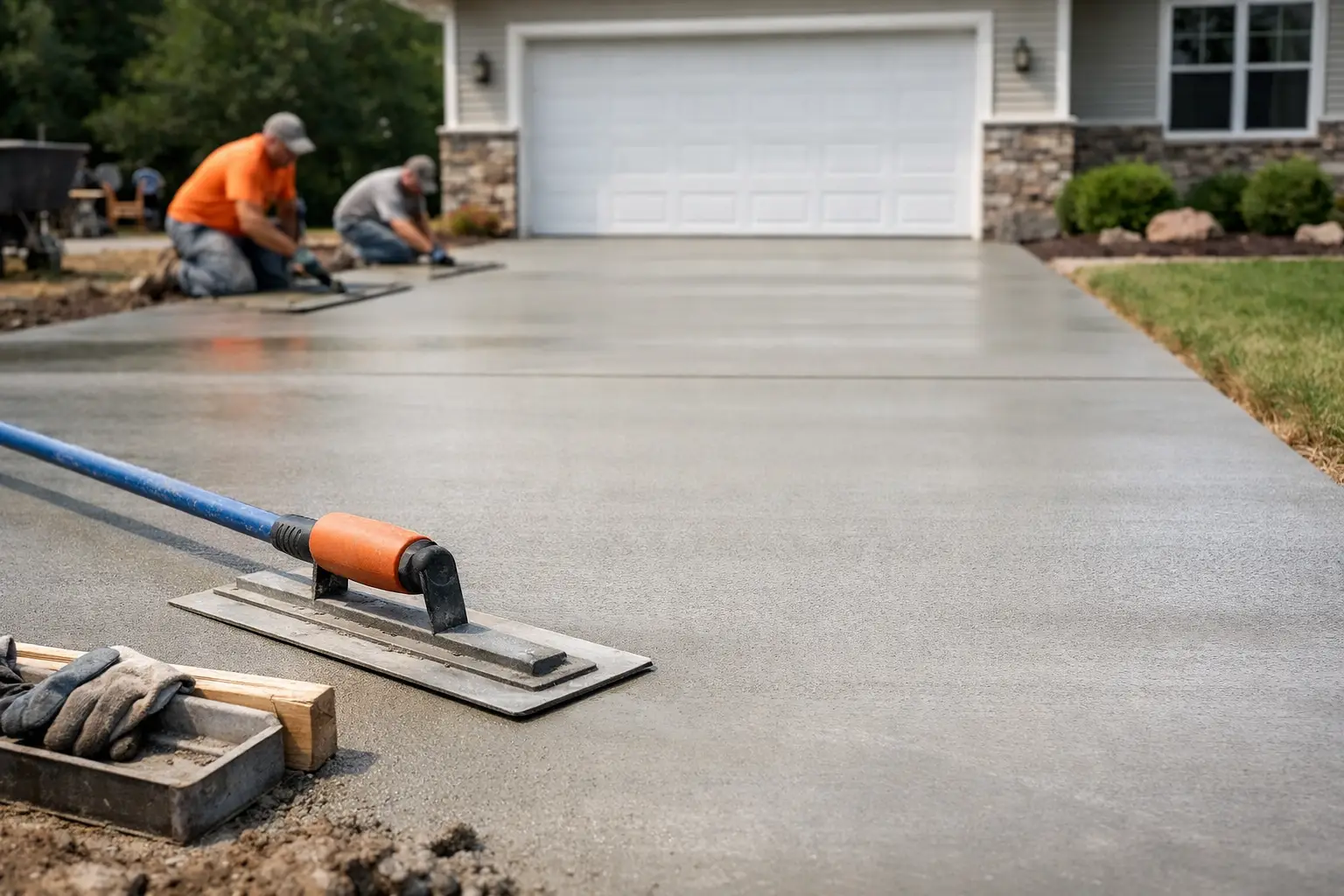
A driveway usually looks simple from the street. Then the cracks spread, water starts sitting near the garage, or the edges begin to break down under daily traffic. That is when concrete driveway installation stops being a basic upgrade and becomes a job where planning, base prep, grading, and finish quality all matter.
In Dallas-Fort Worth, a driveway has to handle heat, heavy vehicles, shifting soils, and fast-moving rain. If any part of the installation is rushed, the surface can fail early even if it looks good on day one. A well-built driveway is not just about pouring concrete. It is about building a slab that drains properly, carries weight, and holds up over time.
What good concrete driveway installation actually includes
A quality driveway starts before the concrete truck arrives. The layout has to make sense for how the property is used, whether that means a straight residential drive, a wider approach for multiple vehicles, or access for commercial traffic. Thickness, reinforcement, slope, and subgrade preparation need to match the site conditions and the expected load.
This is where many problems begin. If the soil is soft, poorly compacted, or uneven, the slab can settle and crack. If the driveway is flat in the wrong areas, water can collect against the house or create standing puddles that shorten the life of the surface. If joints are skipped or placed incorrectly, random cracking becomes more likely.
Professional concrete driveway installation is a sequence, not a single event. Excavation, grading, forms, base material, reinforcement, pour timing, finishing, joints, and curing all affect the final result. Miss one step, and the driveway may still look acceptable for a while, but the weak point usually shows up later.
Why base preparation matters more than most owners expect
The concrete gets the attention, but the base does the heavy lifting. In North Texas, expansive clay soils can move with moisture changes. That movement puts stress on slabs, especially when the ground beneath them was not properly prepared. A strong base helps reduce settlement, supports the slab evenly, and improves long-term performance.
That does not mean every site needs the same build-out. It depends on the soil condition, drainage pattern, and how the driveway will be used. A residential driveway for standard vehicles may require a different approach than a commercial entrance that sees delivery trucks or frequent turning traffic. The point is simple: thickness alone does not solve a bad foundation.
Compaction is just as important as the material itself. Loose ground under a new pour can lead to voids, sinking sections, and edge failure. Once concrete is installed, fixing those issues is far more expensive than doing the groundwork correctly the first time.
Thickness, reinforcement, and load requirements
Not every driveway should be poured to the same specification. Standard residential work often differs from driveways serving oversized trucks, trailers, RVs, or commercial traffic. Heavier loads may call for greater slab thickness, stronger reinforcement, or both.
This is one of those areas where cheap pricing can hide future cost. If the slab is undersized for the way the property is used, cracking and fatigue tend to show up early. A contractor should ask the right questions about vehicle weight, turning patterns, and frequency of use before finalizing the plan.
Drainage is not optional
A new driveway should move water away from structures, not trap it. In a region that gets intense rain events, drainage needs to be built into the installation from the beginning. Slope matters, and so does the transition between the driveway, sidewalk, street, and garage slab.
Poor drainage can lead to more than puddles. It can contribute to erosion at the edges, staining, slippery surfaces, and moisture problems near foundations. On some properties, the right fix is a simple grade adjustment. On others, drainage design becomes more involved because of lot elevation, nearby hardscape, or tight spacing between structures.
This is why driveway replacement is often about more than replacing old concrete. If the original slab failed because water was being directed the wrong way, a new pour without correcting that issue is just repeating the same mistake.
The finish affects appearance and traction
The surface finish changes both the look and function of a driveway. Most property owners want clean curb appeal, but a driveway also needs enough texture for traction, especially during rain. A broom finish is common because it provides grip and a neat appearance without overcomplicating maintenance.
Decorative options can also make sense, especially for homes where the driveway is a major visual feature. Color, borders, and stamped accents can improve appearance, but they need to be chosen with the property style and expected wear in mind. A decorative finish that looks great on a brochure may not be the best fit for a high-traffic surface if maintenance expectations are not realistic.
For many Dallas-Fort Worth properties, the best choice is a finish that balances appearance, durability, and ease of upkeep. Good concrete work should look sharp, but it also has to perform.
Timing, weather, and curing all affect the result
Concrete work is sensitive to weather, and Texas conditions can be demanding. High heat, wind, and direct sun can speed up moisture loss during placement and finishing. That can affect surface quality and curing if the crew does not manage the job correctly.
A proper installation schedule should account for site readiness, mix timing, finishing conditions, and curing protection. This is not just about keeping the project moving. It is about giving the concrete the best chance to gain strength and resist surface issues.
Curing often gets overlooked because it happens after the visible part of the job. But curing is part of the installation, not an extra. Without it, concrete can lose durability, become more prone to surface defects, and fail to reach the performance it should have had.
When replacement makes more sense than repair
Some driveways can be repaired, but not all of them should be. If the slab has widespread cracking, major settling, drainage failure, or severe surface breakdown, patching isolated areas may only delay a full replacement. Repairs can help when the underlying structure is still sound. They are less effective when the base, grade, or overall slab condition is already compromised.
This is where an honest site assessment matters. A low-cost repair can sound attractive, but if it leaves the main problem untouched, the money is not really saved. In many cases, a full replacement gives better long-term value because the base, slope, thickness, and finish can all be corrected together.
What property owners should ask before hiring a contractor
The right questions are usually practical. How will the site be excavated and prepared? What thickness is planned for the slab? What kind of reinforcement will be used? How will water drain away from the house and garage? Where will control joints go? How long should the driveway cure before vehicle traffic?
You do not need a lecture full of industry jargon. You need clear answers that show the contractor understands the site and has a plan. A specialist should be able to explain how the driveway will be built, what conditions could affect the job, and where trade-offs may exist.
For example, widening a driveway can improve access and parking, but it may also require changes to grading, sidewalks, or landscaping. Decorative finishes can improve curb appeal, but they may affect budget and maintenance. There is nothing wrong with those trade-offs as long as they are discussed up front.
Concrete driveway installation for homes and commercial properties
Residential and commercial jobs share the same fundamentals, but the demands can be different. A homeowner may be focused on replacing a cracked driveway, improving the look of the front elevation, or making space for more vehicles. A property manager may be more concerned with traffic load, safety, and minimizing long-term maintenance issues.
The installation approach should reflect that difference. Commercial access points often need stronger design and stricter attention to load paths and turning areas. Residential projects may place more emphasis on appearance, neighborhood fit, and transitions with walkways or patios. In both cases, durability starts with correct prep and good workmanship.
That is the value of hiring a contractor who works in concrete every day. Fantastico Concrete serves Dallas-Fort Worth with the kind of trade-focused approach this work requires: clear planning, solid execution, and a driveway built to perform instead of just pass inspection.
The long-term value of doing it right
A driveway is one of the hardest-working surfaces on a property. It carries vehicles, handles weather, affects drainage, and shapes first impressions every time someone pulls up. When concrete driveway installation is done correctly, you get more than a new slab. You get a surface that supports daily use, looks clean from the street, and avoids the avoidable problems that come from shortcuts.
If you are planning a new driveway or replacing one that has reached the end of its life, focus on the parts of the job that do not show in a photo. The prep, the grading, the reinforcement, and the curing are what make the finished surface worth having.

