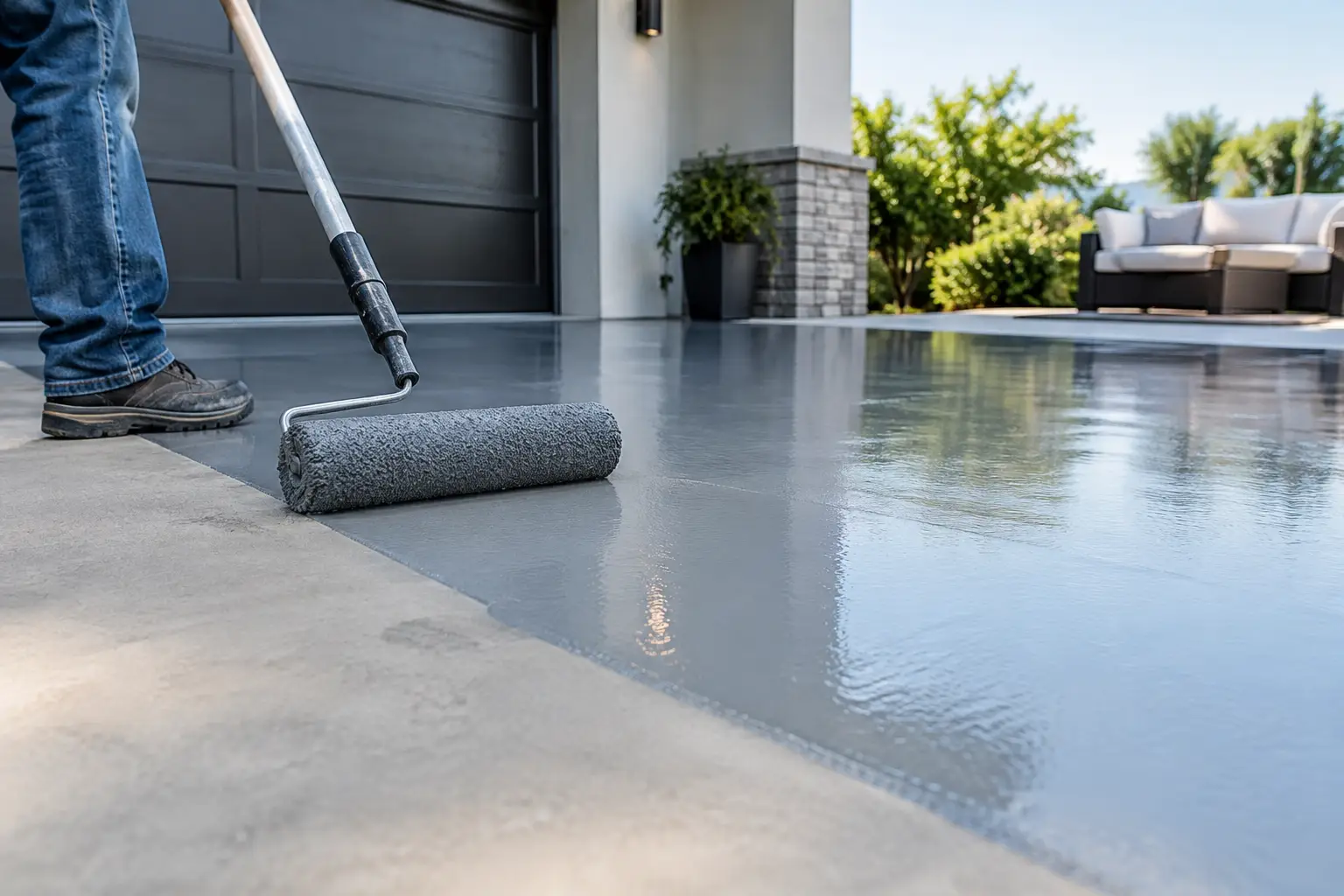
A faded patio, an oil-stained garage floor, or a driveway with surface wear can make otherwise sound concrete look neglected. Concrete coatings can improve the appearance of these surfaces while making them easier to clean and, in some cases, safer to walk on. The key is choosing a coating system that fits the concrete’s condition, the amount of traffic it receives, and the exposure it faces.
A coating is not a fix for every concrete problem. It can protect a stable slab and give it a finished look, but it cannot stop active settlement, correct poor drainage, or make deep structural cracks disappear. Before selecting colors or finishes, start with the condition of the concrete underneath.
When Concrete Coatings Make Sense
Coatings work best on concrete that is structurally sound but showing cosmetic wear. A garage floor with old stains, a porch with a dull surface, a commercial entry with light abrasion, or a patio that needs a more finished appearance may all be good candidates. The surface still needs to be solid, properly sloped, and free from moisture problems.
They are also useful when cleanup is a priority. A sealed or coated garage floor is less likely to absorb oil, dirt, and automotive fluids. On patios and pool-adjacent areas, the right finish can reduce dusting and make seasonal cleaning more manageable. Decorative coatings can add color or texture without the cost and disruption of removing a usable slab.
Dallas-Fort Worth weather makes the details matter. Summer heat, direct sun, sudden rain, and shifts in temperature put outdoor surfaces through regular stress. An exterior system needs UV resistance and a texture appropriate for wet conditions. A glossy coating that looks sharp inside a garage can be a poor choice for a sunny, rain-exposed walkway.
When a Coating Is the Wrong Repair
A coating follows the movement of the slab below it. If the concrete is heaving, sinking, severely cracked, or breaking apart at the edges, covering it may only hide the issue for a short time. Cracks can telegraph through many coating systems, and continued movement can cause peeling or separation.
Drainage deserves the same attention. Water that routinely sits on a driveway, patio, or sidewalk can weaken the surface and create a slip hazard. Coating over standing-water problems does not change the slope or move water away from the structure. In those cases, repair, replacement, regrading, or drainage work may be the more practical investment.
Moisture vapor is another concern, especially on interior slabs. Concrete can release moisture from below even when the top appears dry. If a coating is installed without testing and preparation, pressure from that moisture can create blisters or cause the coating to release. A contractor should evaluate the slab rather than assume a clean-looking surface is ready for a finish.
Common Types of Concrete Coatings
The right material depends on where it will be used. There is no single best option for every floor, driveway, or patio.
Penetrating sealers soak into the concrete rather than creating a noticeable surface film. They are often used to help resist water and staining while maintaining a natural concrete appearance. They offer modest visual change and are a practical choice when protection matters more than color.
Acrylic sealers can enhance color and leave a light sheen. They are commonly used on decorative concrete and may be suitable for outdoor patios, walkways, and stamped surfaces. Their performance depends heavily on surface preparation and product quality, and they may need maintenance sooner than heavier-duty systems.
Epoxy coatings are popular for garages, workshops, and certain commercial interiors because they create a thicker, more decorative film. They can resist many stains and provide a clean, finished look. Standard epoxy is generally not the best exposed exterior option, however, because prolonged ultraviolet exposure can cause yellowing or chalking.
Polyaspartic and polyurethane systems are often considered where faster return to service, abrasion resistance, and UV stability are priorities. They can be effective for garages, covered outdoor areas, and some commercial settings. These systems are not automatically better in every situation. Their cost, installation window, slab condition, and intended use all need to be considered.
Cement-based overlays are different from simple sealers or film coatings. They add a new finish layer over prepared concrete and can be used for decorative resurfacing, texture, or a more substantial visual change. They require a stable base and skilled installation. An overlay placed over moving or failing concrete will have the same long-term problem as the slab beneath it.
Surface Preparation Decides the Result
Most coating failures begin before the coating is applied. Dirt, oil, old sealer, curing compounds, loose material, and smooth concrete can all prevent proper bonding. Pressure washing alone may clean the surface, but it does not always create the profile needed for a durable coating.
Professional preparation may include mechanical grinding, shot blasting, cleaning, crack treatment, and edge work. The method depends on the coating system and the surface condition. The goal is to create clean, sound concrete with the right texture for the product to grip.
Cracks should be evaluated individually. Some can be cleaned and filled as part of a coating project. Others indicate ongoing movement that should be addressed first. Expansion joints should generally remain functional rather than being filled solid and hidden under a decorative finish.
Weather conditions also affect installation. Surface temperature, humidity, and rain forecasts can influence curing and adhesion, especially outdoors. Rushing a coating job because a surface looks dry can create a problem that does not show up until months later.
Choosing Concrete Coatings by Location
For a garage, prioritize stain resistance, hot-tire performance, and ease of cleaning. A broadcast flake finish can add visual depth and help reduce the slick feel of a plain glossy surface. If the garage receives direct afternoon sun, UV exposure should be part of the material decision.
For a driveway, keep expectations practical. Driveways carry vehicle weight, hot tires, road grime, and constant weather exposure. Some coating systems are designed for this work, while others are better reserved for garages or pedestrian areas. A penetrating sealer or purpose-built exterior system may provide better value than a decorative finish that requires frequent repair.
For patios and walkways, traction matters as much as color. Smooth, high-gloss surfaces can become slippery when wet. A textured finish, anti-slip additive, or decorative overlay may be the better choice, particularly around pools, outdoor kitchens, and entries.
For commercial spaces, the questions expand to traffic level, cleaning chemicals, downtime, safety requirements, and maintenance expectations. A retail back room, warehouse aisle, restaurant patio, and office entry do not need the same system. The best specification is the one built around actual use, not the one that simply looks best in a sample photo.
What to Ask Before Approving the Work
Before moving forward, property owners should get clear answers about the slab condition, the preparation method, the coating system, and the expected maintenance. A good proposal should explain whether cracks will be repaired, how slip resistance will be handled, and what can reasonably be expected from the finish.
Ask whether the product is intended for interior or exterior use, how long the area must stay off limits, and what could affect the warranty. If a contractor recommends coating damaged concrete instead of repairing it, ask why that approach makes sense for the specific slab. Direct answers are a good sign that the scope matches the job.
Fantastico Concrete approaches surface improvements with the same practical mindset used for concrete repair and installation: the finished surface must perform, not just photograph well. For homes and properties across North Texas, that means starting with the slab, drainage, exposure, and daily use before recommending a coating option.
A well-chosen coating can give sound concrete a cleaner look and a more useful surface for years. The best next step is a site evaluation that separates cosmetic wear from real concrete issues, so the money goes toward a solution that holds up.

