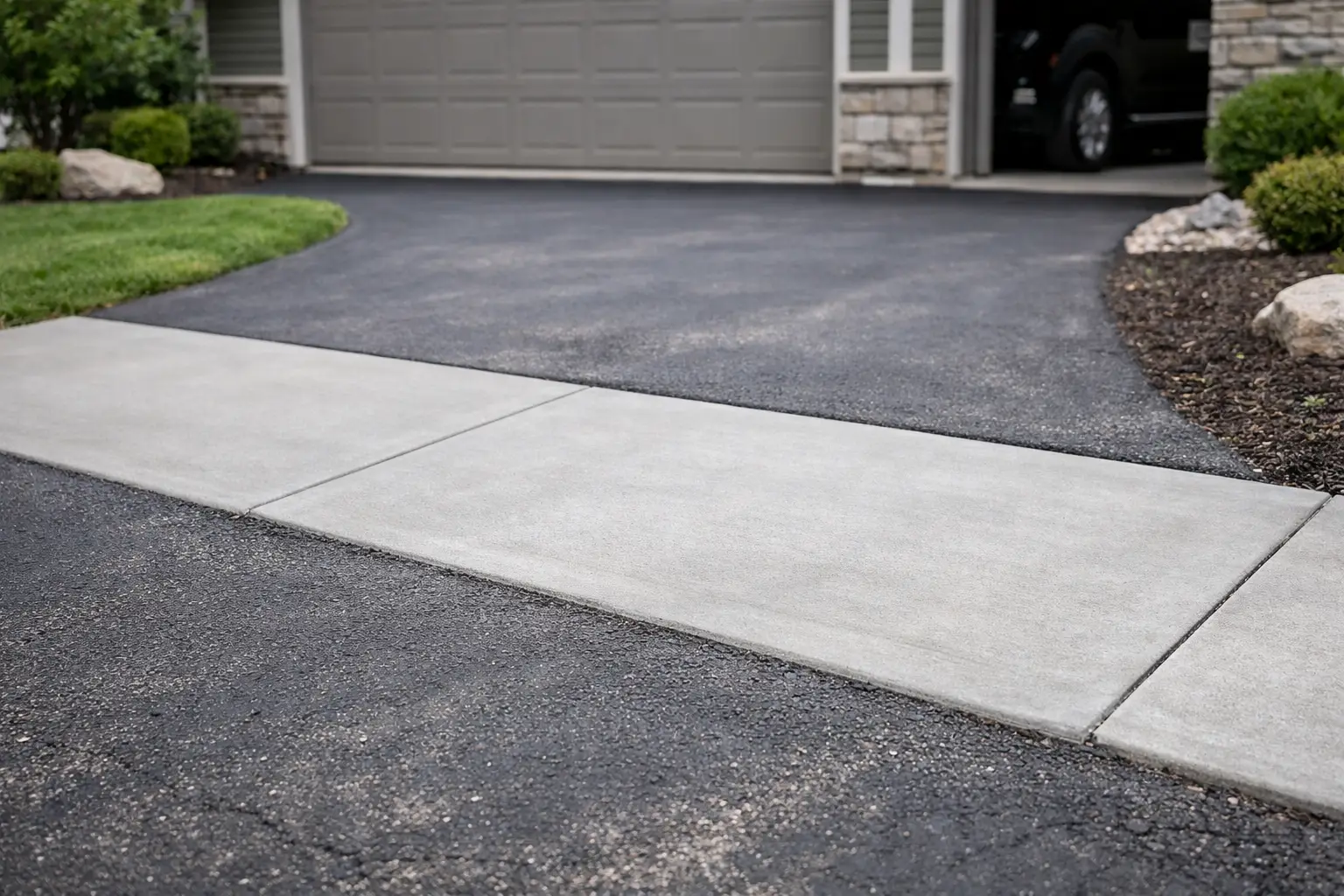
Most driveway problems do not start in the middle. They start at the edge - where the driveway meets the street, sidewalk, garage approach, or another paved surface. That transition zone takes heavy weight, constant turning, runoff, and repeated impact from daily use. A concrete apron for driveway access is built to handle that stress and protect the rest of the slab from early damage.
If you are planning a new driveway or dealing with cracks, sinking, pooling water, or a rough entrance, the apron deserves more attention than it usually gets. Done right, it improves function, supports vehicle traffic, and gives the driveway a cleaner finish. Done poorly, it becomes the weak point that causes bigger repairs later.
What Is a Concrete Apron for Driveway Use?
A driveway apron is the section of concrete that creates the transition between your driveway and the adjoining surface. In many residential cases, that means the area between the street and the main body of the driveway. In other layouts, it can be the approach near a garage, gate, or parking pad where slope and surface change need to be managed.
This section is not just decorative. It helps distribute vehicle loads, creates a smoother entry point, and often plays a big role in drainage. Because it sits at a high-stress location, it may need thicker concrete, stronger base preparation, or better joint placement than a basic flat section of pavement.
That matters even more in places with expansive soils, heavy rain events, and wide temperature swings. In North Texas, for example, concrete work has to account for movement below the slab as well as wear on top of it.
Why the Apron Matters More Than People Think
A lot of property owners focus on the visible part of the driveway and treat the apron like a small add-on. In practice, it does some of the hardest work on the site.
Every time a vehicle enters from the street, weight shifts right onto that edge. Tires turn there. Water tends to collect there. If the apron is too thin, poorly compacted underneath, or poured without proper grade, problems show up fast. You may see cracking at the mouth of the driveway, spalling along the edge, erosion under the slab, or uneven settlement that makes the entrance feel rough.
A properly built apron helps prevent those issues. It also protects the larger investment behind it. When the transition point performs well, the rest of the driveway usually lasts longer and looks better.
Signs You May Need a New Driveway Apron
Sometimes the need is obvious. Sometimes it shows up as a small nuisance that keeps getting worse.
If your driveway entrance has broken corners, standing water, tire dips, surface flaking, or a lip that scrapes low vehicles, the apron may be failing. The same goes for driveways where the entrance has separated from the street line, developed deep cracks, or started sinking on one side.
For older properties, the issue may not be age alone. It may be that the original apron was not designed for current vehicle loads. A driveway that once handled compact cars may now see pickups, SUVs, trailers, service vehicles, or delivery traffic on a regular basis.
New construction and major driveway replacements are also the right time to address the apron. It is easier and more cost-effective to build the transition correctly during the main project than to patch it after the fact.
Concrete Apron for Driveway Performance Starts Below the Surface
Good concrete work is not just about what gets poured. The real performance starts with grading, excavation, and base prep.
An apron needs stable support beneath it. If the subgrade is soft, poorly compacted, or already holding water, the concrete above it will not last the way it should. A contractor should evaluate soil conditions, remove unsuitable material when needed, and install a compacted base that can handle the expected traffic.
Thickness matters too, but it depends on use. A standard residential apron may perform well at one thickness, while a commercial entrance or heavy-use residential drive may need more. Reinforcement, control joints, and edge support all play a role. There is no honest one-size-fits-all answer because load, slope, drainage, and soil conditions vary from site to site.
That is why the cheapest number on paper is not always the best value. If the apron fails early because the base was rushed or the slab was undersized, replacement costs more than doing it right the first time.
Drainage Can Make or Break the Job
One of the main reasons aprons fail is water. If runoff is directed toward the slab without a path to move away, water can sit at the entrance, soften supporting soil, and increase erosion around the edges.
A good apron should work with the property's overall drainage pattern, not fight it. That may mean adjusting slope, tying the apron into nearby surfaces more carefully, or making sure the surrounding grade does not channel water straight under the concrete. In some cases, the apron itself is not the root problem. The real issue is that the yard, curb line, or adjacent paving is forcing water into the wrong place.
This is where local experience matters. A contractor familiar with regional soils and storm patterns can spot drainage problems before the pour instead of after the cracks appear.
What a Well-Built Apron Should Look Like
A solid driveway apron should feel smooth when you drive over it, but not slick when wet. It should transition cleanly from one surface to the next without abrupt height changes. The finish should be consistent, joints should be placed with purpose, and the edges should not look thin, ragged, or unsupported.
Appearance matters, but function comes first. Decorative options like broom finish direction, clean edging, or a more refined layout can improve curb appeal, especially on front-facing residential properties or higher-visibility commercial sites. Still, a sharp-looking apron that holds water or cracks at the corners is not a good job.
The best results balance both. You want an apron that looks finished and performs under real use.
Repair or Replace?
This depends on the condition of the concrete and the cause of the damage. Hairline surface cracks or minor cosmetic wear may not require full replacement if the slab is still structurally sound and the base remains stable.
But if the apron is sinking, rocking, breaking apart at the edges, or showing repeated water-related damage, replacement is usually the smarter move. Surface patching rarely solves deep settlement or drainage issues. It may improve appearance for a short time, but it does not rebuild the support system underneath.
For properties being prepared for sale or lease, replacement can also make more sense than piecemeal repairs. A clean, properly graded entrance improves first impression and reduces questions from buyers, tenants, or inspectors.
What Property Owners Should Ask Before Hiring a Contractor
You do not need a lecture in concrete theory. You do need clear answers.
Ask how the contractor plans to handle excavation, base compaction, slab thickness, reinforcement, and water flow at the entrance. Ask whether the apron will tie into existing surfaces cleanly or whether nearby sections also need attention. If the driveway is already failing, ask what caused it. The answer should go beyond surface cracks and get into support, slope, and usage.
A reliable contractor should be able to explain the practical reason behind the scope of work. At Fantastico Concrete, that kind of direct approach matters because the job is not just to pour concrete - it is to build something that holds up.
Cost Depends on More Than Square Footage
People often want a quick apron price based on size alone. That is understandable, but the real cost depends on access, demolition needs, soil conditions, grade corrections, thickness requirements, finish level, and whether nearby concrete has to be matched or replaced.
A simple residential apron on a stable site costs less than an apron that needs drainage correction or heavy-duty support. If city requirements or right-of-way conditions apply, those can also affect the scope. The right estimate should account for the actual site, not just the dimensions.
Cheap bids often leave out the parts of the job you cannot see. Those are usually the parts that determine whether the apron lasts five years or twenty.
A concrete apron for driveway access may look like a small section of a larger project, but it carries a lot of responsibility. If you treat it like an afterthought, it often turns into the first thing that fails. If you build it with the right base, grade, and finish, it becomes the part that protects everything connected to it.

