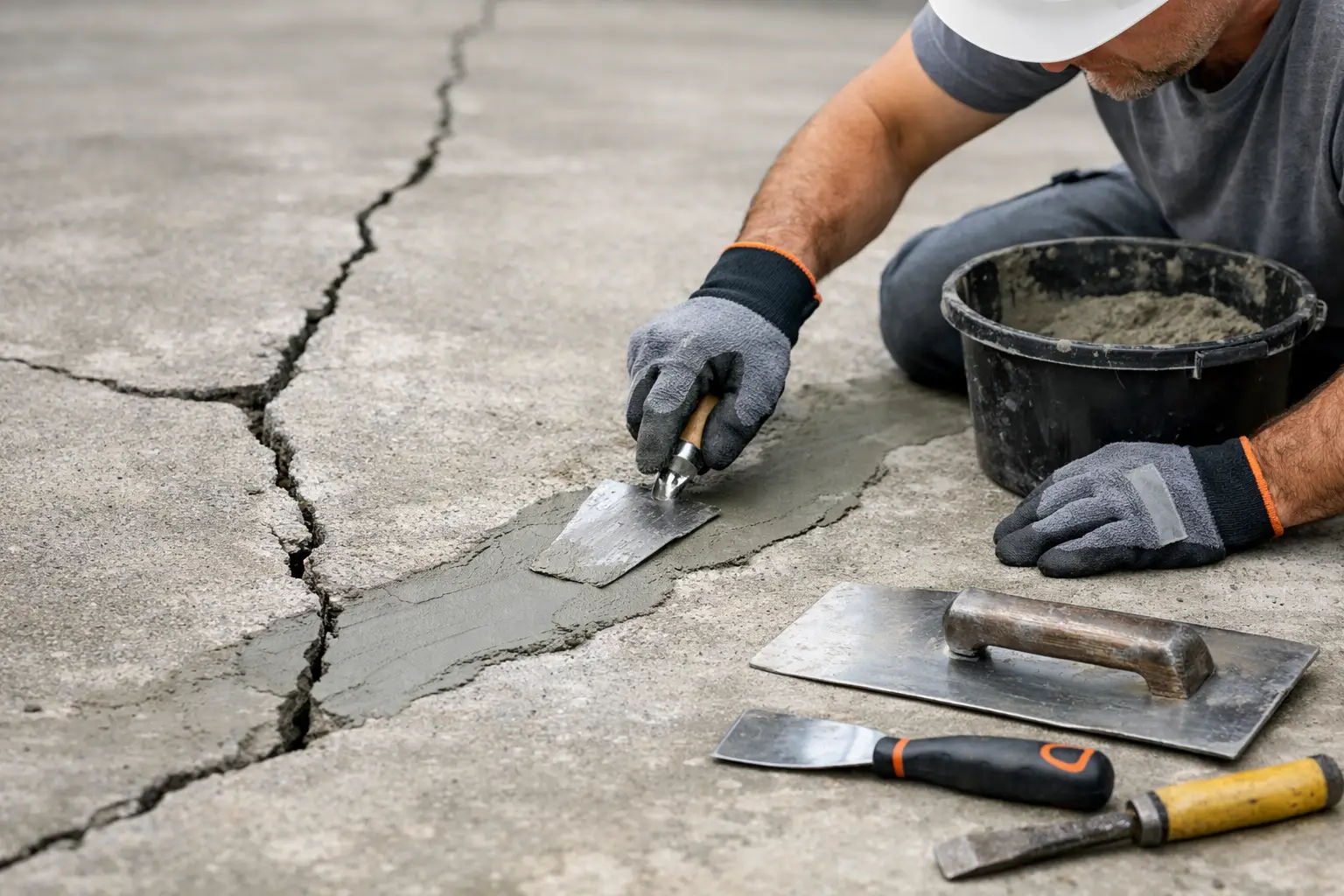
A hairline crack in a driveway is one thing. A slab that is separating, sinking, or holding water is something else entirely. If you are asking, can cracked concrete be repaired, the honest answer is yes - many cracks can be repaired - but not every crack should be.
Concrete cracks for different reasons, and the cause matters just as much as the crack itself. Some are cosmetic and easy to address. Others point to movement below the slab, poor drainage, freeze-thaw stress, tree roots, heavy loads, or age-related wear. The repair that works for one crack may fail fast on another.
Can cracked concrete be repaired in every case?
Not in every case, and that is where many property owners waste money. A surface-level patch can improve appearance and help keep water out, but it will not fix a slab that is actively moving or losing support underneath.
In general, cracked concrete can often be repaired when the slab is still stable, the crack is limited in width, and the surrounding concrete is in decent condition. If the slab has major settling, offset edges, crumbling sections, widespread cracking, or drainage problems that keep coming back, replacement may be the smarter long-term move.
That is why the first step is not choosing a filler. The first step is figuring out what kind of crack you have.
What different concrete cracks usually mean
Hairline cracks are common in concrete. They often show up as the slab cures or ages. If they are small, not spreading, and not causing vertical displacement, they may be more of a maintenance issue than a structural problem.
Wider cracks deserve closer attention. Once a crack starts opening up enough to let in water, debris, and plant growth, it becomes more than cosmetic. Water intrusion can wash out the base material under the slab and lead to bigger damage over time.
If one side of the crack sits higher than the other, that usually signals movement. This is often tied to settlement, erosion, root pressure, or soil problems. In those situations, simply filling the crack rarely solves the actual issue.
Multiple cracks that form a web or pattern across the slab can point to broader failure. A driveway or patio with widespread cracking may be at the end of its useful life, especially if the surface is also scaling, spalling, or sinking.
When repair makes sense
Repair is usually worth considering when the concrete is still structurally sound overall. That means the slab is mostly level, the crack is localized, and the base beneath the concrete has not failed.
For example, a driveway with a few narrow cracks but no major separation can often be repaired successfully. The same goes for sidewalks and patios with limited cracking and good drainage. In these cases, sealing or filling the crack helps reduce water entry, slows further deterioration, and improves appearance.
Commercial properties can also benefit from repair when the problem is isolated. If a walkway has one or two cracks but the section remains stable and safe, a targeted repair may be the most practical option.
The key is matching the repair to the condition of the slab. Good repair work is not about hiding the problem. It is about controlling damage and extending service life where extension is realistic.
When replacement is the better call
There are times when repair is technically possible but still not the right investment. If the slab has major settlement, repeated cracking, poor drainage, or a failing base, patching becomes temporary at best.
Replacement is often the better choice when cracks are wide and deep, when sections are heaving or dropping, or when the concrete has broken into multiple loose pieces. The same is true when a slab creates a trip hazard, holds standing water, or no longer meets the demands placed on it.
For homeowners, this often comes up with older driveways and patios that have been patched several times already. For property managers and commercial owners, safety and liability can make replacement the more practical decision once movement or unevenness becomes significant.
Paying for repeated repairs on failing concrete usually costs more in the long run than removing and replacing the problem area correctly.
Common repair methods for cracked concrete
The best repair method depends on whether the crack is cosmetic, functional, or structural.
For small non-moving cracks, routing and sealing may be enough. This process opens the crack slightly to create a clean repair space, then fills it with an appropriate sealant or repair material. It helps keep out water and reduces further edge breakdown.
For moderate surface cracks, contractors may use specialized patching compounds designed for concrete surfaces. These can improve appearance and restore parts of the surface, but they work best when the slab underneath is stable.
For certain structural cracks, epoxy or polyurethane injection may be used. These methods are more specialized and are typically chosen when the goal is to bond the concrete or block moisture entry in a controlled way.
If the real issue is slab settlement, lifting methods may be part of the repair plan. Raising a sunken section without addressing the crack itself is incomplete, but filling a crack without correcting settlement is just as incomplete. In some jobs, both problems need attention.
A good contractor looks at the whole slab, not just the line in the concrete.
Why cracked concrete keeps coming back
A lot of failed repairs have the same root problem: the crack was treated, but the cause was not.
Drainage is a big one. When water runs under or along a slab, it can erode support and create movement. In parts of North Texas and Oklahoma, expansive soils can also play a role. Soil that swells when wet and shrinks when dry puts repeated stress on concrete. That movement can reopen repaired cracks or create new ones nearby.
Tree roots, heavy vehicle traffic, poor subgrade preparation, and thin concrete placement can all shorten the life of a repair. Even weather matters. Heat, moisture swings, and freeze events can widen weak spots over time.
This is why a proper evaluation matters more than a quick patch. If the slab is telling you there is a support problem, the repair plan needs to deal with support.
What property owners should look for before deciding
Before you repair cracked concrete, look at the full condition of the area. Is the crack getting wider? Is there vertical separation? Does water collect near the crack? Are nearby sections also cracking? Has the slab shifted enough to affect drainage, gates, garage access, or walkability?
Those details help separate a manageable repair from a slab that is heading toward replacement. They also help determine whether the issue is mostly appearance, water protection, or structural performance.
For commercial properties, it also makes sense to think about traffic levels and safety. A repaired crack in a low-traffic area may hold up well for years. The same crack in a high-use loading area or main pedestrian route may need a more durable solution.
For residential properties, curb appeal matters too, but appearance should not outweigh function. A clean-looking patch on unstable concrete is still unstable concrete.
Is DIY repair worth it?
For very small, non-structural cracks, a do-it-yourself repair can be reasonable if the goal is basic maintenance. Cleaning the crack properly and using the right product can help for minor issues.
But DIY work has limits. Most property owners are not equipped to diagnose movement, base failure, drainage issues, or load-related damage. Many off-the-shelf fillers also fail because the crack was dirty, damp, too wide, still moving, or part of a larger slab problem.
If the crack is more than minor, if the slab is uneven, or if the same area keeps failing, it is worth having a concrete specialist assess it. Fantastico Concrete approaches these jobs the practical way: first determine whether the slab can be saved, then recommend repair or replacement based on what will actually hold up.
The right question is not just can cracked concrete be repaired
The better question is whether it should be repaired, and whether that repair will last long enough to make sense. Concrete does not need to look perfect to perform well, but it does need to be stable, safe, and protected from further damage.
If the slab is sound, repair can be a smart investment. If the base is failing or the concrete is breaking down across a larger area, replacement is often the cleaner and more cost-effective fix. The difference comes down to honest evaluation, not guesswork.
A crack is a symptom. Treat the cause, and the repair has a chance to last.

