A driveway that looks good on installation day but becomes slick after rain, shows tire marks, or starts scaling within a few years is not a good finish. The best outdoor concrete surfaces match the way the area will be used, the drainage conditions, and the level of maintenance the property owner is willing to accept. Appearance matters, but traction, durability, and proper installation matter more.
For homeowners and commercial property owners, the right choice usually comes down to four proven options: broom-finished concrete, stamped concrete, exposed aggregate, and decorative overlays. Each has a place. The wrong choice is usually the one selected for looks alone.
What Makes an Outdoor Concrete Surface Last?
Concrete finish is only one part of a durable outdoor surface. A strong driveway, patio, sidewalk, or pool deck starts below the visible layer. Proper base preparation, correct slab thickness, reinforcement where needed, joint placement, slope, and curing all affect how the concrete performs.
This is especially true across North and East Texas, where expansive clay soils, long hot summers, and sudden heavy rain can challenge flatwork. A decorative finish cannot fix poor drainage or a slab that was placed on unstable ground. Before choosing a surface, determine where water will go, how vehicles or foot traffic will use the area, and whether the site has existing movement or soil concerns.
Texture also matters. Outdoor concrete should provide reliable footing when wet. A finish that feels comfortable around a pool may not be tough enough for a vehicle turnaround, and a driveway finish built for tire traffic may not create the patio look a homeowner wants.
Best Outdoor Concrete Surfaces by Use
Broom-Finished Concrete for Driveways and Walkways
Broom finish is the practical standard for many driveways, sidewalks, ramps, and commercial walkways. After the concrete is leveled and floated, a specialized broom is pulled across the surface to create fine, consistent texture. The result is clean, functional, and slip-resistant.
For a driveway, broom-finished concrete is hard to beat. It handles vehicle use well, does not require decorative patterns to look finished, and offers better traction than a smooth troweled surface. It also works well for front walks, side yards, equipment pads, and service areas where safety and durability take priority over a high-design appearance.
The trade-off is simple: broom finish is more utilitarian. It can be enhanced with saw-cut borders, integral color, or a contrasting edge, but it will not duplicate the character of stone or pavers. For many properties, that is a benefit. It looks appropriate, stays practical, and is easier to maintain than more heavily textured decorative surfaces.
Stamped Concrete for Patios and Outdoor Living Areas
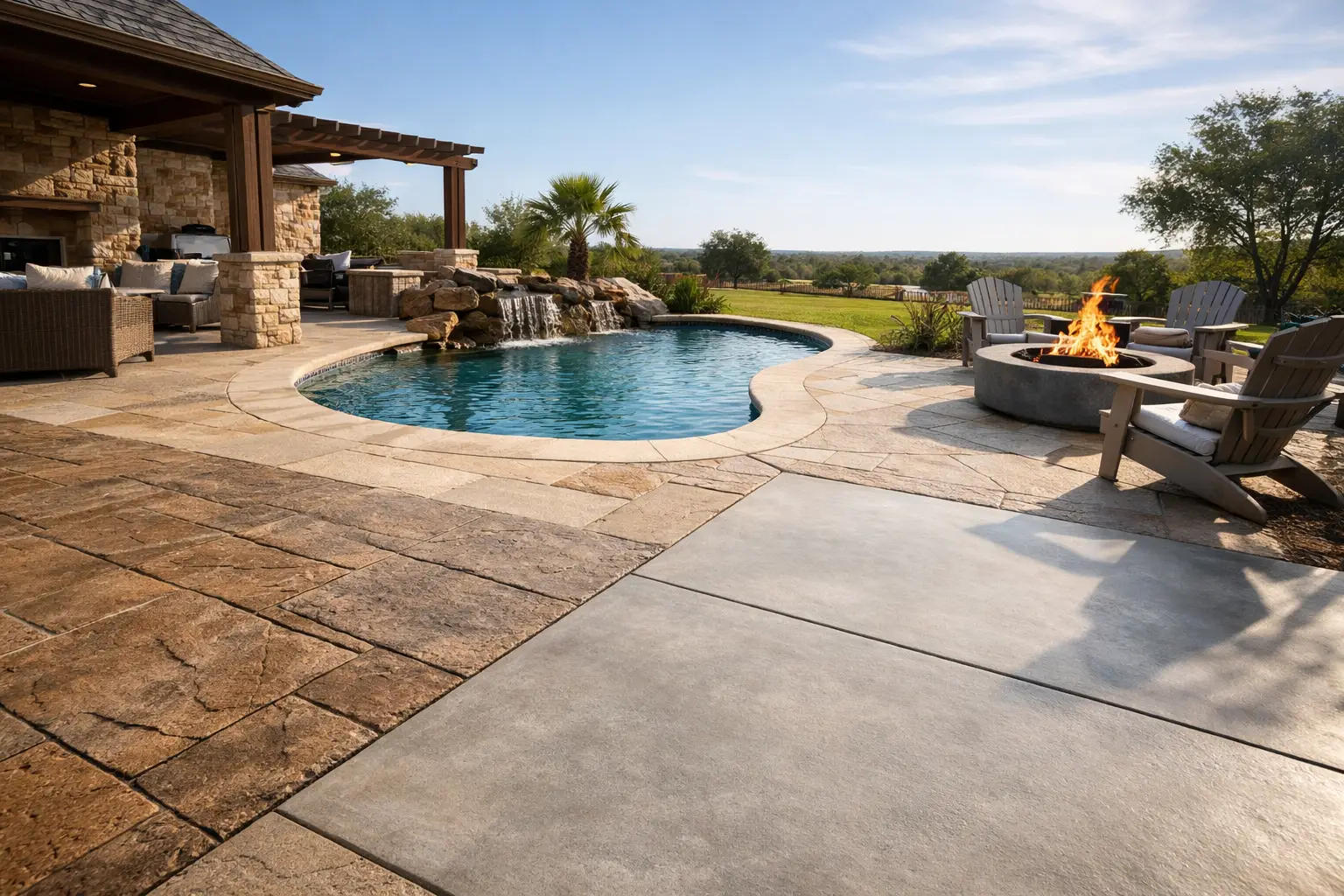
Stamped concrete is a strong option when a patio, porch extension, or outdoor kitchen area needs more visual impact. The surface is patterned while the concrete is fresh to resemble materials such as natural stone, slate, brick, or wood planks. Color can be added throughout the concrete or applied at the surface to create variation and depth.
A well-installed stamped patio can give a backyard a finished, custom look without the joints and shifting issues that can come with individual pavers. It is particularly effective for larger entertainment spaces where the patio is a visible part of the landscape design.
Stamped concrete does require realistic expectations. Deep patterns can hold dirt and debris, and a glossy sealer can become slippery when wet if the correct traction additive is not used. Darker colors may also show fading or sun exposure more quickly in open Texas yards. Periodic cleaning and resealing help protect the color and surface, especially around grilling areas, trees, and pools.
Use stamped concrete where appearance is a major goal and the area will receive normal residential foot traffic. It can be used for driveways, but a simpler, durable pattern and sound slab design are essential for vehicle areas.
Exposed Aggregate for Traction and Texture
Exposed aggregate is one of the most durable decorative finishes available for outdoor concrete. After placement, the top layer of cement paste is removed in a controlled process to reveal the natural stone aggregate within the slab. The finished surface has visible color variation and a textured feel that suits patios, walkways, courtyards, and pool decks.
This finish offers good slip resistance without looking industrial. Because the stone is part of the concrete itself, exposed aggregate has a natural appearance that works well with brick homes, landscaping, and commercial exterior spaces. It also hides small amounts of dirt and wear better than a smooth colored surface.
The main consideration is comfort. The texture can be rougher on bare feet than a lightly broomed or specially textured pool deck, depending on the aggregate selected and how much is exposed. Aggregate choice matters, as does proper finishing. Too much exposure can make the surface uncomfortable and harder to clean; too little reduces the visual effect.
Lightly Textured Concrete for Pool Decks
Pool decks need a different balance. They must provide traction when wet, stay reasonably comfortable under bare feet, and complement the outdoor living area. A lightly broomed finish, knockdown texture, or a purpose-designed textured overlay can be a better choice than deep stamping or coarse aggregate.
Lighter colors are often practical around pools because they absorb less heat than dark charcoal, brown, or black finishes. No surface stays cool under direct Texas sun all day, but color selection can make a noticeable difference. Avoid overly smooth concrete near water. It may look sleek, but safety becomes the issue as soon as the deck gets wet.
For existing pool decks with sound concrete but a worn appearance, a decorative overlay may be an option. Overlays are not a cure for major cracks, slab movement, poor drainage, or failing concrete. The existing slab must be evaluated first. If the base concrete is unstable, replacement is often the more dependable investment.
Color, Sealer, and Surface Maintenance
Color can make plain concrete feel intentional rather than basic. Integral color is mixed into the concrete and provides consistent color through the slab. Topical color hardeners and stains can create more variation, especially with stamped work. Neither option eliminates the need for solid construction underneath.
Sealer is useful, but it is not magic. A quality sealer can help protect decorative concrete from staining, moisture intrusion, and sun exposure. It also enriches color. On outdoor walking surfaces, the sealer should be selected and applied with traction in mind. A heavy glossy coating may look appealing at first, then create a slippery surface after rain or near a pool.
Most exterior concrete benefits from regular cleaning with mild detergent and water. Keep leaves, soil, fertilizer, oil, and standing water from sitting on the surface. Resealing schedules vary by finish, exposure, and traffic, but decorative areas often need attention sooner than plain broom-finished concrete. Driveways should have automotive fluid spills cleaned promptly, since oil can penetrate and stain concrete.
Choose the Finish After the Site Is Evaluated
The best outdoor concrete surface is not always the most decorative one. For a high-traffic driveway, broom finish usually delivers the best combination of traction, cost control, and long-term performance. For a backyard gathering space, stamped concrete may provide the visual result the property needs. Exposed aggregate works well when natural texture and grip are priorities, while lightly textured finishes are often the safer direction for pool areas.
A qualified concrete contractor should also look beyond the finish. Existing grade, drainage, soil movement, tree roots, access, anticipated loads, and connection to adjoining structures all affect the recommendation. A patio that drains toward the house or a driveway with poorly planned joints will create problems regardless of how attractive the surface is.
The right concrete surface should make the property easier to use every day. Choose the finish that fits the traffic, weather, and maintenance expectations, then make sure the slab beneath it is built to support it.

