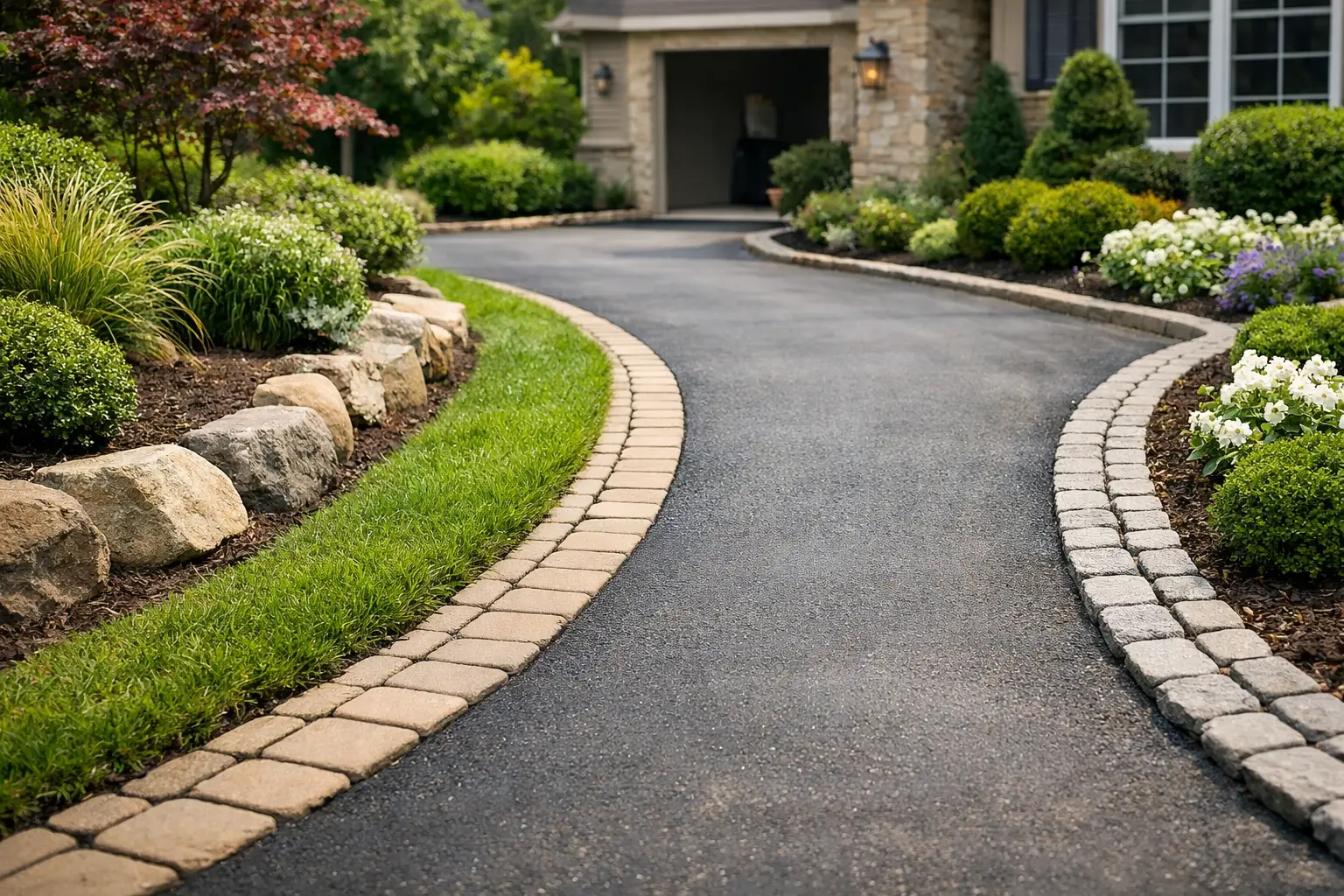
A driveway edge takes more abuse than most homeowners expect. Tires clip it during parking, rain washes soil against it, and lawn equipment chips away at unprotected material. The best driveway edging ideas do more than create a clean line. They help hold the driveway in place, manage runoff, protect landscaping, and give the entire front of the property a finished appearance.
For North Texas properties, the right choice also has to handle heat, heavy rain, expansive clay soil, and regular vehicle traffic. A border that looks good on installation day but shifts, cracks, or traps water is not a good long-term investment. Start with the driveway material, grade, drainage path, and the amount of maintenance you are willing to accept.
What Good Driveway Edging Needs to Do
Driveway edging can be decorative, structural, or both. A gravel driveway needs a firm restraint to keep stone from spreading into the lawn. A concrete driveway often benefits from a curb, gutter, or contrasting border that protects the slab edges and directs water. Paver driveways need edge restraints installed below the surface so the pavers cannot creep outward under vehicle loads.
Before choosing a material, look at where water goes during a hard rain. The edging should never create a dam that sends water back toward the garage, house, or neighboring property. It also needs a properly prepared base. Even durable concrete and stone can move when installed over poorly compacted soil.
12 Best Driveway Edging Ideas
1. Poured Concrete Curb Edging
A formed concrete curb is one of the strongest options for active driveways. It creates a permanent border, helps contain gravel or landscaping material, and stands up well to tires and routine yard work. It works especially well beside concrete, asphalt, and gravel driveways.
The curb can be straight, gently curved, or shaped to match the driveway layout. For drainage-sensitive areas, a contractor can plan curb placement with swales, drains, or openings where needed. This is not the least expensive option, but it is often one of the most durable.
2. Concrete Ribbon Borders
A concrete ribbon border is a wider, flatter strip poured along the outside of the driveway. It can be finished in a contrasting color, exposed aggregate, broom texture, or stamped pattern. On a plain concrete driveway, this creates a more intentional look without sacrificing the toughness of a full concrete installation.
Ribbon borders are useful where the slab edge has begun to chip or where the driveway meets a lawn at the same elevation. They should be jointed correctly to allow for normal concrete movement and reduce random cracking.
3. Belgian Block or Granite Cobblestone
Granite blocks bring a traditional, high-end look to a driveway. They are exceptionally hard, resist weathering, and create a clear visual frame around asphalt, concrete, pavers, or gravel. Their irregular texture also adds character to formal homes and older properties.
Installation matters more than the stone itself. Cobblestone needs a stable base and firm edge support. If individual stones are simply placed in loose soil, they can settle unevenly and become a problem for tires, mowing, and drainage.
4. Brick Driveway Borders
Brick edging gives a warm, classic contrast against a gray concrete or black asphalt surface. It can be installed in a soldier course, basket weave, or another simple pattern. Brick is a practical fit when the home already has brick exterior details and the goal is to tie the hardscape to the house.
Use brick rated for exterior ground contact, not standard wall brick. In areas with clay soil movement, a properly prepared base and edge restraint are necessary to keep the line from becoming uneven over time.
5. Natural Stone Edging
Limestone, flagstone, and cut stone can create a relaxed, substantial border around a driveway. This option works best when the driveway transitions into natural landscaping, a stone mailbox feature, or a garden bed. Larger stone pieces can also help prevent mulch and soil from spilling onto the drive.
Natural stone is not always the best answer for a tight parking area. Uneven stones can be struck by tires, and thin pieces may crack under repeated impact. Keep the border set back enough to give drivers room, especially near garage approaches and turns.
6. Steel Landscape Edging
Steel edging creates a crisp, low-profile line with a modern appearance. It is commonly used between a driveway and gravel beds, decomposed granite, or clean-lined planting areas. Because it sits close to grade, it does not compete with the architecture or make mowing difficult.
Its limitation is structural strength. Steel edging is excellent for separating landscape materials, but it is not a substitute for a concrete curb where tires regularly cross the edge. Choose heavy-gauge material and solid anchoring if it will be near vehicle traffic.
7. Aluminum Edging
Aluminum offers a similar clean profile but will not rust. It is lighter than steel and can be shaped around gentle curves, making it a good fit for decorative borders and low-traffic areas. It is generally less suited to driveways where larger trucks, trailers, or frequent curb contact are expected.
This is a detail-oriented choice rather than a heavy-duty containment system. It looks best when installed flush and paired with well-maintained gravel, mulch, or plantings.
8. Paver Edge Restraints
For a paver driveway, the edge restraint is not optional. Pavers depend on a compacted base, jointing material, and a fixed perimeter to maintain their pattern. Hidden plastic, aluminum, or concrete restraints are typically installed along the outer edges before the final landscape work is completed.
A visible paver soldier course can add a finished border, but it still needs proper restraint below or behind it. Without that support, vehicle pressure can gradually push the outer pavers apart.
9. Gravel and Stone Shoulders
A crushed stone shoulder can soften the transition from driveway to lawn while improving drainage. It is a good option for rural properties, long driveways, and locations where a rigid curb would interfere with runoff. The shoulder can be held in place with concrete, steel, or stone edging depending on the look and traffic needs.
The trade-off is maintenance. Loose stone can migrate, especially near curves and parking areas. A compacted base and the right stone size reduce movement, but occasional raking or replenishing is normal.
10. Concrete Curb and Gutter
Curb and gutter systems are designed around drainage as much as appearance. The curb defines the edge while the gutter carries surface water toward a planned outlet. This approach is especially valuable on sloped driveways, commercial approaches, and properties with recurring erosion or washout.
The water still needs somewhere safe to go. Directing runoff toward a street, drain inlet, swale, or approved collection area requires planning around local conditions and site grading. A curb and gutter system should not be treated as a simple cosmetic add-on.
11. Raised Planter Borders
A raised concrete or masonry planter beside the driveway can create a strong visual entry while separating vehicles from landscaping. It works well near mailbox areas, front walk connections, and broad driveway entrances. A low planter can also discourage drivers from cutting corners into the lawn.
Keep sightlines clear. Tall shrubs, walls, or ornamental grasses placed near an exit can block visibility of pedestrians, cyclists, and approaching vehicles. Use durable plants that can handle reflected heat from concrete in Texas summers.
12. Stamped or Colored Concrete Edges
Stamped or colored concrete lets a driveway border stand apart without introducing a second material that may shift differently over time. A band with a stone texture, darker integral color, or exposed aggregate finish can make a standard driveway look more custom while staying easy to clean.
Color and texture should serve the overall property, not overwhelm it. On a busy exterior with brick, stone, and multiple roof colors, a simple contrasting band usually looks better than an elaborate pattern.
How to Choose the Right Edge for Your Driveway
For gravel driveways, prioritize containment. Concrete curbs, cobblestone, and properly installed steel edging are strong choices depending on the budget and desired appearance. For concrete driveways, a ribbon border, curb, colored edge, or curb and gutter system often provides the cleanest long-term result.
For asphalt, stone and concrete borders can prevent the edge from unraveling, but they must be installed with care so they do not hold water against the asphalt. For pavers, use a true structural edge restraint first, then add visible border pavers or stone only if the design calls for them.
Budget should include base preparation, excavation, drainage adjustments, and cleanup, not just the cost of the visible material. Those hidden steps are where durable edging is won or lost. A border installed at the correct elevation with compacted support will outlast a cheaper option placed directly on loose soil.
Details That Prevent Expensive Problems
Do not run rigid edging across a natural drainage path without an outlet. Do not place decorative stone where drivers routinely make tight turns. Avoid planting beds that force irrigation water toward the driveway base or foundation. And if an existing slab edge is badly broken, address the underlying movement or drainage issue before covering it with a new border.
For new concrete work, joints should be planned with the driveway layout rather than added as an afterthought. For existing driveways, repairs and edging should be evaluated together. A new curb beside a settling slab may look good briefly, but it will not correct a base problem beneath the concrete.
The best driveway border is the one that suits how the property is actually used. Choose a material that can take the traffic, allows water to move where it should, and gives the driveway a clean edge you will not have to fight every season.

