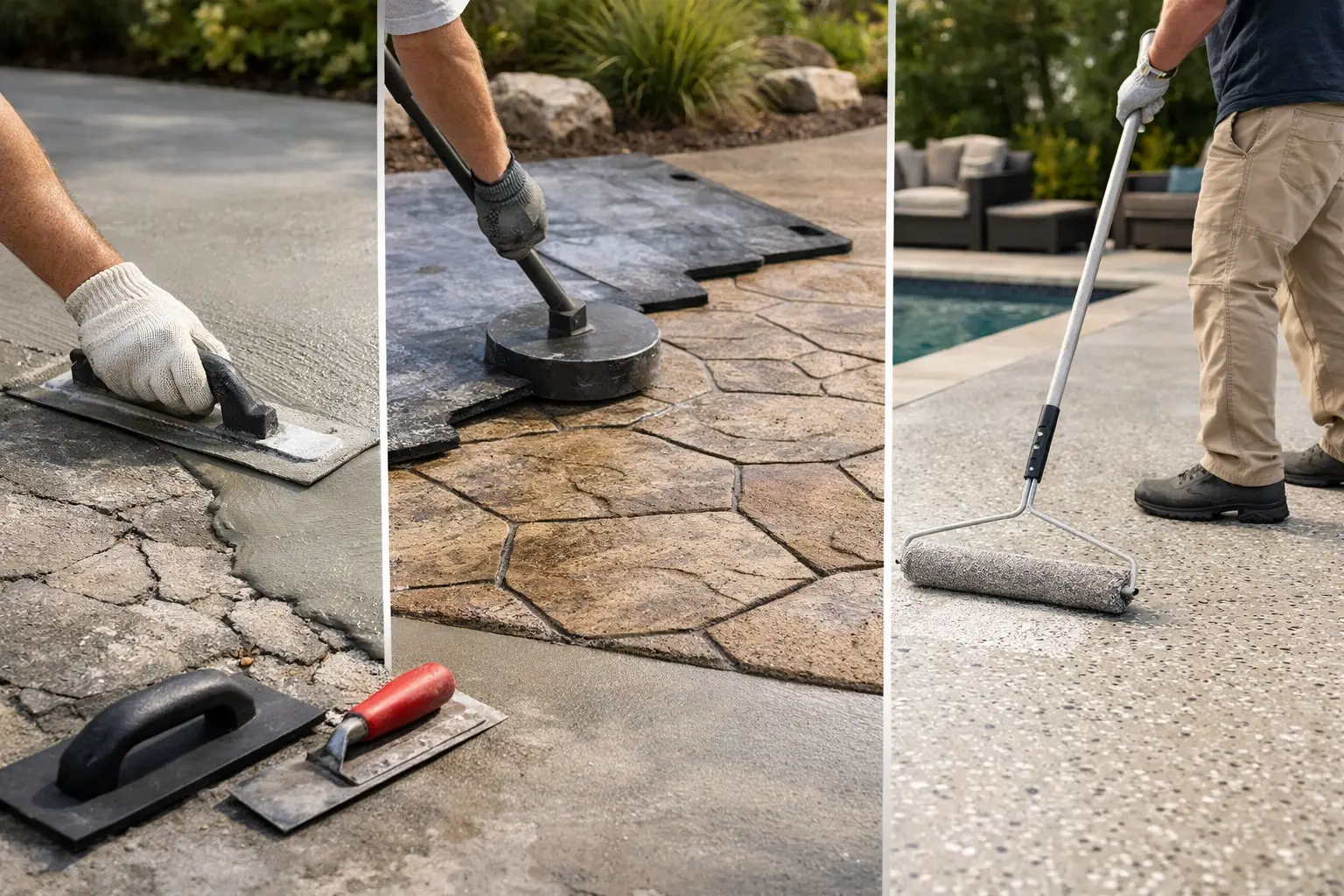
A worn concrete slab does not always need to be torn out. In many cases, the right concrete resurfacing options can restore the look of a driveway, patio, walkway, or pool deck at a lower cost than full replacement. The key is knowing what problem you are actually solving. Surface wear, minor pitting, discoloration, and light scaling can often be addressed. Deep structural cracking, major settling, and drainage failure usually cannot.
That distinction matters because resurfacing is not a magic fix. It is a surface solution. When it is used on sound concrete, it can extend service life and improve appearance. When it is used to cover a slab that is already failing, it tends to fail with it.
When concrete resurfacing options make sense
Resurfacing works best when the base slab is still structurally stable. That means no major heaving, no widespread separation, and no underlying movement that will keep stressing the surface. Hairline cracks and small cosmetic defects are usually manageable. Large trip hazards, broken edges, and drainage issues are signs that repair or replacement may be the better investment.
For property owners, the decision usually comes down to three things: condition, appearance, and budget. If the slab is usable but looks rough, resurfacing can be a practical middle ground. If the slab is unsafe or moving, putting a new coating on top is often just delaying a bigger repair.
In North Texas and nearby markets, weather adds another layer. Heat, heavy rain, shifting soils, and freeze events can all affect concrete performance. That is why local evaluation matters. A patio that only has surface wear is very different from a driveway that is cracking because the subgrade is moving.
Common concrete resurfacing options
Not all resurfacing systems do the same job. Some are mainly cosmetic. Others provide a thicker, more durable reset for worn flatwork. The right option depends on where the concrete is located, how much traffic it gets, and what condition it is in now.
Cement-based resurfacer
A cement-based resurfacer is one of the most common choices for older driveways, sidewalks, and patios. It is a thin overlay applied over prepared concrete to create a fresh surface. This works well when the slab has surface wear, light spalling, minor pitting, or uneven color but is otherwise solid.
The advantage is straightforward. It can improve appearance without the cost and downtime of tearing out the slab. It also keeps the finished look close to traditional concrete, which many homeowners and commercial property managers prefer.
The trade-off is that prep work matters as much as the material itself. If the slab is not cleaned, repaired, and profiled correctly, the new surface may not bond well. It also will not solve major cracks caused by movement underneath.
Decorative overlay
A decorative overlay is used when appearance matters as much as function. These systems can be textured, stained, stamped, or patterned to give plain concrete a more finished look. They are common on patios, pool decks, entryways, and commercial outdoor spaces where curb appeal matters.
This option can make older concrete look significantly better, but it is still dependent on the condition of the slab below. Decorative systems also vary in thickness and toughness. A stamped overlay on a patio may perform well, while a heavily used commercial drive lane may need something more durable or a different approach entirely.
If you want style, this is often the best resurfacing category. If you mainly want to cover damage on a high-traffic slab, function should come first.
Microtopping
A microtopping is a very thin cement-based coating designed to create a smooth, updated surface. It is typically used when the goal is visual improvement rather than covering deeper wear. It can work well on lightly damaged surfaces and in spaces where a clean, modern finish is the priority.
The limitation is durability under tougher conditions. Because it is thin, it is less forgiving on slabs with bigger flaws. It is usually not the first choice for heavily worn exterior concrete that sees constant vehicle traffic.
Spray texture coatings
Spray-applied coatings are often used around pool decks, patios, and walkways. They can add slip resistance and help create a cooler-feeling textured surface underfoot. For outdoor living areas, that can be a strong selling point.
These systems are more specialized than a basic resurfacer. They are not meant for every slab. On the right surface, they improve comfort and appearance. On the wrong surface, especially one with unresolved cracking or movement, they can break down early.
Epoxy or polyaspartic coating systems
Some people include coatings like epoxy or polyaspartic in the conversation about concrete resurfacing options, though they are technically more coating systems than true resurfacers. They are often used in garages, commercial interiors, and some protected exterior spaces.
Their strength is chemical resistance, easier cleaning, and a more finished surface. Their weakness outdoors is exposure and slab movement. In open exterior environments with strong UV and temperature swings, material selection becomes more critical. These systems can perform very well in the right application, but they are not a universal answer for every driveway or patio.
What resurfacing can fix and what it cannot
Resurfacing can improve surface-level problems. That includes discoloration, light scaling, shallow pitting, worn finishes, and some minor cracking after proper repair. It can also refresh the look of old flatwork that is still doing its job structurally.
It cannot correct major settlement, deep structural cracks, failing edges, or chronic standing water caused by improper slope. If tree roots are lifting a walkway or expansive soil is shifting a slab, the surface layer is not the real issue. Covering those problems usually leads to more cracking and wasted money.
This is where a lot of property owners get stuck. A slab can look bad enough to want a cosmetic fix, but the real question is whether the concrete is still stable enough to accept one.
Repair first, then resurface
The best resurfacing jobs start with honest prep. Cracks may need routing and filling. Unsound concrete has to be removed. Oil, dirt, sealers, and weak surface material need to be cleaned off so the new layer can bond. In some cases, mechanical grinding or shot blasting is part of the process.
Skipping prep is one of the main reasons resurfacing fails. It is also why contractor selection matters. A thin overlay applied over a dirty or unstable slab may look good for a short time, then start peeling or reflecting the same defects underneath.
For commercial properties, this matters even more because foot traffic, carts, deliveries, and vehicles will test the surface quickly. For homeowners, the concern is usually longevity and appearance. Either way, prep is not the place to cut corners.
How to choose the right option for your property
Start with use. A driveway needs a different solution than a backyard patio. Vehicle traffic, sun exposure, drainage, and slip resistance all matter. Then look at condition. If the slab has mostly cosmetic wear, a resurfacer or decorative overlay may be enough. If the slab is moving or broken, replacement may be the smarter call.
Budget matters too, but lowest cost should not be the only filter. A cheaper overlay on a failing slab is often more expensive than doing the right repair once. On the other hand, replacing a structurally sound slab just because it looks old may not be necessary.
This is where a contractor should be direct with you. Not every slab should be resurfaced. The right answer is the one that fits the actual condition of the concrete, not the one that sounds easiest.
When replacement makes more sense
Some concrete is past the point of resurfacing. If there is widespread cracking, major settlement, poor drainage, or repeated repair history, replacement is often the better long-term investment. The upfront cost is higher, but it gives you the chance to correct the base, the slope, and the slab thickness where needed.
That can be especially important on driveways, commercial aprons, and other surfaces that carry weight. If the foundation of the slab is wrong, resurfacing only changes the top layer. It does not fix the reason the concrete is breaking down.
A good contractor will tell you that plainly. At Fantastico Concrete, that practical approach matters because the goal is not just to improve how concrete looks next week. It is to make sure the surface performs the way it should over time.
If you are weighing concrete resurfacing options, the best next step is not picking a finish from a brochure. It is getting a clear read on whether your slab is still worth saving. Once that answer is clear, the right solution usually is too.

