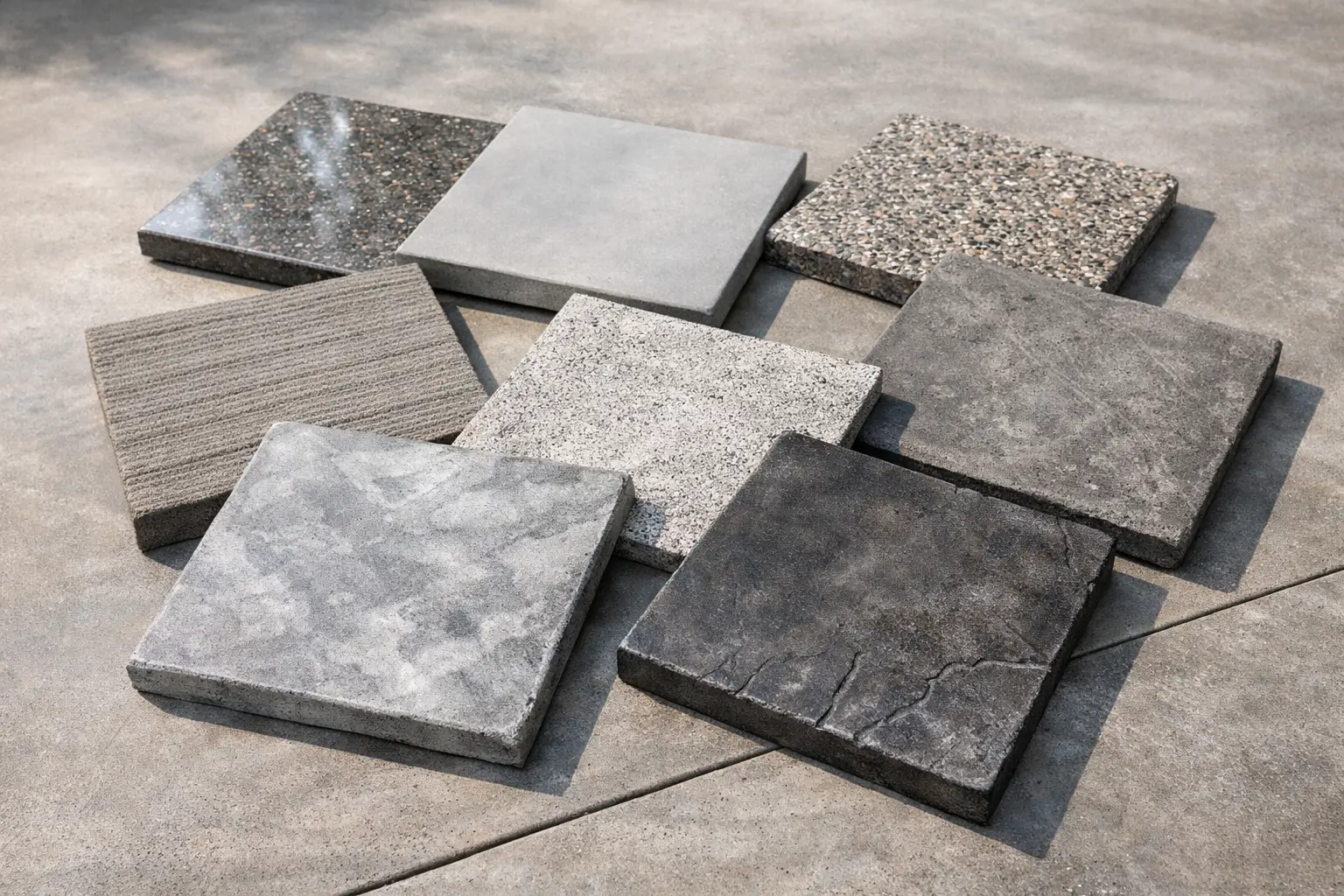
Picking a concrete finish gets real fast once you picture the surface in daily use. A driveway that looks clean on day one can become slick in rain, show tire marks, or highlight every stain if the finish is wrong. The best concrete finish options are not just about appearance. They affect traction, maintenance, heat, wear, and how well the slab fits the job.
For homeowners, property managers, and commercial clients, the right finish usually comes down to one question: what does this concrete need to do every day? A backyard patio has different demands than a loading area, pool deck, storefront walk, or front-entry path. Good concrete work starts with the slab itself, but the finish is what people see and feel every time they use it.
How to choose the best concrete finish options
There is no single best finish for every project. A finish that works well for a decorative patio may be a poor choice for a steep driveway. Likewise, a highly textured surface can improve grip but may collect dirt more easily or feel rough under bare feet.
When comparing finishes, focus on four factors: traction, appearance, maintenance, and long-term wear. In hot climates, surface temperature also matters. In freeze-thaw areas, salt exposure matters more. Around North Texas, sun, heavy rain, shifting soils, and regular vehicle traffic usually matter most.
Broom finish
A broom finish is one of the most common and dependable choices for exterior concrete. Once the slab is placed and smoothed, a broom is dragged across the surface to create a light texture. That texture improves slip resistance without making the concrete look overly rough.
This finish is a strong fit for driveways, sidewalks, patios, ramps, and commercial walkways. It is practical, cost-effective, and easy to maintain. If the project is about function first, a broom finish is often the smartest call.
The trade-off is appearance. Broom-finished concrete has a clean, straightforward look, but it does not offer the custom visual detail of more decorative options. For many property owners, that is perfectly fine. For others, especially where curb appeal matters, it may feel too plain.
Smooth trowel finish
A smooth trowel finish creates a dense, sleek surface with a more refined look. It is often used indoors or in covered spaces where exposure to water is limited. On the right project, it can look sharp and modern.
Outside, this finish needs caution. A smooth surface can become slippery when wet, especially around patios, walkways, and pool areas. For that reason, it is usually not the first recommendation for exterior flatwork that sees foot traffic during rain.
Where it does make sense is in garages, interior slabs, utility spaces, or areas that will receive a coating later. It is clean-looking, but function has to come first.
Exposed aggregate finish
Exposed aggregate is one of the best concrete finish options when you want more texture and a stronger decorative look without losing durability. After placement, the top layer of cement paste is removed to reveal the stone within the mix. That creates a textured, varied surface with natural visual depth.
This finish works well for patios, pool decks, walkways, and some driveways. It offers good traction and a more upscale appearance than a standard broom finish. It also hides minor dirt and wear better than smoother surfaces.
The main trade-off is cost and consistency. Exposed aggregate takes more control during installation, and the final look depends on the mix design and exposure process. If the goal is a crisp, uniform appearance, this finish may feel a little more natural and less controlled than stamped or polished surfaces.
Stamped concrete
Stamped concrete is chosen for appearance first, but it can still perform well when installed correctly. The surface is patterned to resemble stone, brick, tile, wood, or other materials. For patios, pool decks, courtyards, and entry areas, stamped concrete can add a lot of visual value without the cost of individual pavers or natural stone.
It is a good option when the slab needs to do real work but also needs to look finished and intentional. This is especially true on outdoor living spaces where plain gray concrete may not match the home or landscape.
That said, stamped concrete is not maintenance-free. It usually benefits from periodic sealing, and some patterns can become slick if the texture is too shallow or the sealer choice is wrong. It also requires solid installation practices. If the base, drainage, or control joints are poorly handled, decorative concrete will not hide those problems.
Salt finish
A salt finish has a lightly pitted texture created by pressing coarse rock salt into fresh concrete and washing it away later. The result is subtle, attractive, and more slip-resistant than a smooth trowel finish.
This finish is often used on patios, pool decks, and walkways where a softer decorative look is preferred. It has enough texture to break up the surface visually, but not so much that it feels aggressive underfoot.
Its best use is in spaces where appearance and comfort matter more than heavy-duty wear. It is not usually the first pick for high-traffic commercial areas or driveways expected to handle frequent heavy loads.
Light sand or swirl finish
A sand finish or swirl finish offers a middle ground between plain and decorative. These finishes create surface texture and visual movement without the stronger pattern of stamping or the pronounced stone reveal of exposed aggregate.
They can work well on residential patios, sidewalks, and entry paths where the owner wants something with a little more style than a broom finish but still wants a practical exterior surface. A swirl finish, in particular, can give fresh concrete a more custom look without pushing the project into a higher decorative budget.
This option is less common than broom or stamped finishes, so the installer matters. A finish like this needs consistency to look intentional rather than uneven.
Stained concrete
Stained concrete changes the color of the slab rather than its texture. Acid stains and water-based stains can add earth tones, richer color variation, or a cleaner architectural look depending on the product and the slab condition.
For outdoor spaces, stained concrete is usually paired with another finish method. In other words, the stain adds color, while brooming, texturing, or other surface treatment handles traction and feel. This combination can work well on patios, courtyards, and commercial entry areas.
The limitation is that color does not hide structural issues. If the slab is cracked, patched, or inconsistent in finish, stain may highlight those variations instead of blending them. It looks best on well-prepared concrete with a clear design plan.
Polished concrete
Polished concrete is common in commercial interiors, retail spaces, offices, and modern residential interiors. The slab is mechanically ground and refined to create a smooth, reflective surface that is durable and easy to clean.
It is not typically the answer for outdoor slabs exposed to rain and weather. For that reason, it falls lower on the list for exterior work even though it is excellent in the right environment. Property owners sometimes ask about it because they like the clean look, but polished concrete belongs mostly inside.
If a project includes an interior slab, showroom floor, or finished commercial space, polished concrete can be a strong long-term choice. For driveways and outdoor patios, there are better options.
Which finish works best by project type?
For driveways, broom finish and some exposed aggregate finishes usually make the most sense. They provide traction, hold up well, and keep the project grounded in function. Stamped concrete can work on driveways too, but only when the installation is done with traffic, joint placement, and surface grip in mind.
For patios, the field opens up. Broom, stamped, exposed aggregate, salt finish, and swirl finish can all work well depending on the look you want and how the space will be used. Around grills, furniture, and foot traffic, a patio needs a finish that is easy to live with, not just attractive in photos.
For sidewalks and entry paths, broom finish remains hard to beat. It is safe, reliable, and clean-looking. In higher-visibility areas, exposed aggregate or a decorative texture may be worth the upgrade.
For pool decks, slip resistance and foot comfort matter more than anything else. Exposed aggregate, salt finish, and some textured stamped finishes are often strong candidates. Smooth finishes usually are not.
What matters more than the finish alone
The finish gets attention, but the concrete underneath does the heavy lifting. Subgrade preparation, reinforcement, drainage, control joints, proper mix selection, and curing all affect whether the slab performs the way it should. A great-looking finish on a poorly built slab is still a bad project.
That is why finish selection should happen as part of the full scope, not as an afterthought. The right contractor will ask how the surface will be used, how water moves across the site, what kind of traffic it will see, and how much maintenance the owner actually wants to take on.
If you are choosing between the best concrete finish options, start with use first and appearance second. The right finish should still look good years from now, after weather, foot traffic, and daily wear have had their say. Good concrete is supposed to make life easier, not give you one more surface to worry about.

