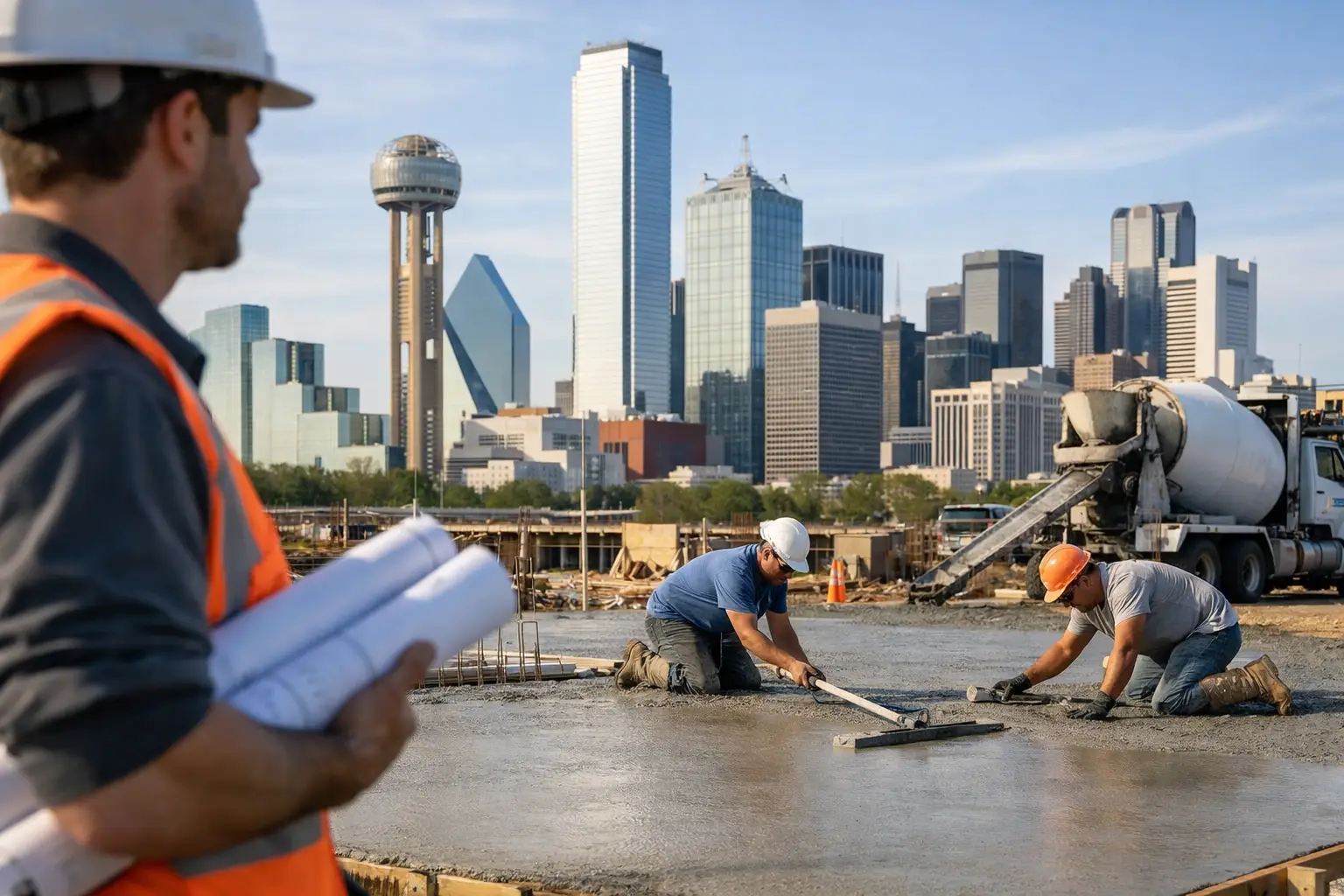
A driveway can look solid on the day it is poured and still fail early because the base was rushed, the slope was wrong, or the joints were placed as an afterthought. For anyone searching for the best concrete contractor Dallas property owners can hire, the real goal is not simply finding the lowest price. It is finding a concrete specialist who plans for the ground, water, traffic, and weather around your property.
Concrete work is permanent, visible, and expensive to redo. Whether you need a new driveway, patio, sidewalk, parking area, foundation slab, or replacement section, the contractor’s preparation and execution will determine how the surface performs years from now.
What the Best Concrete Contractor in Dallas Does Differently
Dallas-Fort Worth concrete faces conditions that deserve more than a one-size-fits-all pour. North Texas heat can dry a surface too quickly. Heavy rain can expose weak drainage. Expansive clay soils can move with changing moisture levels, putting stress on slabs, driveways, and walkways.
A capable contractor accounts for those conditions before concrete arrives. That starts with evaluating the existing grade, soil condition, drainage path, vehicle load, access, and connection points to the home or surrounding hardscape. A new driveway for two passenger vehicles has different requirements than a commercial loading area, just as a backyard patio has different needs than a slab for a detached structure.
The difference is usually in the work you do not see once the job is complete: excavation depth, compacted base material, reinforcement placement, forms, joint layout, and curing practices. Decorative finish work matters, but it cannot compensate for poor preparation below the slab.
Start With the Scope, Not the Quote
Before requesting estimates, get clear on what the project must accomplish. “Replace the concrete” is a starting point, not a full scope. Explain whether the goal is better drainage, more parking space, wheelchair-friendly access, a larger entertaining area, repair of trip hazards, or a stronger surface for vehicles and equipment.
A good contractor should ask follow-up questions. Where does water collect now? Are there visible cracks in adjacent concrete? Will the new surface meet an existing garage floor, porch, fence, or building? Is demolition included? Do you want a standard broom finish, a smoother finish, exposed aggregate, or stamped concrete?
Those details affect both price and performance. For example, a low patio quote may not include enough grading to direct water away from the house. A driveway replacement quote may not address failing base material under the old slab. Comparing estimates without comparing scope can lead to a false bargain.
Ask How the Contractor Plans the Base and Drainage
Concrete is strong in compression, but it is not flexible. When the material underneath shifts or washes out, cracking and settlement become more likely. That is why base preparation deserves a direct conversation before work starts.
Ask the contractor how deep they will excavate, what base material they will use, and how it will be compacted. The right answer depends on the site and intended use. A pedestrian walkway and a heavy-use driveway should not automatically receive the same preparation.
Drainage is equally important. Finished concrete should be graded so water moves where it should, not toward a structure or into an area that already holds water. On a tight property, even a small change in slope can affect a gate opening, landscape bed, garage entry, or neighboring surface.
Do not expect a contractor to promise that concrete will never crack. Concrete naturally shrinks as it cures, and minor cracking can occur even on a well-built project. What a professional can control is the planning that reduces avoidable cracking, including stable preparation, appropriate thickness, reinforcement where needed, properly placed control joints, and sensible curing.
Look Closely at Jointing, Thickness, and Reinforcement
These are technical details, but homeowners and property managers do not need to become concrete experts to ask the right questions. The contractor should be able to explain the proposed slab thickness, where reinforcement will be used, and how joints will be laid out.
Control joints create planned weak points so the concrete has a better chance of cracking in orderly lines instead of randomly across the surface. Expansion material may also be needed where new concrete meets a building, existing slab, or another fixed structure. The layout should make sense for the shape of the pour rather than being treated as a rushed final step.
Reinforcement can help hold sections together if cracking occurs, but it is not a substitute for a good base. Likewise, thicker concrete can be appropriate for heavier loads, but thickness alone cannot solve drainage or soil movement problems. The best approach matches the design to the actual use of the surface.
Review Real Work That Matches Your Project
Photos can be useful, but ask to see examples that are similar to your job. A contractor with attractive patios may still need to demonstrate experience with driveway approaches, commercial flatwork, retaining-related site conditions, or large slab placements.
When reviewing completed work, look past the color and first-day shine. Check whether edges look straight, joints are clean, transitions are smooth, and the surface appears consistently finished. For driveways and sidewalks, pay attention to slope and how the concrete meets existing areas. Poor transitions can create puddles, tire impact, or tripping hazards.
Local experience also matters when a project involves permits, right-of-way work, drainage requirements, utility coordination, or commercial access. Requirements can vary by municipality and project type. A reliable contractor identifies those questions early rather than discovering them after demolition begins.
Compare Estimates Line by Line
A written estimate should make it possible to understand what you are buying. It does not need to read like a legal textbook, but it should clearly address the work to be performed, dimensions or square footage, demolition if applicable, base preparation, concrete placement, finish type, jointing, cleanup, and any exclusions.
Be cautious when one price is dramatically lower than the others. Sometimes a contractor has found a legitimate efficiency. More often, the difference is hidden in the scope: less excavation, thinner concrete, limited removal, no hauling, weak base preparation, or missing drainage work.
Use these questions to make estimates easier to compare:
- Is removal and disposal of the existing concrete included?
- What preparation will be completed under the new concrete?
- What thickness and finish are proposed for this specific use?
- How will joints, reinforcement, and transitions be handled?
- What is excluded, and how are unforeseen site conditions addressed?
The contractor’s willingness to answer these questions is useful information on its own. Clear answers before the job usually lead to better communication during the job.
Verify Professional Basics Before Work Begins
Concrete work often involves heavy equipment, demolition, truck access, and work around homes, vehicles, tenants, or customers. Ask about insurance and make sure the contractor is prepared to provide documentation when appropriate. For larger commercial projects or work with property management requirements, confirm site rules, scheduling expectations, access plans, and safety procedures before the start date.
Also discuss payment timing. A reasonable deposit and progress-based payment structure may make sense depending on project size and material needs, but the agreement should be clear. Avoid arrangements that pressure you to pay the full amount before meaningful work is complete.
A dependable contractor should also set realistic expectations about schedule. Weather, concrete availability, inspection timing, and site conditions can affect a project. Straight answers are better than promises that ignore conditions on the ground.
Choose Communication You Can Build On
The right contractor does not need to oversell the job. They should be direct about what they see, explain the recommended solution, and tell you where there are trade-offs. A basic broom-finish patio may be the practical choice for a rental property. A homeowner investing in outdoor living may decide that a larger layout, upgraded finish, or improved drainage is worth the additional cost.
That practical, project-specific approach is what clients should expect from a specialist such as Fantastico Concrete. The goal is not to make every job more complicated. It is to build the right concrete surface for the property, the budget, and the way the space will be used.
Before signing, take one last look at the scope and make sure the finished result is clearly defined. The best concrete project is not the one that is cheapest on paper. It is the one that gives your property a stable, safe, useful surface that still makes sense after years of Texas weather and daily use.

