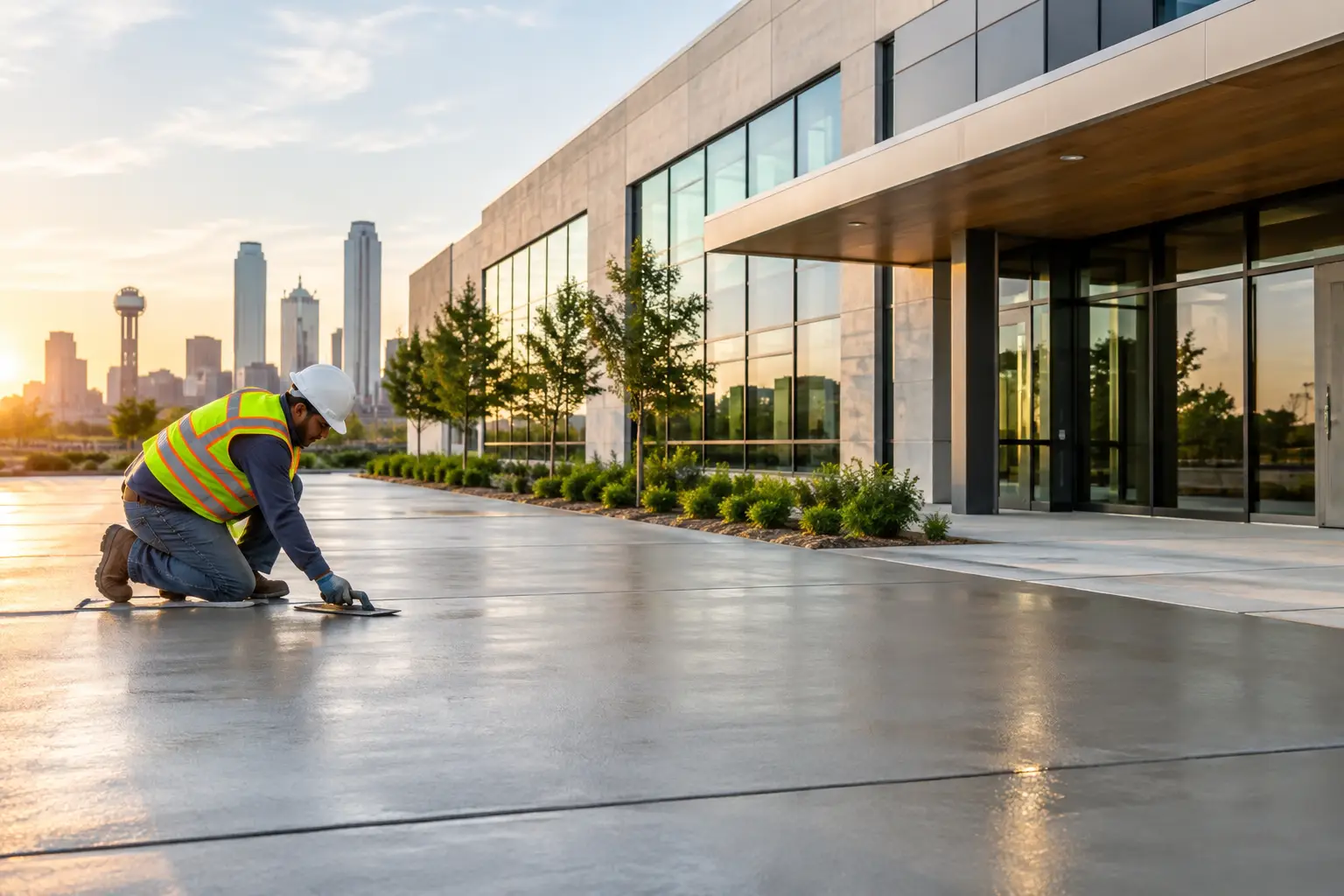
A cracked entry walk, ponding water near a storefront, or broken parking curb can make a commercial property look neglected before a customer reaches the door. The best commercial concrete upgrades address those visible problems while improving how people, vehicles, and water move across the site. For property owners and managers, the right project is rarely about pouring more concrete. It is about correcting the condition that creates liability, maintenance costs, or daily inconvenience.
North Texas properties deal with intense summer heat, heavy rain, shifting soils, and constant vehicle traffic. Concrete work needs to account for all of it. A good upgrade starts with the surface people see, then considers the base, slope, joints, drainage, and intended load beneath it.
1. Replace Failed Sidewalks and Pedestrian Paths
Sidewalks are one of the most practical commercial upgrades because they affect every visitor, employee, tenant, and delivery driver on foot. Cracks, uneven panels, settlement, and spalling create trip hazards and make a property feel poorly maintained. Patching may work for small, isolated damage, but widespread movement or broken edges usually calls for removal and replacement.
A properly planned replacement should establish a consistent walking surface, appropriate cross-slope, and clean transitions at doorways, ramps, curbs, and parking areas. If tree roots are lifting panels, drainage is washing out the base, or soil movement is the underlying issue, replacing only the top layer will not solve the problem for long.
For properties with public access, accessibility requirements also need to be considered. The exact solution depends on the building entrance, existing grades, and local code requirements. A concrete contractor can identify where a walk needs a new approach, landing, ramp connection, or better drainage before work begins.
2. Upgrade Parking Lots, Aprons, and Drive Lanes
Vehicle traffic exposes weak concrete quickly. Loading zones, dumpster areas, drive-through lanes, parking lot entrances, and service drives all take more abuse than a standard sidewalk. When slabs crack under repeated loads or edges break down, the cause may be inadequate thickness, a poor base, water intrusion, or heavy vehicles using pavement designed for lighter traffic.
Replacing a failed drive lane is often more cost-effective than repeating surface repairs. The new concrete should be designed around actual use. A restaurant drive-through, apartment dumpster pad, warehouse approach, and medical-office parking lot may all need different slab thicknesses, reinforcement details, joint layouts, and base preparation.
The apron between a public street and private parking area deserves special attention. It handles turning traffic, drainage runoff, and frequent edge loading. A clean, durable apron improves access and gives the entire property a more finished appearance. For commercial sites, this is often one of the highest-impact concrete improvements available.
3. Correct Drainage With Proper Concrete Grading
Standing water is not just an appearance issue. It can create slippery walking conditions, weaken the base beneath slabs, accelerate cracking, and direct runoff toward doors or foundations. Concrete drainage upgrades use intentional slope to move water away from buildings and toward approved collection points, drains, or swales.
The answer is not always to add a drain. In many cases, regrading a walkway, replacing a low section of pavement, or adjusting the elevation of an adjoining curb provides a more direct fix. On larger sites, a combination of concrete grading and drainage structures may be necessary.
This work requires planning before demolition starts. Existing elevations, door thresholds, adjacent pavement, utilities, and water flow all affect the final design. A slab that looks level can still hold water if it does not have enough fall. Conversely, too much slope can make pedestrian routes uncomfortable or unsuitable for their purpose.
4. Add Concrete ADA Ramps and Entry Landings
A commercial entrance needs to be easy to approach, stable under foot traffic, and suited to the people using it. New or upgraded ramps, landings, and curb transitions can improve access while modernizing an older property. This is especially valuable for retail centers, offices, churches, medical facilities, multifamily properties, and public-facing service locations.
Ramp work is detail-driven. Slope, landing size, handrail needs, detectable warning surfaces, drainage, and the transition into surrounding walks all matter. An entry upgrade that misses one of those details can lead to water problems, awkward access, or costly rework.
Not every entrance needs a full rebuild. Sometimes the right improvement is a new landing, a corrected threshold transition, or replacement of a deteriorated curb ramp. The site layout and applicable requirements determine the scope. The goal is straightforward: give people a safe, usable route without creating a drainage issue at the building entrance.
5. Build Stronger Dumpster Pads and Service Areas
Dumpster pads and rear service areas are easy to overlook until they fail. Trash trucks, delivery vehicles, grease, standing water, and repeated impact can break apart concrete that was not built for the workload. Once a pad has major cracking, settlement, or broken corners, it can become difficult to keep containers level and accessible.
A commercial dumpster pad should be built for the vehicle loads it will receive, not just the weight of the dumpster itself. Proper excavation, a compacted base, suitable concrete thickness, reinforcement where appropriate, and well-placed control joints all help the slab perform. Grading also matters because water and waste runoff should not collect around the enclosure.
For properties planning a new enclosure or site reconfiguration, it makes sense to review truck turning paths before the concrete is placed. A pad that is too small or poorly positioned can create ongoing damage to curbs, drives, landscaping, and adjacent pavement.
6. Install Curbs, Wheel Stops, and Protective Barriers
Curbs direct traffic, protect landscape beds, define parking areas, and help control runoff. When curbs are damaged or missing, vehicles can cut corners, strike building-side walks, and erode landscape edges. New concrete curbing is a relatively focused upgrade that can improve order and durability across a commercial site.
Wheel stops and equipment pads can also protect vulnerable areas. The right solution depends on how the property operates. Wheel stops may help protect storefront walks in a parking row, while a raised equipment pad can keep mechanical equipment stable and above surrounding runoff.
This work should be coordinated with striping, landscaping, drains, and vehicle clearance. A curb placed without considering traffic flow can create more problems than it solves. The best commercial concrete upgrades support the way customers, tenants, and service vehicles actually use the property every day.
7. Improve Outdoor Areas With Functional Concrete Flatwork
Commercial outdoor space can be more useful than it looks. A restaurant may need a durable patio. An office building may benefit from a defined break area. A multifamily property may need new walkways around a pool, mail area, or common space. Even industrial sites may need level staging pads or employee break areas that hold up to regular use.
The finish should match the application. A broom finish provides practical traction for many exterior walking surfaces. Decorative finishes can add visual appeal near customer-facing entries, but they are not always the right choice for heavy service areas. The layout, drainage, and joint pattern should be planned with the same care as the finish.
For property managers, phased work may be the best option when a site must remain open. Sections can often be scheduled around tenant access, business hours, or traffic patterns. That takes coordination, but it can reduce disruption while still moving a larger improvement plan forward.
How to Prioritize a Commercial Concrete Project
Start with safety and water. Uneven walks, failed curb ramps, broken drive lanes, and drainage problems should come before cosmetic upgrades because they can lead to injuries, tenant complaints, and further damage. Next, look at areas that take heavy vehicle loads or affect daily operations, such as service drives, loading areas, and dumpster pads.
Then consider visible customer-facing improvements. An updated entry walk, clean curb line, or functional patio can strengthen curb appeal without sacrificing practicality. Before approving work, ask how the contractor will handle base preparation, drainage, joint placement, curing, access during construction, and cleanup. Those details have a major effect on how long the finished concrete lasts.
Fantastico Concrete helps commercial property owners make clear, practical decisions about repairs, replacements, and new flatwork. The right upgrade is the one that solves the site problem at its source and continues working long after the crew leaves.

