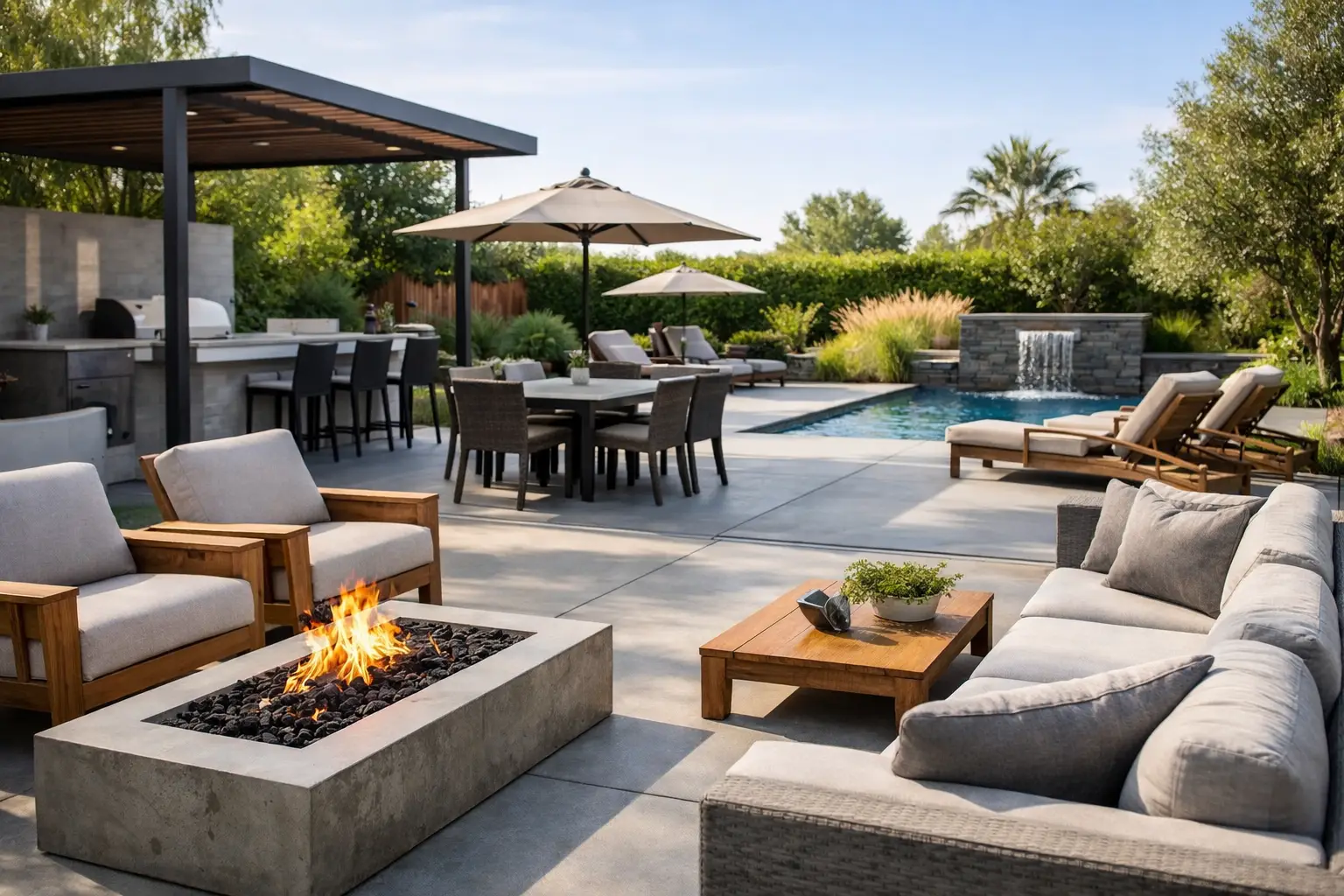
A good patio does more than fill space. The right backyard concrete patio ideas make a yard easier to use, easier to maintain, and better suited to how you actually live outside in North Texas.
In Dallas-Fort Worth, that matters. Heat, sudden rain, shifting soil, and heavy use all put pressure on outdoor surfaces. A patio has to look good, but it also has to drain well, hold up over time, and fit the layout of the property. That is why the best patio ideas are not just about appearance. They solve real problems.
What makes a concrete patio idea worth doing
A lot of homeowners start with photos and end up choosing a design that does not fit the space. That usually leads to wasted square footage, awkward furniture placement, or water running back toward the house. A better approach is to start with function.
Think about how the patio will be used most often. If it is mainly for grilling and weekend seating, a clean rectangular layout may be enough. If you want a dining area, lounge zone, and walkway connection, the slab should be planned in sections so each use has room. Concrete works well here because it can be shaped, sized, and finished to match the property without forcing a one-size-fits-all design.
It also helps to think long term. Decorative features are great, but the base work matters more. Proper grading, reinforcement, thickness, and joint placement are what keep a patio performing after the first season.
Backyard concrete patio ideas for real use
1. Keep it simple with a large brushed concrete patio
A standard brushed finish is still one of the smartest options for a backyard patio. It gives you a clean look, good traction, and a surface that fits almost any home style. For families who want durability first, this is hard to beat.
This option works especially well in larger backyards where you need a broad, usable surface for tables, chairs, grills, and foot traffic. It is also easier to maintain than patios with lots of grout lines, joints from mixed materials, or uneven pavers.
The trade-off is visual impact. Plain brushed concrete is not trying to be dramatic. But if the goal is a strong, low-maintenance surface that stays functional year after year, simple often wins.
2. Add shape with a bordered patio
If you want more visual definition without overcomplicating the project, a border can do a lot. A contrasting edge in a different texture, score pattern, or color helps the patio look more finished and intentional.
This is a good middle ground for homeowners who want something better than plain concrete but do not want the cost or maintenance that can come with more decorative systems. Borders also help break up large slab areas so the patio feels designed rather than poured as one flat field.
3. Use saw cuts to create a clean grid pattern
Saw-cut patterns are one of the most practical decorative ideas for concrete. The lines give the patio structure and visual rhythm, but the surface still performs like a monolithic slab.
This approach fits modern homes especially well, but it can also work on traditional properties if the pattern is scaled correctly. Wider squares tend to feel cleaner and less busy. Smaller scoring can start to look cluttered in a modest backyard.
The key is restraint. A patio does not need a complicated pattern to look custom.
4. Choose stamped concrete if you want texture and a more finished look
Stamped concrete is one of the most requested backyard concrete patio ideas for homeowners who want more character. It can mimic stone, slate, brick, or wood while keeping the strength of concrete underneath.
Done well, stamped concrete can give a backyard a more upscale look. It works nicely for covered patios, pool-adjacent spaces, and outdoor entertaining areas where appearance matters as much as square footage.
It is not the right fit for every project. Stamped surfaces can cost more than basic finishes, and some patterns look dated if the color or texture choice is too aggressive. In Texas heat, lighter tones usually make more sense than dark ones because they stay cooler underfoot and show less weathering over time.
5. Build the patio in zones instead of one big pad
One large patio can work, but zoning often makes the space more usable. That might mean a main seating area off the back door, a separate grilling pad, and a connecting walkway to another part of the yard.
This layout helps define how the space works without needing walls or major landscaping. It also allows the patio to fit the property better. A wide slab across the whole rear of the house can feel oversized if the yard is narrow. Breaking the design into connected sections usually feels more balanced.
From a practical standpoint, zoning can also help with drainage and expansion planning. If you want to add a pergola, fire feature, or outdoor kitchen later, separate sections can make that easier.
Patio ideas that work well in Texas yards
6. Extend the patio with a walkway connection
A patio should not feel stranded in the yard. Connecting it to the side gate, driveway, pool area, or another outdoor feature makes the whole property work better.
Concrete walkways are especially useful for homes with muddy traffic paths, side-yard access needs, or detached garage routes. When the patio ties into those routes, the yard feels more complete and easier to move through.
This kind of addition is not flashy, but it improves daily use in a way that homeowners notice right away.
7. Plan for shade structures from the start
A patio in Texas without shade has limited value during the hottest months. If you know you want a pergola, patio cover, or shade sail, that should be part of the planning before the concrete is poured.
That does not always mean installing the structure at the same time, but it does mean accounting for layout, footing locations, and clearances. A patio designed around future shade will function better than one where the cover gets added as an afterthought.
It also affects size. Once you add posts, furniture, and circulation space, a patio that looked large on paper can start to feel tight.
8. Include a widened landing off the back door
Sometimes the best patio idea is solving a transition problem. A narrow step-down area outside the back door often becomes a bottleneck, especially when people are carrying food, moving furniture, or coming in from the yard.
A widened concrete landing creates a stronger transition from the house to the patio and improves safety at the same time. This is especially useful when replacing older concrete that has settled, cracked, or become uneven.
It is not the most glamorous upgrade, but it improves the patio every time someone uses it.
9. Use integral color or stain carefully
Color can help a patio feel warmer and more custom, but it works best when it supports the overall property instead of trying to dominate it. Earth tones, soft grays, and sand colors usually fit Texas homes better than bold reds or heavy contrast treatments.
If you are considering color, think about how it will look against the brick, siding, roof, and surrounding hardscape. Also think about maintenance. Some decorative color treatments need more upkeep than homeowners expect, especially in high-sun areas.
For many properties, subtle color plus a clean texture is the better choice than a highly stylized finish.
10. Design with drainage in mind, not after the fact
This is the least exciting idea on the list, and one of the most important. A patio that holds water, sends runoff toward the foundation, or creates soggy edges in the yard is a problem no matter how good it looks.
Proper slope, grade transitions, and water movement should be built into the design from the start. That includes understanding where downspouts discharge, how the yard drains naturally, and whether adjacent surfaces are already causing issues.
In many cases, the smartest patio design is the one that quietly fixes water problems while creating better outdoor space.
How to choose the right concrete patio design
The best backyard concrete patio ideas usually come down to three things: how you use the space, what the property can support, and how much maintenance you want later. A decorative stamped patio may make sense for a covered entertainment area. A brushed patio with a border may be the better fit for a rental property, a busy family yard, or a home where durability matters most.
Budget matters too, but cheapest is not always best. Replacing a failed patio costs more than doing the job correctly the first time. That is why layout, base prep, reinforcement, finish selection, and drainage should all be considered together.
For homeowners in the Dallas-Fort Worth area, local soil movement and weather should stay part of the conversation. A patio has to handle real conditions, not just look good in a photo. Fantastico Concrete approaches patio work with that in mind - build for use, build for drainage, and build for the long haul.
A concrete patio should make your backyard easier to enjoy, not harder to manage. If an idea adds beauty but not function, keep looking. The right design is the one that still works after the furniture is out, the grill is on, and the weather does what Texas weather does.

